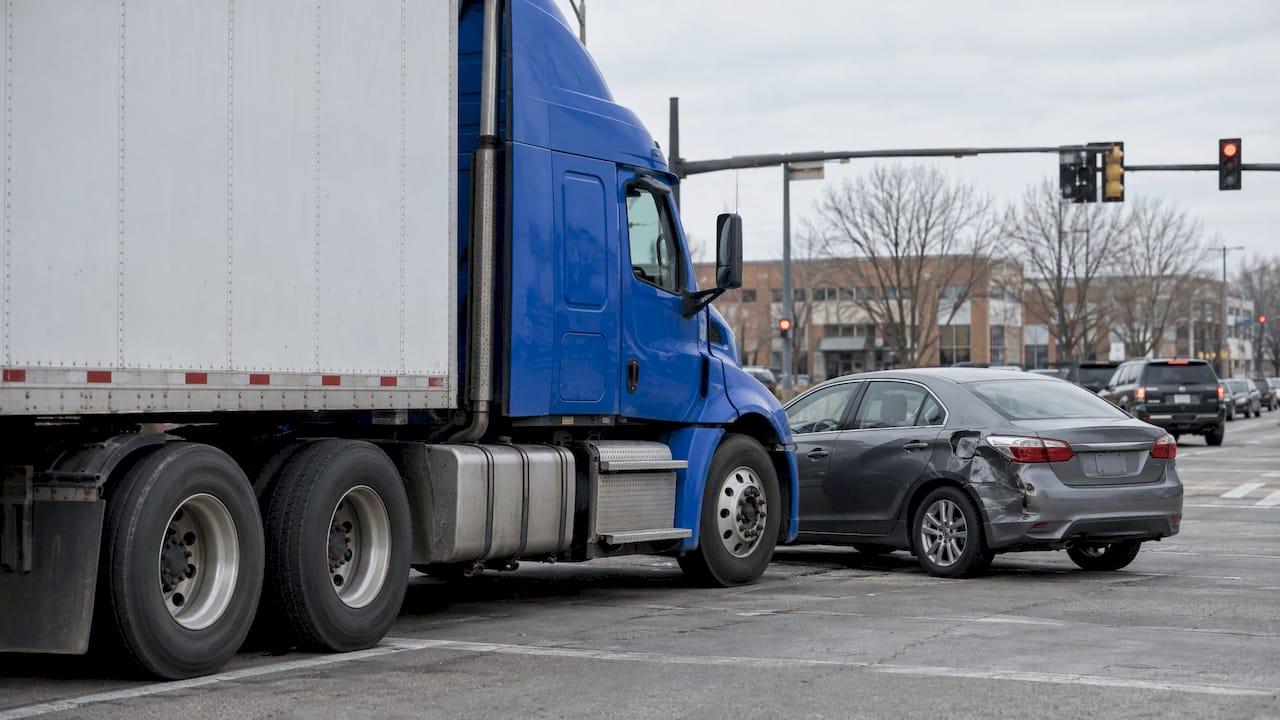
If a semi, an 18-wheeler or another commercial truck hit you or someone you love, the attorney you need is one who handles trucking cases, not a general practitioner. These claims involve a trucking company, federal safety rules and insurance policies that fight back. You can start by describing your crash and injuries in our free case evaluation, which is built around the type of injury and the circumstances, so your request reaches a vetted local attorney who fits your situation.
TL;DR
- A truck crash claim often reaches beyond the driver to the trucking company and others, so you need an attorney who knows how to investigate all of them.
- Evidence in trucking cases can disappear fast, so the first days matter: photos, medical records and a written preservation request.
- Federal rules define what counts as a reportable truck accident and require carriers to keep records, which a good attorney uses.
- Personal injury attorneys typically work on contingency, but you should still confirm fees and case costs in writing before you sign.
- Families who lost someone, motorcyclists and cyclists hit by trucks have their own claims. Tell the attorney which applies to you at the start.
Table of Contents
- What a truck collision attorney does
- How a truck crash case differs from a car accident claim
- Who may be responsible for a truck crash
- Evidence to protect in the first days
- Deadlines you cannot ignore
- What compensation can include
- How truck accident attorneys charge
- How to choose a truck injury attorney
- Start with a free evaluation
- Our perspective
- FAQ
- Sources
What a truck collision attorney does
A truck collision attorney represents people injured, or families bereaved, in crashes involving large commercial vehicles: tractor-trailers, box trucks, tankers, flatbeds and delivery trucks. The work starts before any lawsuit. The attorney identifies who may be responsible, sends notices to preserve evidence, gathers medical and employment records, calculates what the injury will cost you over time, and deals with insurers so you are not negotiating alone while you recover.
The difference from a typical car claim is scale and complexity. A passenger car crash usually involves two drivers and two insurers. A truck crash can involve a driver, a motor carrier, a company that loaded the cargo, a maintenance contractor and a truck manufacturer, each with its own insurer and its own lawyers. The truck itself causes more severe injuries because of its weight, which means larger medical bills, longer recoveries and higher stakes.
How a truck crash case differs from a car accident claim
Federal rules apply. Commercial trucks are regulated by the Federal Motor Carrier Safety Administration. The federal regulations define an "accident" as a crash involving a commercial motor vehicle that results in a death, an injury needing immediate treatment away from the scene, or damage serious enough that a vehicle must be towed. They also require motor carriers to keep an accident register for three years, according to 49 CFR Part 390 on the eCFR (February 19, 2026 edition). For you, that means the company is supposed to hold a record of your crash, and your attorney knows to ask for it. For a plain-language overview of what drivers and carriers must follow, see our guide to federal trucking regulations.
Insurance is larger, and so is the resistance. Federal law sets minimum public liability coverage for carriers. For a for-hire carrier moving non-hazardous property in a vehicle with a gross weight rating of 10,001 pounds or more, the minimum is $750,000 under 49 CFR 387.9. Carriers of certain hazardous materials face higher minimums. A serious injury can cost far more than a minimum policy, which is one reason identifying every responsible party matters.
The evidence belongs to someone else. In a car crash you may have your own photos and the other driver's statement. In a truck crash the key evidence sits with the carrier: driver logs, dispatch records, maintenance files, inspection reports and data recorded by the truck. It can be overwritten or discarded in the ordinary course of business unless someone formally asks that it be kept.
Who may be responsible for a truck crash
Liability in a trucking case is often shared. Depending on the facts, an attorney will look at:
- The driver, for speeding, distraction, impairment, fatigue or unsafe lane changes.
- The trucking company, for how it hired, trained, scheduled and supervised the driver, and for how it maintained the truck. We explain the theories behind these claims in why trucking companies face wrongful death suits.
- The cargo loader or shipper, if unbalanced or overweight loading contributed to a rollover or jackknife.
- A maintenance contractor or parts maker, if brakes, tires or steering failed.
- A government body, in rarer cases where road design or upkeep played a part. These claims usually have special notice rules and short deadlines.
If the driver was a company employee or was driving a company vehicle on a work errand, the employer may be responsible for what the driver did on the job. Our guide to the steps to protect your claim after a company vehicle accident walks through how that changes the claim, and the same logic applies to delivery driver accidents.
Evidence to protect in the first days
Trucking cases are won on documents and data, and you can protect more of it than you might think. If you are physically able, or a family member can help:
- Get medical care and keep every record. Treatment records tie your injuries to the crash. Gaps in treatment are used by insurers to argue you were not that hurt.
- Photograph everything. Take pictures of the vehicles, the road, skid marks, damage, your injuries and any visible company name, USDOT number or trailer markings.
- Collect names. Get the driver's name, the company on the door, the insurer, and contact details for witnesses.
- Get the police report number. The report is a starting point for the attorney, even when you disagree with parts of it.
- Do not give a recorded statement to the trucking company's insurer before you have spoken with an attorney, and do not post about the crash online.
- Have your attorney send a preservation request. This is a formal letter telling the carrier to keep logs, electronic data, maintenance records and any camera footage. We cover what it includes in our guide to the spoliation letter in trucking accidents.
For a broader checklist that applies to any crash, see our car accident evidence best practices. If the truck left the scene, read our piece on the first 72 hours of a hit-and-run claim.
Deadlines you cannot ignore
Every state sets a statute of limitations, the legal deadline for filing a lawsuit. It varies by state and by type of claim, and it can be shorter for wrongful death or when a government body is involved. Some states also require early written notice to a public agency long before the lawsuit deadline. Because the deadline depends on where the crash happened and who is responsible, ask an attorney in that state about your exact date as soon as you can. Waiting is the single most avoidable way to lose a valid claim.
What compensation can include
The damages you may be able to seek depend on your injuries and your state's law. In general they fall into these groups:
| Type of loss | Examples |
|---|---|
| Medical costs | Emergency care, surgery, hospital stays, rehabilitation, future treatment |
| Lost income | Time off work, reduced hours, lost earning capacity if you cannot return to your job |
| Pain and suffering | Physical pain, loss of enjoyment of life, scarring or disfigurement |
| Emotional harm | Anxiety, depression, post-traumatic stress after a crash |
| Property damage | Vehicle, motorcycle, bicycle or gear repair or replacement |
| Wrongful death | Funeral and burial costs, loss of the family member's income and support, loss of companionship |
No attorney can promise an amount. What a good one can do is document each category properly, so the claim reflects what the crash will cost you over years rather than weeks.
If you were on a motorcycle or bicycle
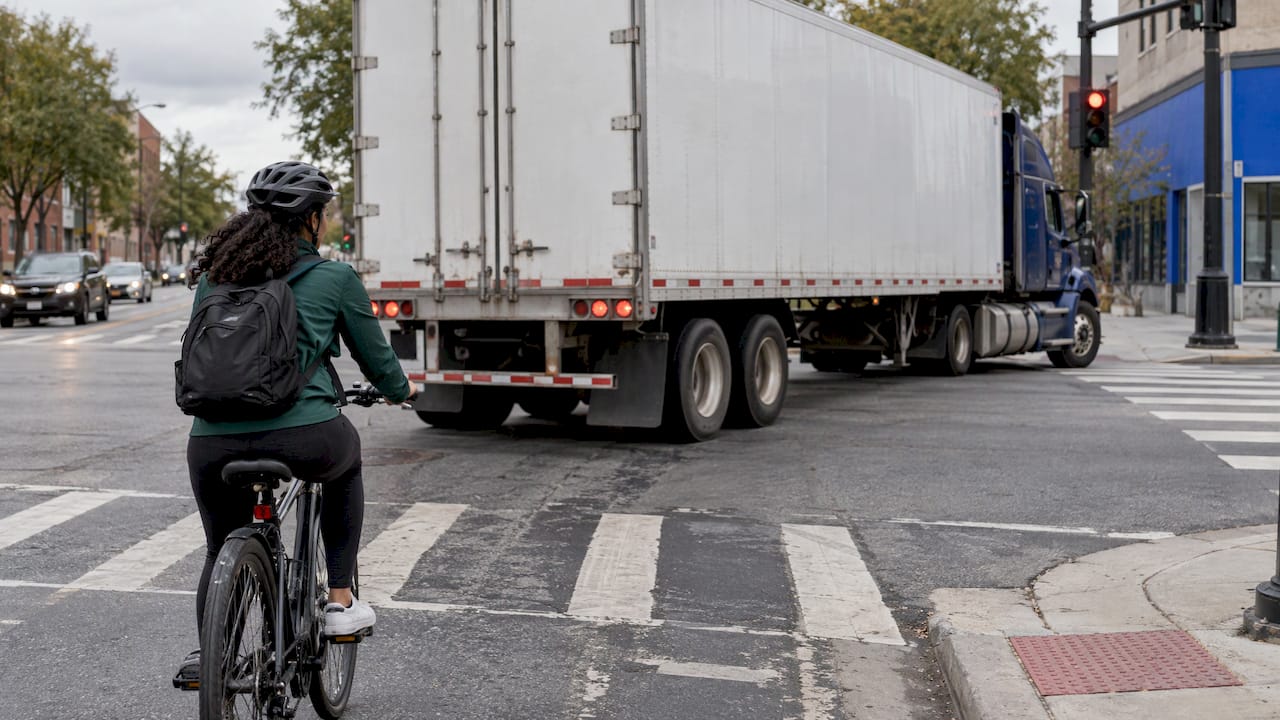
Riders and cyclists often suffer the most severe injuries in a truck collision, and insurers sometimes try to shift blame onto them. Tell the attorney at the start that you were on a two-wheeler, because the investigation will focus on the truck's blind spots, its turning and lane-change movements, and what the driver could see.
If you lost a family member
A wrongful death claim is brought on behalf of the surviving family, and state law decides who may file and which losses can be claimed. Federal rules treat a death within 30 days of a crash as a fatality for reporting purposes, per the eCFR. Our family guide to truck accident wrongful death claims explains who can file and what to gather.
How truck accident attorneys charge
Most personal injury attorneys, including those who handle truck cases, work on a contingency fee: no fee is charged up front, and the attorney is paid a percentage of what is recovered. Case costs are a separate matter. Before you sign, get the following in writing:
- The percentage, and whether it changes if the case goes to trial.
- Whether the percentage is calculated before or after case costs are deducted.
- Which costs are advanced, such as records, expert witnesses and accident reconstruction, and who pays them if there is no recovery.
- How medical liens and bills are handled when the case settles.
A clear fee agreement is a sign of a well-run practice. Truck cases can need expensive experts, so ask how costs are usually handled in cases like yours.
How to choose a truck injury attorney
A short list of questions separates a trucking specialist from a general practice:
- How many truck cases has the attorney handled, and how recently?
- Will they send a preservation request right away?
- Do they work with accident reconstruction and medical experts?
- Are they prepared to file suit if the carrier will not settle fairly?
- Who will actually work on your file, and how often will you hear from them?
For example, a former prosecutor who personally handles each case, as the team at McDowell Law Firm describes its truck accident work, shows the kind of direct attorney involvement worth asking about when you compare options.
Prepare for the first consultation
Bring the police report number, photos, the insurer's name and any letters you have received, your medical records and bills, proof of lost income, and a short written timeline of the crash and your symptoms. Write down your questions in advance. If you have already spoken to an insurance adjuster, say so.
Start with a free evaluation
Searching one law firm at a time costs time you may not have while you are recovering. Our free evaluation asks about your injury and what happened, so your request is matched to a vetted local attorney who handles that kind of case. It carries no obligation, and you decide what happens next.
Whether you were in a car, on a motorcycle or on a bicycle, or you are a family member of someone who died, you can start your free evaluation in a few minutes. If you want to understand when a lawyer is worth calling in general, read why hire a car accident attorney after a crash and first party versus third party claims.
Our perspective
Most people who contact us after a truck crash are not looking for a legal education. They are hurt, behind on bills, and facing an insurer that already has a team working. The first thing they need is a clear answer to a simple question: do I have a claim, and who should I talk to?
That is why we built our evaluation around the specifics. A broken leg from a rear-end collision with a semi is a different case from a family's wrongful death claim or a cyclist's injuries, and the attorney who fits one may not fit the other. Our free, no-obligation assessment is tailored to the injury type and the circumstances, so the attorney you are matched with is suited to what happened to you.
Our advice is to act while the evidence still exists. Take the free evaluation early, protect your records, and let an attorney handle the carrier. You focus on healing.
Gerard
FAQ
Can you sue a trucking company if their truck hits you?
Yes, in many cases. If the driver was working for the company, or the company's hiring, scheduling or maintenance practices contributed to the crash, the company can be named alongside the driver. An attorney will review the facts and the records to decide who is responsible in your situation.
How long does a truck accident lawsuit take?
There is no standard length. Cases that settle can resolve in months, while cases with serious injuries, disputed fault or several defendants can take longer, and a trial adds more time. Medical treatment often has to reach a stable point first, so the full cost of your injuries is known before you settle.
What if the truck driver says the crash was my fault?
Tell your attorney and do not argue about fault with the driver or the insurer. Evidence such as the truck's recorded data, witness accounts and the physical scene helps establish what happened. Many states allow a claim even when an injured person is partly at fault, but the rules differ, so ask an attorney in your state.
Do I need a special lawyer for an 18-wheeler or semi-truck crash?
It is wise to choose one with truck case experience. These claims involve federal safety rules, company records and multiple insurers, which a general injury practice may not handle often. Our free evaluation helps connect you with a vetted local attorney based on your injury and circumstances.
Sources
- eCFR: 49 CFR Part 390, Federal Motor Carrier Safety Regulations: General (February 19, 2026)
- 49 CFR 387.9, Financial responsibility, minimum levels