
If the other driver caused the wreck, file with their insurer to skip your deductible and preserve your shot at diminished value, pain and suffering, and other damages your own policy won't touch. Use your own insurer instead when you need repairs fast, the at-fault driver is uninsured, or your state requires no-fault injury claims through your own coverage. You can often do both at once: your insurer pays fast, then recovers from the at-fault carrier through subrogation, and state timelines for suing directly still apply either way.
TL;DR:
- Filing a first-party claim can speed up repairs and medical payments but may impact your premiums and limits recovery to policy-covered damages.
- Third-party claims allow recovery beyond policy limits, including diminished value and pain and suffering, but typically require more time and dispute resolution.
- Simultaneously pursuing both claims can help maximize recovery, especially in cases of shared fault or uninsured drivers, with subrogation refunding your deductible afterward.
- Prompt documentation, including photos and police reports, is essential within the first few days after an accident to strengthen your claims and enable faster insurer response.
- Consulting a lawyer is advisable when injuries are severe, liability is contested, or settlement offers are insufficient, as they can negotiate better outcomes and handle complex situations.
Table of Contents
- First Party vs Third Party: What Actually Separates the Two Claims
- When Should You File With Your Own Insurer First?
- When Does a Third-Party Claim Make More Sense?
- Can You File Both Claims at the Same Time?
- What Should You Do in the First Few Days After a Crash?
- When Is It Time to Call a Car Accident Attorney?
- What This Article's Contributor Thinks You're Getting Wrong
- How Carcollisionlawyer Can Help You Decide Your Next Move
- Sources
- FAQ
First Party vs Third Party: What Actually Separates the Two Claims
A first-party claim runs through your own auto policy: collision coverage, Personal Injury Protection (PIP), MedPay, or uninsured/underinsured motorist coverage. A third-party claim goes to the at-fault driver's insurer, asking them to cover the damage their policyholder caused. That single distinction, whose contract you're invoking, drives almost every practical difference between the two paths.
Your own insurer owes you a contractual duty of good faith. The at-fault driver's insurer owes you nothing contractually. They're investigating to protect their policyholder's premium and their own bottom line, which is why third-party claims tend to move slower and get contested more often, according to Progressive's claims guidance.
Here's how the two stack up on the factors that actually matter to your wallet and your timeline:
- Deductible: First-party claims usually require you to pay yours upfront; third-party claims typically don't touch it.
- Speed: First-party repairs and PIP payments generally move faster because your insurer is contractually bound to respond, per Nolo's overview.
- Scope of recovery: Third-party claims can reach diminished value, pain and suffering, and lost wages beyond what your policy limits allow.
- Premium risk: Filing first-party, even when you're not at fault, can affect renewal pricing depending on your carrier and state.
- No-fault states: Medical bills route through PIP regardless of fault, but property damage still follows fault rules and can be pursued against the at-fault driver's insurer.
That last point trips people up constantly. Living in a no-fault state doesn't mean the at-fault driver's insurer is off the hook for your bumper and fender. It only changes how your medical bills get paid.
When Should You File With Your Own Insurer First?
First-party makes sense when speed matters more than maximizing every dollar, or when the at-fault driver's coverage is thin, disputed, or nonexistent. It's also your only option for medical bills in a no-fault state, since PIP has to be tapped before anything else.
Filing first-party fits these situations:
- You need your car repaired now and can't wait out a liability investigation.
- The at-fault driver is uninsured or underinsured, so UM/UIM coverage is your primary recovery path.
- You're in a no-fault state and need PIP or MedPay for medical treatment.
- Liability is genuinely unclear or contested by both sides.
Once you report the claim, your insurer assigns an adjuster, you pay your deductible, and repairs typically start once an estimate is approved. If you added rental reimbursement to your policy, that kicks in here too. Behind the scenes, your insurer may pursue subrogation against the at-fault driver's carrier to recover what they paid out, including your deductible, though that process can take months to resolve.
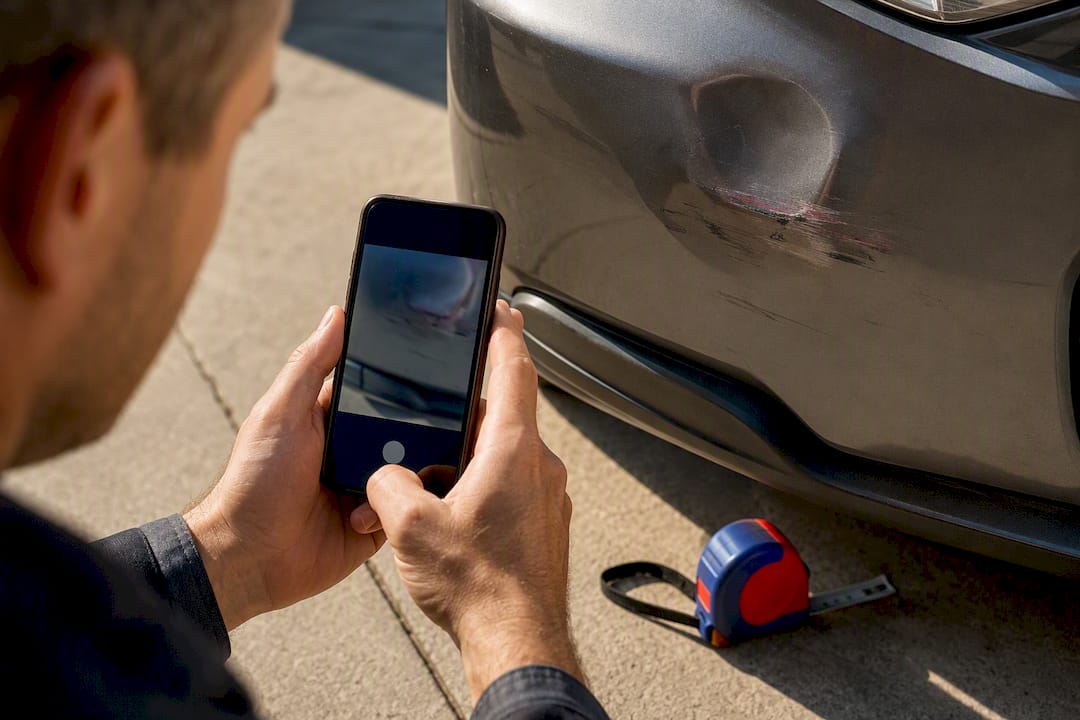
Pro Tip: Before you sign off on a repair estimate, photograph every angle of the damage and save the itemized estimate as a PDF. If your insurer later fights the at-fault carrier over subrogation, dated documentation is what settles the argument.
When Does a Third-Party Claim Make More Sense?
Third-party is the stronger play when fault is clear and you want the full range of damages your own policy simply doesn't cover. Skipping your deductible is the obvious perk, but the bigger one is access to diminished value claims and non-economic damages like pain and suffering, categories a first-party claim can't reach.
The tradeoff is patience. The at-fault insurer has no contract with you, so expect an actual investigation, and don't be surprised if their adjuster disputes liability or offers less than your damages justify. That's standard practice, not a red flag specific to your case.
Before you call the at-fault insurer, have these ready:
- The police report number and responding officer's name.
- Photos of vehicle damage, the accident scene, and any visible injuries.
- Contact information for witnesses.
- Medical records and bills tied directly to the crash.
- A written repair estimate from a shop, not just an insurance app estimate.
Timelines run anywhere from a few weeks to several months, longer if injuries are involved or fault is contested. Lowball initial offers are common enough that you should treat the first number as a starting point, not a final answer. If the gap between their offer and your actual damages feels wide, that's usually the moment to get a second opinion from someone who negotiates these for a living.
Can You File Both Claims at the Same Time?
Yes, and for a lot of accident victims it's the smartest move available. You file first-party to get your car fixed and your medical bills moving, while your insurer separately pursues the at-fault carrier through subrogation to recover what they paid, including refunding your deductible once that process resolves.
A few things shape how that plays out:
- Made-whole doctrine: In some states, you're entitled to be fully compensated before your insurer can keep any subrogation recovery; other states let insurers recoup their share first, so the rule you're under depends on where you live.
- Deductible refunds: If subrogation succeeds, you typically get your deductible back, but the timeline varies widely, sometimes weeks, sometimes longer.
- When it's worth doing both: Shared fault situations, urgent repair needs, or an at-fault driver who's uninsured or underinsured are the clearest cases for running both claims in parallel, according to LegalClarity's breakdown of dual-claim scenarios.
What Should You Do in the First Few Days After a Crash?
Get medical attention first, even for injuries that feel minor. Adrenaline masks pain, and a same-day medical record is worth far more later than a memory of "feeling fine."
Once you're safe, work through this sequence:
- Photograph the scene, all vehicles involved, and any visible injuries before anything gets moved or repaired.
- File a police report and get the report number before you leave.
- Collect names and contact information for every witness on scene.
- Notify your own insurer promptly, most policies require "prompt" reporting even if you're filing third-party.
- Keep dated records of every call, email, and letter with either insurer.
Insurers generally move faster than people expect once a claim is properly documented. Many follow model timelines requiring acknowledgment within about 15 days and a decision within roughly 21 days once your file is complete, so gaps in documentation are usually what stalls things, not insurer foot dragging.
Don't lose sight of your state's statute of limitations, either. Personal injury claims commonly carry a 2 to 3 year filing window, and missing it ends your ability to sue the at-fault driver entirely, regardless of how the insurance claims played out. If the at-fault driver turns out to be uninsured or underinsured, your own UM/UIM coverage becomes your main recovery route, filed with your insurer but functioning to cover someone else's negligence.
When Is It Time to Call a Car Accident Attorney?
Some situations don't resolve cleanly through either claims process, and that's your signal to stop negotiating alone. Call an attorney when:
- Injuries are serious, permanent, or still evolving weeks after the crash.
- Liability is disputed and neither insurer will budge.
- A settlement offer sits noticeably below your actual medical bills, lost wages, or repair costs.
- You suspect bad faith, delayed responses, lowball tactics, or denied claims without explanation.
- UM/UIM coverage or diminished value calculations get complicated enough that you're not confident reading the numbers yourself.
An attorney drafts demand letters that carry more weight than anything you'd send, negotiates directly with adjusters trained to minimize payouts, and files suit if a fair settlement never materializes. They also track deadlines you might not know exist and put a real number on non-economic losses insurers routinely undervalue. If you've hit a wall with either claim type, common claim denials are worth reading before your next call with an adjuster.
What This Article's Contributor Thinks You're Getting Wrong
Most people treat first-party and third-party claims as a binary choice, pick one and stick with it. That's the mistake. Gerard has covered no-fault versus at-fault rules and insurance bad-faith practices extensively, and the pattern that shows up again and again is victims abandoning a faster first-party path out of fear it'll "count against" their third-party rights. It usually doesn't. Running both isn't hedging your bets, it's the default smart move for anyone whose case isn't a slam-dunk on liability. A free evaluation process exists specifically to sort out which path, or combination of paths, fits your situation before you commit to either insurer's version of events.
— Gerard
How Carcollisionlawyer Can Help You Decide Your Next Move
A free, no-obligation case evaluation built around your specific accident is available instead of a generic script. Instead of guessing whether to push your own insurer or the at-fault driver's carrier, you can get matched with a vetted local attorney who can look at your injuries, your state's rules, and your policy limits before you sign anything.
This matters most when injuries are serious, liability is contested, or UM/UIM and diminished value calculations start getting complicated, exactly the situations where DIY negotiating tends to leave money on the table. The intake process is quick and tailored to your accident type, whether that's a car, motorcycle, truck, or bicycle crash. If you're weighing your options right now, start your free case evaluation and find out what your claim might actually be worth before the insurance company tells you what they think it's worth.
Sources
Claims rules, deductible practices, and statutes of limitations vary by state and by policy. Confirm your specific deadlines and coverage terms against your own policy documents, and consult your state insurance department for local exceptions before assuming any figure here applies to your case.
This article is general information, not a substitute for advice from a qualified lawyer. Consult a qualified legal professional about your own circumstances before acting on anything here.
- What Is a Third-Party Insurance Claim? - Progressive
- How do I start a car accident claim? - Nolo
- Autoinsurance
FAQ
Is It Better to File First-Party or Third-Party After a Crash?
It depends on your priority: first-party is faster and skips liability disputes, while third-party avoids your deductible and can recover damages like pain and suffering that your own policy doesn't cover.
Can I File a Claim With Both Insurers at Once?
Yes, filing both is common and often advisable, especially when fault is disputed or the at-fault driver may be uninsured, and your insurers sort out subrogation between themselves afterward.
What Happens to My Deductible if the Other Driver Was at Fault?
If your insurer successfully recovers costs from the at-fault carrier through subrogation, you typically get your deductible refunded, though the timeline can run from weeks to several months.
How Long Do I Have to File a Claim After an Accident?
Statutes of limitations for personal injury claims commonly run 2 to 3 years depending on your state, so calendar the deadline early and don't rely on insurance negotiations to pause the clock.
When Should I Get a Lawyer Instead of Handling the Claim Myself?
Consult an attorney when injuries are serious, liability is disputed, a settlement offer falls short of your actual damages, or an insurer appears to be acting in bad faith.