
If the driver who hit you has no insurance, or not enough of it, your own uninsured motorist (UM) or underinsured motorist (UIM) coverage is what pays your medical bills, lost wages, and pain and suffering. The single most urgent move right now is to preserve every piece of evidence from the scene and notify your own insurer before you sign anything or speak with the other driver's carrier. If your injuries are serious or your insurer starts dragging its feet, talk to an attorney before you agree to anything in writing.
TL;DR:
- Uninsured or underinsured motorist coverage generally pays for medical bills, lost wages, pain, and vehicle damage when the at-fault driver has no insurance or insufficient limits.
- Filing a claim requires immediate scene documentation, prompt police reporting, and timely notification of your insurer to avoid claim denial.
- Deadlines such as policy notice, state statutes, and contractual filing windows must be met, as missing any can jeopardize your claim.
- Insurers often use tactics like claiming late notice or disputing injury severity to deny or delay your UM/UIM claim, making legal advice crucial in contested cases.
- Consulting a lawyer is especially important with long-term injuries, coverage disputes, or low settlement offers, as complex issues and deadlines heavily influence claim success.
Table of Contents
- What Does an Uninsured Motorist Claim Actually Cover?
- When Does Uninsured or Underinsured Coverage Actually Apply?
- How to File an Uninsured or Underinsured Motorist Claim
- What Deadlines Could Kill Your Uninsured Motorist Claim?
- How Insurers Handle UM/UIM Claims and What to Watch For
- When Should You Hire a Lawyer for a UM/UIM Claim?
- What I've Seen Go Wrong Most Often in These Claims
- Get a Free Case Review Before Deadlines Work Against You
- Sources
What Does an Uninsured Motorist Claim Actually Cover?
An uninsured motorist claim pays out when the driver who caused your crash carries no liability insurance at all. Underinsured motorist coverage, often written on the same policy line, kicks in when the at-fault driver has insurance, but their limits are too thin to cover what you actually lost. Your declarations page usually lists these as UMBI (uninsured motorist bodily injury) and UIMBI (underinsured motorist bodily injury), with UMPD (uninsured motorist property damage) as a separate line item in states that offer it.
Here's what these coverages typically pay for:
- Medical bills tied directly to the crash, from the ER visit through physical therapy
- Lost wages if your injuries kept you out of work
- Pain and suffering, calculated differently depending on your state's formula
- Vehicle repair costs, but only if you carry UMPD or collision coverage, since many UIM policies focus almost entirely on bodily injury and skip property damage
That last point trips people up constantly. A LegalClarity breakdown of underinsured motorist coverage notes that UIM often covers injuries but not your bumper. If you don't already carry collision or UMPD, don't assume your UIM claim will fix your car. It also interacts with PIP or MedPay: those pay first for medical bills regardless of fault, and UM/UIM can step in afterward to cover what PIP didn't, plus the non-medical losses PIP never touches.
When Does Uninsured or Underinsured Coverage Actually Apply?
Not every bad accident triggers a UM/UIM claim. It generally comes down to three scenarios, and knowing which one you're in shapes everything about how you file.
- The at-fault driver has zero insurance. This is the classic case, and it's more common than most drivers assume. Roughly 13% of U.S. drivers carry no insurance at all, and in some states that figure tops 20%.
- The at-fault driver flees the scene. Hit-and-run claims almost always qualify as uninsured motorist claims, but most policies and several state guidance pages require a police report filed within a tight window, sometimes as short as 72 hours, to preserve the claim.
- A phantom vehicle causes the crash without making contact. Think of a car that swerves into your lane, forces you off the road, then disappears. Several states allow UM claims here, but only with independent evidence like a witness or physical marks, since there's no vehicle to identify.
For vehicle damage specifically, UMPD often carries a lower or even waived deductible in hit-and-run and phantom-vehicle cases in certain states, according to guidance from New Jersey's Department of Banking and Insurance. That makes UMPD worth checking before you default to your regular collision coverage, which usually carries a standard deductible regardless of fault.
How to File an Uninsured or Underinsured Motorist Claim
Filing correctly from day one prevents most of the disputes that stall these claims for months. Here's the sequence that actually protects your claim.
- Document the scene immediately. Take photos of vehicle damage, license plates, road conditions, and any visible injuries. Get names and phone numbers from witnesses before they leave, because they will not answer a call from an insurance adjuster three weeks later nearly as readily as they'll talk to you on the spot.
- File a police report, even for minor damage. For hit-and-run or phantom-vehicle claims, this report often becomes the entire foundation of your UM claim. State insurance department pages, including Washington's Office of the Insurance Commissioner, stress reporting promptly rather than waiting to see how you feel the next morning.
- Get medical attention right away, and keep every record. Insurers scrutinize gaps between the crash date and your first treatment. A three-week delay before seeing a doctor gives an adjuster an easy argument that your injury came from something else.
- Notify your own insurer promptly. State the facts: date, location, what happened, that the other driver appears uninsured or underinsured. Don't speculate about fault percentages or apologize reflexively at the scene. Adjusters record calls, and a casual "sorry, I didn't see you" can resurface later as an admission.
- Get written confirmation of the at-fault driver's coverage status. If they do have some insurance, request the declarations page or a written statement from their carrier confirming the policy limits and, if applicable, that those limits have been paid out or exhausted. You need this document before your own insurer will process a UIM claim, since UIM only pays the gap between what the at-fault policy paid and what you actually lost.
- Submit your UM/UIM claim with your carrier. Most companies accept claims through an online portal, but for anything involving injury, send your written notice by certified mail too, so you have a dated, signed receipt. Include the police report, medical records, photos, and the at-fault driver's coverage confirmation.
- Request written acknowledgment of your claim. Ask your insurer to confirm in writing that they received your claim and assigned it a claim number. This becomes your paper trail if the process stalls.
Timelines vary by state and by how contested the claim is, but expect an initial coverage decision within a few weeks of a complete submission, and a final resolution anywhere from a couple of months to over a year if the case involves significant injury or a dispute over value.
Pro Tip: Keep a single folder, physical or digital, with every document related to the claim: the police report, medical bills, the at-fault driver's insurance confirmation, and copies of every letter you send or receive. When an insurer asks "did you ever provide us with X," you want to answer with a date and a page number, not a guess.
What Deadlines Could Kill Your Uninsured Motorist Claim?
Three separate clocks run at once on a UM/UIM claim, and missing any one of them can end your case regardless of how strong the underlying facts are.
- Prompt-notice policy conditions. Your own insurance contract likely requires you to report a UM/UIM incident within a set window, sometimes just days, sometimes a few months. This is a contractual deadline, not a legal one, but insurers enforce it aggressively.
- State statute of limitations. Most states give you somewhere around two to three years to bring a claim, though the exact period depends entirely on your state's law and whether the claim is framed as a contract or personal injury matter.
- Contractual suit or arbitration deadlines. Some UM/UIM policies include a separate, shorter window for filing suit or demanding arbitration if your insurer denies or undervalues the claim, and this can run out well before the general statute of limitations does.
Because these three deadlines rarely line up, the safest approach is to assume the earliest one applies and act accordingly. Get written receipts every time you notify an insurer of anything, whether by certified mail tracking, portal confirmation email, or a claim number issued over the phone. State guidance pages, like the one from Washington's insurance commissioner, consistently point to overlapping deadlines as one of the most common reasons legitimate claims get denied on a technicality. If you're past the 90-day mark since your accident and haven't formally notified your insurer, treat that as a red flag and call a lawyer this week, not next month.
How Insurers Handle UM/UIM Claims and What to Watch For
Your own insurer is still, at the end of the day, trying to pay out as little as possible on your claim, even though you've paid them premiums for years. That's not cynicism, it's how the incentive structure works, and understanding it changes how you negotiate.
Common denial or delay tactics include:
- Claiming late notice, even when you reported within a reasonable window
- Arguing insufficient proof of the at-fault driver's lack of coverage
- Disputing the severity or cause of your injuries using gaps in treatment
- Citing a consent-to-settle violation, which happens when you accept a settlement or sign a release from the at-fault driver's insurer without first notifying your own UM/UIM carrier
That last one deserves its own warning. If you settle with the at-fault driver's insurer and sign a release before telling your UM/UIM carrier, you can forfeit your subrogation rights and jeopardize the entire UIM claim, according to LegalClarity's explainer on underinsured motorist coverage. Always get your own carrier's written consent before signing anything from the other side.
When your insurer denies or lowballs a claim, you generally have a few paths forward: a formal demand letter backed by medical records and wage documentation, arbitration if your policy includes a mandatory arbitration clause, or a civil suit against your own insurer for breach of contract. In states that recognize bad-faith insurance practices, you may also have grounds for a separate claim if your insurer acted unreasonably, and remedies for that can include attorney fees and penalties on top of the underlying claim value, which shifts leverage back toward you in negotiations. Roughly 13% of drivers nationwide carry no insurance, which is exactly why this entire dispute process exists in the first place. If your insurer is stonewalling, our guide on insurance bad faith claims walks through what counts as bad faith and how to escalate a complaint. Our breakdown of common denial reasons also covers what to do the moment a denial letter shows up in your inbox.

When Should You Hire a Lawyer for a UM/UIM Claim?
Not every UM claim needs an attorney, but a few red flags should push you toward one fast: serious or long-term injuries, an insurer disputing coverage outright, a lowball settlement offer that doesn't cover your medical bills, or any sign your own carrier is acting in bad faith.
An attorney handling a UM/UIM claim typically does the following:
- Gathers and organizes medical records, wage documentation, and expert opinions to build a defensible damages figure
- Values the claim using comparable settlements and jury verdicts rather than accepting the insurer's first number
- Negotiates directly with the adjuster and, if needed, files suit or initiates arbitration
- Pursues a bad-faith claim separately if your own insurer acted unreasonably
Worth understanding upfront: even if you win a judgment against an uninsured at-fault driver personally, collecting that money is a different problem entirely. Many uninsured drivers have few assets, which is exactly why UM coverage exists, but it also means attorneys weigh collectability carefully before recommending a suit against the individual driver rather than relying on your own UM policy. Some states also impose SR-22 filing requirements or administrative penalties on uninsured drivers, though that rarely helps you collect faster.
Most personal injury attorneys work on contingency, meaning they only get paid if you recover money, which lines up their incentive with getting you the highest realistic settlement rather than a quick, low one.
Pro Tip: If you're unsure whether your case needs a lawyer, get a free evaluation before you decide. It costs nothing to find out whether your claim is strong enough to justify legal representation, and waiting too long can cost you the deadlines discussed above.
What I've Seen Go Wrong Most Often in These Claims
The pattern that sinks the most claims isn't a weak case. It's timing. People wait to report the crash, wait to see a doctor, or sign a release from the at-fault driver's insurer without checking their own policy's consent-to-settle clause first. Any one of those mistakes can hand a legitimate claim to an insurer on a silver platter, and the driver never even realizes they did it until months later.
The claims that resolve well almost always share one trait: someone got a professional read on the case early, before evidence went stale or a deadline quietly passed. You don't need to hire a lawyer the day of the crash, but you do need to know whether your situation has red flags before you make any decisions on your own. A quick, free evaluation through a service like Carcollisionlawyer's intake process can tell you that in minutes, not months.
— Gerard
Get a Free Case Review Before Deadlines Work Against You
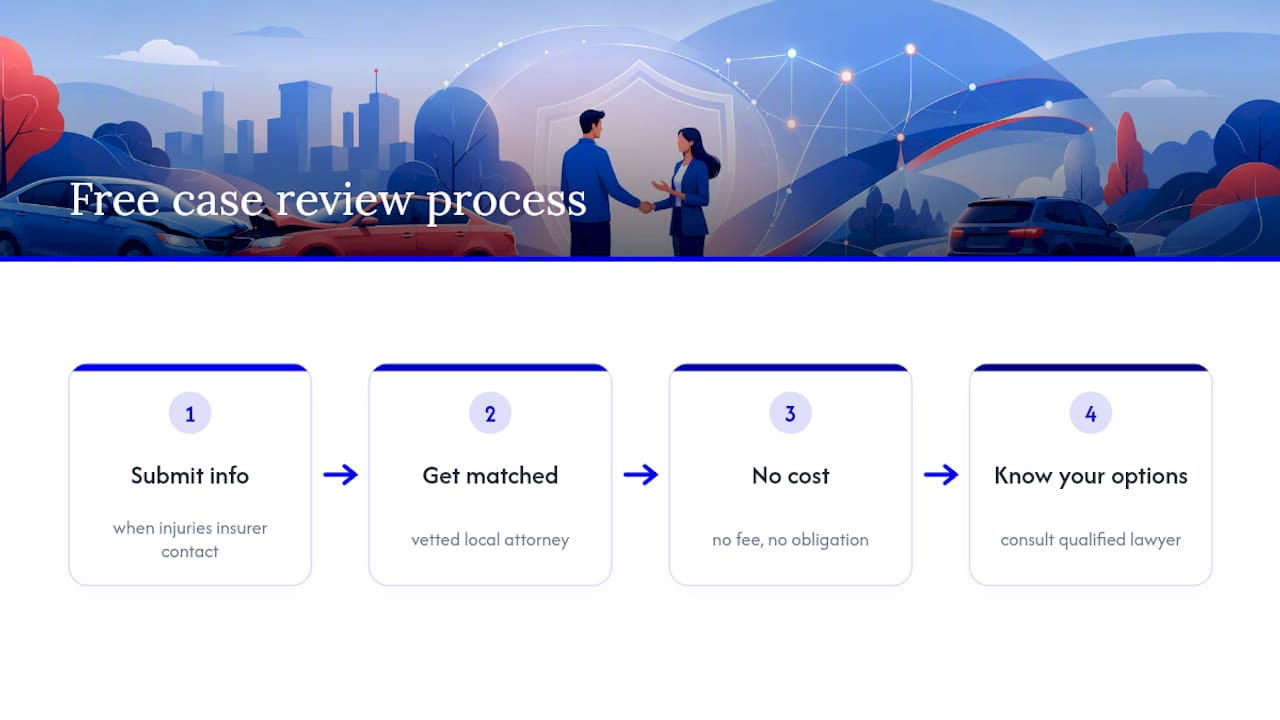
Carcollisionlawyer connects you with vetted local attorneys who handle uninsured and underinsured motorist claims specifically, at no upfront cost to you.
The evaluation asks a few straightforward questions about your accident: when it happened, whether the at-fault driver had insurance, what injuries you sustained, and whether you've already been in contact with either insurer. Based on your answers, Carcollisionlawyer matches you with an attorney in your area who has handled similar UM/UIM disputes, rather than a general practice firm learning the nuances as they go. That matters because consent-to-settle violations, subrogation disputes, and arbitration clauses trip up people every day who didn't know the rules existed until it was too late. For more on what a fair settlement should look like once your claim moves forward, our guide on car accident settlement factors is worth reading before you accept any offer.
There's no fee to submit your information, and no obligation once you're matched. Start your free case evaluation now and find out where your claim actually stands.
This article is general information, not a substitute for advice from a qualified lawyer. Consult a qualified legal professional about your own circumstances before acting on anything here.
Sources
- Insurance Information Institute — Facts and Statistics: Uninsured Motorists
- UM/UIM: What Is Uninsured Motorist Coverage? | Progressive
- What to do if you’re hit by an uninsured or underinsured driver | Washington Office of the Insurance Commissioner
- Filing an Uninsured/Underinsured Motorist Claim | NJ Government
- Underinsured motorist insurance: what it is and how it works | LegalClarity