
Rear-end accident claims are defined by a deceptive gap between public perception and legal reality. Most people assume the driver who hits from behind is automatically at fault and that the claim process is straightforward. That assumption is wrong. Why rear-end accidents complicate claims comes down to three converging forces: disputed liability under state fault rules, the difficulty of proving soft-tissue injuries, and insurance company tactics designed to minimize payouts. Understanding each force gives you a real advantage when navigating your claim.
Why rear-end accidents complicate claims more than you expect
The presumption of rear-driver fault exists in most states, but it is not absolute. Liability disputes arise frequently because state fault rules create very different outcomes depending on where the crash happened. In contributory negligence states, even 1% of fault assigned to you can bar any compensation entirely. In modified comparative negligence states, your payout is reduced by your percentage of fault. That legal distinction alone can mean the difference between a full settlement and nothing.
Insurance adjusters know these rules and use them aggressively. They investigate lead driver behavior, including sudden stops, brake light failures, and last-second lane changes, to chip away at the rear driver's presumed liability. Investigations can extend from days to months when police reports, witness accounts, and vehicle damage patterns conflict with each other. The longer the investigation runs, the more pressure you feel to accept a lower offer.

Despite public perception, rear-end claims are often intensely litigated with the focus shifting from fault to injury value. That shift catches many claimants off guard. They expect a quick payout and instead find themselves in a drawn-out dispute over how badly they were hurt.
How soft-tissue injuries create evidentiary problems
Whiplash is the most common injury in rear-end collisions, and it is also the hardest to prove. Soft-tissue injuries do not show up on X-rays. Insurers exploit that gap by arguing the injury is pre-existing, exaggerated, or inconsistent with the physics of the impact. Insurers scrutinize prior medical records and challenge injury causation at every stage of the claim process.
The concept of Maximum Medical Improvement, or MMI, adds another layer of complexity. MMI is the point at which your doctor determines your condition has stabilized and further treatment will not produce significant improvement. Settling before you reach MMI is a serious mistake. Premature settlement bars future compensation for injuries that worsen or newly emerge after you sign the agreement.
Consistent, early medical documentation is your strongest defense against insurer skepticism. Here is what that looks like in practice:
- Seek medical evaluation within 24–48 hours of the crash, even if symptoms feel minor.
- Attend every scheduled appointment and follow your treatment plan without gaps.
- Request written records of each diagnosis, treatment note, and imaging result.
- Ask your doctor to document the connection between the crash and your injuries explicitly.
- Keep a personal pain journal noting daily symptoms, limitations, and how the injury affects your work and daily life.
Pro Tip: Starting treatment within 48 hours strongly supports injury causation claims. Gaps in treatment give insurers grounds to argue you were not seriously hurt or that a separate event caused your condition.
What insurance company tactics do to your claim
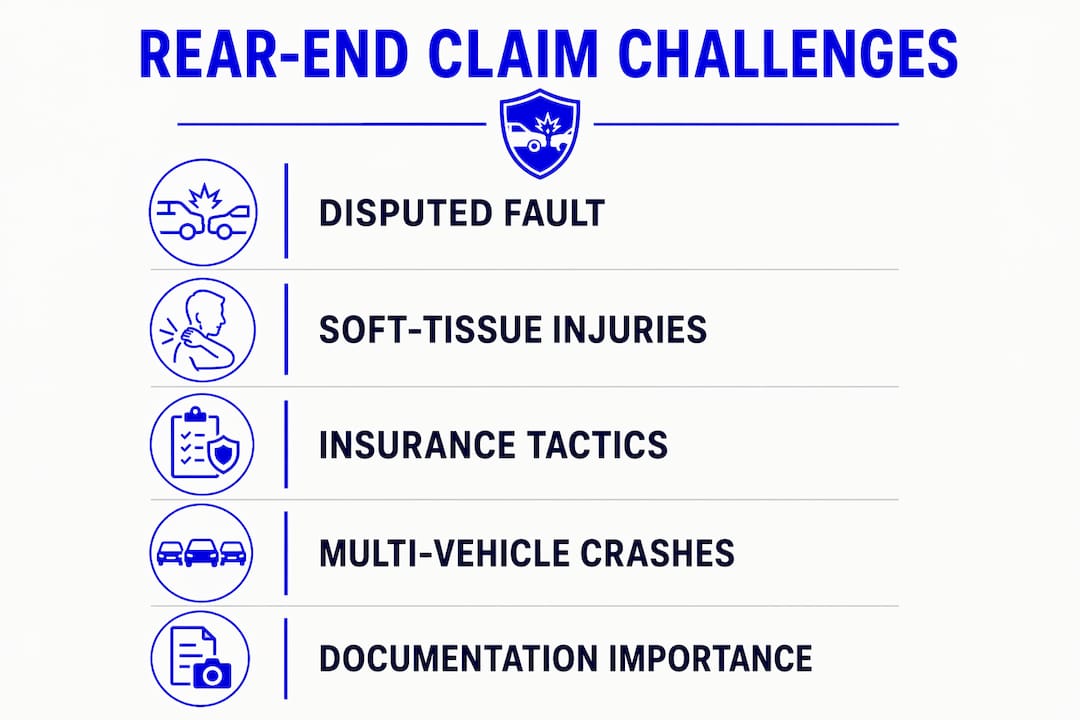
Insurance companies use delay and pressure as deliberate tools. Fast settlement offers nearly always favor insurers over claimants who do not yet know the full cost of their injuries. Accepting an early offer feels like relief, but it closes the door on any future compensation.
The most common tactics you will face include:
- Excessive documentation requests: Adjusters ask for records, statements, and authorizations repeatedly to slow the process and wear you down.
- Lowball initial offers: The first offer is almost never the fair one. It tests whether you know what your claim is worth.
- Injury causation disputes: Adjusters argue your injuries existed before the crash or were caused by something else entirely.
- Blame shifting: They introduce evidence of your own driving behavior to assign partial fault and reduce the payout.
- Recorded statement traps: Early recorded statements create inconsistencies that adjusters use against you later.
Giving a recorded statement to an insurer without legal advice is one of the most common and costly mistakes claimants make. Insurers use minor inconsistencies in early statements to dispute the entire claim or assert partial fault, reducing or eliminating compensation. Consult a legal professional before agreeing to any recorded statement.
Understanding the claim denial process helps you recognize these tactics before they derail your case. The goal is to stay informed and avoid reacting under pressure.
How multi-vehicle crashes multiply the complexity
A two-car rear-end collision is complicated. A chain-reaction crash involving three or more vehicles is a different category of problem entirely. Multi-vehicle crashes increase claim complexity exponentially because each party carries separate insurance policies, each insurer has its own interests, and liability must be apportioned across multiple drivers.
| Scenario | Key complication | Typical impact on claim |
|---|---|---|
| Two-vehicle rear-end | Disputed fault, soft-tissue injury | Moderate delay, contested settlement |
| Three-vehicle chain reaction | Multiple liable parties, conflicting accounts | Extended investigation, layered negotiations |
| Commercial vehicle involved | Employer liability, federal regulations | Higher damages potential, longer litigation |
| Rideshare vehicle involved | Personal vs. commercial policy gap | Coverage disputes, additional legal complexity |
Conflicting witness accounts and technical evidence like dashcam footage, event data recorders, and accident reconstruction reports become central to these cases. Complex accidents involving commercial or rideshare vehicles require specialized legal attention because the liability structure is fundamentally different from a standard two-car crash. The injury claim timeline in these cases often stretches well beyond what claimants initially expect.
Practical steps to protect your rear-end collision claim
Protecting your claim starts at the scene and continues through every interaction with insurers and medical providers. These steps apply regardless of how straightforward your accident initially appears.
- Document the scene immediately. Photograph vehicle positions, damage, road conditions, and any visible injuries before vehicles are moved.
- Get the police report. A formal report establishes the facts of the crash and is harder for insurers to contradict than your word alone.
- Know your state's fault rules. Understanding whether your state uses contributory or modified comparative negligence tells you how much your own behavior matters to your payout. Review liability concepts and shared fault before speaking with any adjuster.
- Do not give recorded statements without legal advice. Consulting a professional before giving statements is almost always the right call.
- Wait for MMI before settling. Settling before your condition stabilizes cuts off your ability to claim compensation for future medical costs or lost wages.
- Hire specialized legal help for complex cases. Multi-vehicle crashes, commercial vehicle involvement, and disputed liability cases require an attorney who understands the specific legal and insurance frameworks at play.
Pro Tip: The factors that determine your settlement value go well beyond medical bills. Lost income, pain and suffering, and future care costs all factor in. Know what you are entitled to before you negotiate.
Key Takeaways
Rear-end accident claims are complicated by disputed liability, hard-to-prove injuries, insurer pressure tactics, and multi-vehicle scenarios that require careful legal strategy to navigate successfully.
| Point | Details |
|---|---|
| Fault is not automatic | Contributory and comparative negligence rules can reduce or eliminate your compensation. |
| Document injuries immediately | Seek medical care within 48 hours to build a strong causation record. |
| Avoid early settlements | Settling before MMI bars future compensation for worsening injuries. |
| Insurer tactics are deliberate | Delay, lowball offers, and recorded statements are tools designed to reduce your payout. |
| Complex crashes need legal help | Multi-vehicle and commercial vehicle claims require specialized legal attention. |
What 15 years of watching these claims taught me
The most damaging mistake I see claimants make is treating a rear-end accident like a routine transaction. They assume fault is obvious, call the insurer, and wait for a check. What actually happens is that the insurer opens an investigation, requests records, and starts building a file aimed at minimizing what they pay out.
The second mistake is settling too fast. I have watched people accept offers within two weeks of a crash, only to discover months later that their whiplash had progressed into a cervical disc injury requiring surgery. That settlement check is gone. The legal right to pursue further compensation is gone with it.
Patience is not passive. Waiting for MMI, maintaining consistent treatment, and keeping meticulous records are active decisions that protect your financial recovery. The claimants who do best are the ones who treat their claim like a job, not an inconvenience.
The insurer's goal and your goal are not aligned. Knowing that from day one changes how you respond to every phone call, every document request, and every offer. Get legal advice early. The cost of not doing so is almost always higher than the cost of a consultation.
— Gerard
When your rear-end claim needs professional support
Rear-end accident claims involve more moving parts than most people realize. Medical documentation, fault disputes, insurer negotiations, and settlement timing all affect what you ultimately recover.
Carcollisionlawyer connects accident victims with trusted attorneys who specialize in exactly these situations. The process starts with a free evaluation so you understand what your claim may be worth before committing to anything. Whether your case involves a straightforward two-car collision or a complex multi-vehicle crash, get your free case evaluation and find out what compensation you may be entitled to. Specialized legal support matched to your specific injury and circumstances is available now.
FAQ
Why is fault disputed in rear-end accidents?
Fault is disputed because state negligence rules allow insurers to argue the lead driver contributed to the crash through sudden stops, brake light failures, or unsafe lane changes. In contributory negligence states, any shared fault can eliminate your compensation entirely.
What is Maximum Medical Improvement and why does it matter?
Maximum Medical Improvement, or MMI, is the point at which your doctor determines your condition has stabilized. Settling before MMI means you cannot claim compensation for injuries that worsen or emerge after the agreement is signed.
Should I give a recorded statement to the insurance company?
No. Giving a recorded statement without legal advice creates inconsistencies that insurers use to dispute your claim or assign partial fault. Consult an attorney first.
How do soft-tissue injuries complicate a rear-end claim?
Soft-tissue injuries like whiplash do not appear on X-rays, making them easy for insurers to challenge. Insurers argue these injuries are pre-existing or inconsistent with the impact, which is why early and consistent medical documentation is critical.
What makes multi-vehicle rear-end crashes harder to resolve?
Multi-vehicle crashes involve multiple insurance policies, conflicting witness accounts, and proportionate liability across several parties. That combination extends investigation timelines and requires more complex legal negotiation to reach a fair outcome.