
A car accident injury claim timeline is defined as the sequence of legal and medical steps that determine how long it takes to receive compensation after a collision, from the date of the crash through final settlement or trial verdict. Most claims resolve between 6 and 24 months, though simple cases can close in 30 to 90 days and complex ones stretch beyond three years. The central milestone in any claim is Maximum Medical Improvement (MMI), the point at which your doctor confirms your condition has stabilized. Until you reach MMI, neither you nor your attorney can accurately calculate the full value of your injuries, future medical costs, or lost earning capacity.
What are the main phases of a car accident injury claim?
The car accident injury claim timeline follows a predictable sequence, even when individual cases vary widely in duration. Understanding each phase helps you set realistic expectations and avoid costly mistakes.
| Phase | Typical Duration |
|---|---|
| Medical treatment and reaching MMI | 4 weeks to 2+ years |
| Demand letter preparation | 2 to 6 weeks after MMI |
| Insurance investigation and negotiation | 1 to 6 months |
| Lawsuit filing and discovery | 6 to 18 months |
| Mediation | 1 to 3 months |
| Trial (if reached) | 3 to 7 days in court |

The process begins the moment you seek medical care. Your attorney cannot send a demand letter until your treatment is complete or you have reached MMI, because the demand must reflect your total damages. Once the demand letter goes out, the insurer typically has 30 to 45 days to respond, though this varies by state.
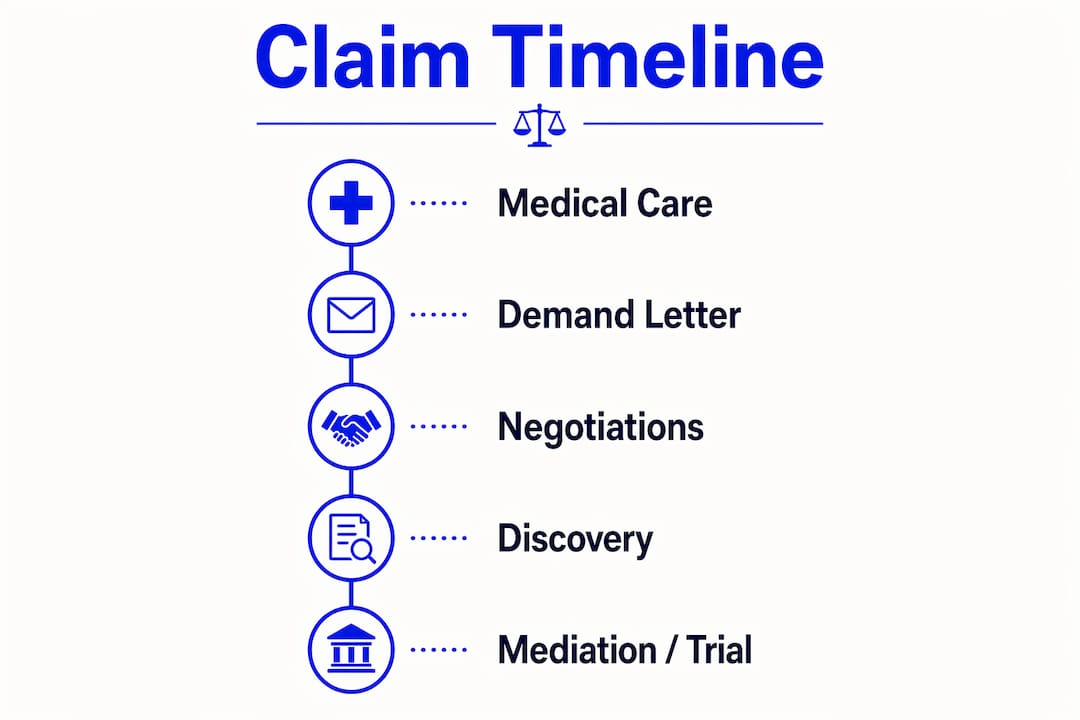
Negotiation rounds follow, and most cases settle here. Most personal injury cases start with insurance claims and move to lawsuits only when negotiations fail. This distinction matters because pre-suit resolution is significantly faster than court litigation. If negotiations stall, your attorney files a lawsuit, which triggers the discovery phase. Discovery can extend 6 to 18 months depending on case complexity, the number of parties involved, and how aggressively the insurer contests liability.
Mediation often follows discovery, giving both sides a structured opportunity to settle before trial. Approximately 95% of car accident lawsuits settle before reaching trial, which typically lasts 3 to 7 days if it does occur. That statistic means trial is the exception, not the rule, but preparing as if you will go to trial consistently produces better settlement outcomes.
Pro Tip: Keep a running log of every medical appointment, missed workday, and out-of-pocket expense from day one. This record becomes the backbone of your demand letter and shortens the documentation phase considerably.
How does injury severity affect how long your claim takes?
Injury severity is the single biggest variable in the car accident settlement timeline. Soft tissue injuries such as whiplash or muscle strains typically settle in 4 to 8 months, while cases involving surgery can take 9 to 18 months just to reach MMI. Catastrophic injuries including spinal cord damage or traumatic brain injury can push the full timeline past three years.
MMI is the turning point that legal teams look for before pushing claims aggressively. Your attorney will not submit a demand letter before this milestone because doing so locks in a settlement figure before the full scope of your injuries is known. Settling before reaching MMI risks undervaluing future medical costs and permanently forfeiting your right to additional compensation for ongoing or worsening conditions.
Consider the practical difference between two injury types:
- Soft tissue injuries: Treatment concludes in weeks to a few months. MMI is reached relatively quickly, the demand letter goes out promptly, and settlement often follows within the same year as the accident.
- Surgical or catastrophic injuries: Rehabilitation can span years. MMI may not be declared until well into the second or third year post-accident. The claim value is substantially higher, which also motivates insurers to contest more aggressively.
"Reaching MMI provides the baseline to project future medical care costs, preventing undervalue settlements that leave injured parties without resources for ongoing treatment."
Documenting your medical progress exhaustively throughout treatment is not optional. Every imaging result, specialist referral, physical therapy session, and prescription record strengthens your claim and reduces the insurer's ability to dispute the severity of your injuries.
What legal steps affect the timeline and what delays are common?
The legal side of the car accident claim process introduces its own set of time variables, many of which are outside your direct control. Here is the sequence most claims follow once pre-suit negotiations fail:
- Statute of limitations check. Many states enforce strict deadlines: Texas allows 2 years, New York and Massachusetts allow 3 years. Missing the deadline permanently eliminates your right to sue, regardless of how strong your case is.
- Lawsuit filing. Your attorney files a complaint in the appropriate court. The defendant (typically the at-fault driver and their insurer) has 20 to 30 days to respond.
- Discovery phase. Both sides exchange evidence, take depositions, and retain expert witnesses. Insurers use this phase to probe for inconsistencies in your medical records or accident account. Structured deposition preparation is critical here.
- Mediation. A neutral mediator facilitates settlement discussions. Many courts require mediation before scheduling a trial date.
- Trial. If mediation fails, the case proceeds to trial. Most trials conclude within a week, but pre-trial preparation adds months to the timeline.
Common delay factors include disputed liability (where both parties claim the other was at fault), multi-party cases involving multiple vehicles or defendants, and appeals filed after a verdict. Insurance companies also use delay as a negotiating tactic, banking on financial pressure forcing claimants to accept lower offers.
Pro Tip: Ask your attorney to set calendar reminders for every response deadline during discovery. Missed deadlines on your side can result in sanctions or weakened evidence, while tracking insurer deadlines gives you leverage to push the process forward.
| Delay factor | Typical time added |
|---|---|
| Disputed liability | 3 to 12 months |
| Multi-party cases | 6 to 18 months |
| Complex medical evidence | 3 to 9 months |
| Insurer appeals post-verdict | 6 to 24 months |
How do insurance company practices influence the settlement timeline?
Insurance adjusters operate on a clear objective: close claims for as little as possible, as quickly as possible when it benefits them, or as slowly as possible when delay pressures claimants. Understanding their playbook helps you counter it.
A standard adjuster investigation includes reviewing the police report, requesting your medical records, inspecting vehicle damage, and sometimes conducting recorded statements. This process typically takes 30 to 60 days. The adjuster then issues an initial offer, which is almost always lower than the actual claim value.
Negotiation rounds follow. Each exchange adds 2 to 6 weeks to the timeline, and insurers routinely make three to five offers before reaching a number that reflects fair compensation. Attorney involvement changes this dynamic significantly. Represented claimants receive higher offers earlier in the process because insurers know an experienced attorney will identify undervalued damages and file suit if necessary.
Key facts about the settlement payment and release process:
- Once both parties agree on a figure, you sign a release of liability.
- Settlement payments are issued within weeks of signing the release in most cases.
- Signing a release is permanent and closes the case entirely. You cannot reopen it to pursue additional compensation, even if your condition worsens.
This is why the sequence matters so much. Signing a release before reaching MMI, before completing discovery, or before understanding the full scope of your damages is one of the most expensive mistakes an injured person can make.
How can you track your claim and avoid costly mistakes?
Managing your own claim timeline proactively reduces delays and protects your compensation. The steps below apply whether you are in the pre-suit phase or active litigation.
- Seek medical care immediately after the accident, even if injuries feel minor. Gaps in treatment are the first thing insurers use to argue your injuries were not serious.
- Record every key date: the accident date, each medical appointment, the date your attorney sends the demand letter, and every insurer response.
- Do not sign any document from the insurer without attorney review. Early release offers are designed to close claims before the full injury picture is clear.
- Consult a car accident attorney as early as possible. Attorneys who handle injury claim duration cases know which evidence to preserve, which deadlines to track, and how to counter insurer delay tactics.
- Use a simple spreadsheet or a dedicated folder to store all correspondence, medical bills, and legal documents in one place.
Pro Tip: Request copies of all medical records directly from providers rather than waiting for your attorney to gather them. This speeds up the demand letter preparation phase by weeks.
The claimants who move through the process most efficiently are those who treat their claim like a project with milestones, deadlines, and documentation requirements. Passive participation almost always extends the timeline and reduces the final payout.
Key takeaways
The car accident injury claim timeline is controlled primarily by medical recovery milestones and the legal steps that follow, with MMI serving as the non-negotiable starting point for accurate claim valuation.
| Point | Details |
|---|---|
| MMI drives the timeline | Never settle before reaching Maximum Medical Improvement or you risk undervaluing future medical costs. |
| Most claims avoid trial | Approximately 95% of car accident lawsuits settle before trial, making negotiation preparation the priority. |
| Statutes of limitations are firm | Texas allows 2 years and New York allows 3 years; missing the deadline ends your right to sue permanently. |
| Discovery adds significant time | The discovery phase alone can extend 6 to 18 months in complex cases, requiring thorough documentation. |
| Release signing is irreversible | Once you sign a release, the case closes permanently with no option to pursue additional compensation. |
What I've learned watching claimants navigate this process
After years of working with accident victims and the attorneys who represent them, the pattern I see most often is this: people underestimate how much their own behavior in the first 90 days shapes the entire timeline. The claimants who document everything, follow their treatment plans without gaps, and consult an attorney before speaking to the insurer consistently reach better outcomes faster than those who try to manage it alone.
The second most common mistake is confusing the claim process with a lawsuit. Most cases settle before filing, and many people who think they are headed to court never get there. That misunderstanding creates unnecessary anxiety and sometimes pushes people to accept low settlements just to avoid a trial that was never likely to happen.
Patience until MMI is not passive waiting. It is strategic positioning. The moment you accept a settlement before your injuries have stabilized, you hand the insurer a permanent advantage. I have seen claimants settle for five-figure amounts only to face six-figure medical bills six months later, with no legal recourse available.
The clients who fare best are those who treat the process with the same seriousness they would give a major financial decision, because that is exactly what it is.
— Gerard
Get the legal support your claim deserves
Navigating the car accident claim process alone puts you at a structural disadvantage against insurance companies that handle thousands of claims every year. Carcollisionlawyer connects injured accident victims with experienced attorneys who know how to document injuries properly, counter insurer delay tactics, and push claims toward maximum compensation.
Whether your case involves a soft tissue injury that may resolve in months or a catastrophic injury requiring years of treatment, the right attorney changes the outcome. Carcollisionlawyer offers a free evaluation so you can understand your compensation options without any upfront commitment. The earlier you get legal guidance, the stronger your position at every stage of the timeline. Start your free claim evaluation at Carcollisionlawyer today.
FAQ
How long does a car accident injury claim typically take?
Most car accident injury claims resolve between 6 and 24 months, with straightforward soft tissue cases settling in as few as 30 to 90 days and complex surgical or multi-party cases extending beyond three years.
What is MMI and why does it matter for my claim?
Maximum Medical Improvement (MMI) is the point at which your doctor determines your condition has stabilized. Settling before MMI risks locking in a figure that does not account for future medical costs or long-term disability.
Do most car accident claims go to trial?
No. Approximately 95% of car accident lawsuits settle before trial. Most cases resolve during pre-suit negotiations or after the discovery phase, making thorough documentation more important than courtroom preparation for the majority of claimants.
What happens after I sign a settlement release?
Payment is typically issued within weeks of signing. The release permanently closes your case, meaning you cannot pursue additional compensation for that accident even if your injuries worsen or new medical costs arise.
What is the statute of limitations for filing a car accident lawsuit?
Deadlines vary by state. Texas sets a 2-year limit, while New York and Massachusetts allow 3 years. Missing the deadline eliminates your right to sue entirely, regardless of how strong your evidence is.