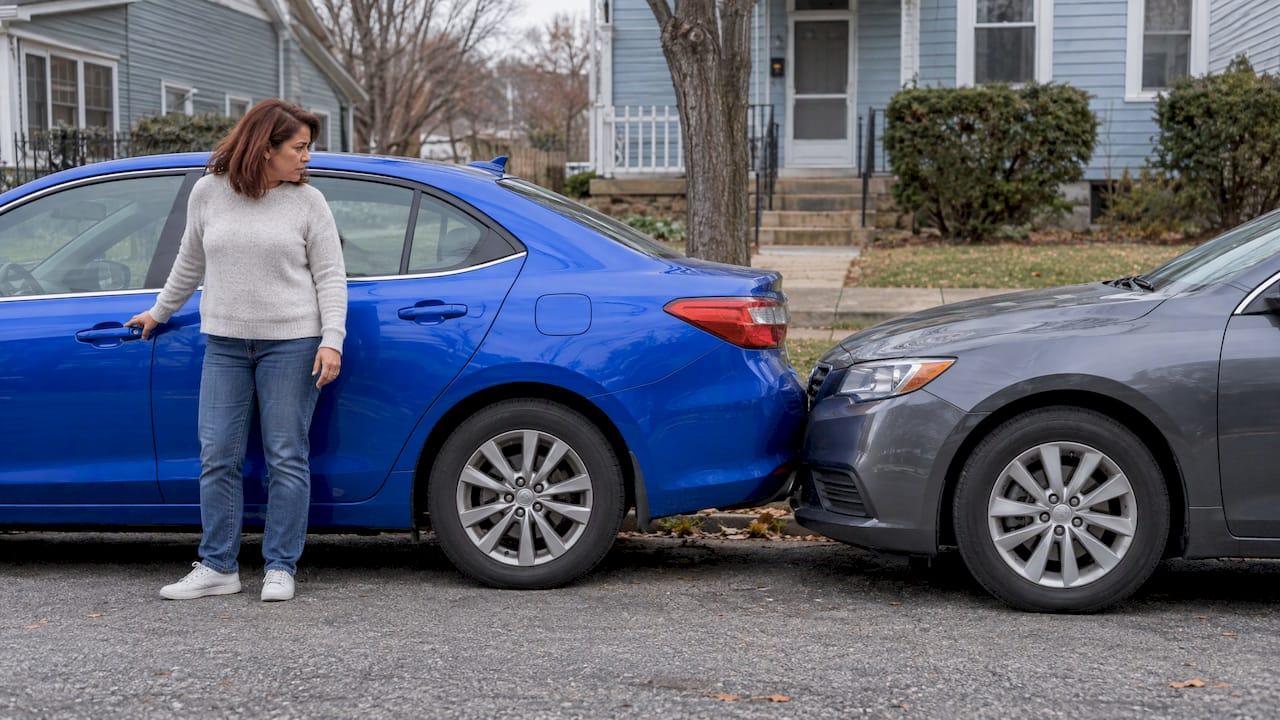
Yes, you can make an injury claim after a crash that left little or no visible damage. A claim rests on your injury, the other party's fault and the medical proof that connects the two, not on how a bumper looks. If you were hurt in a car, truck, motorcycle or bicycle crash, our free evaluation lets you describe your injury and circumstances and see whether a vetted local attorney can take a look.
TL;DR
- Injury claims depend on fault, injury and proof of the link between them. A clean-looking bumper does not end a claim.
- Get medical care quickly and keep every record. Whiplash, concussion and soft-tissue injuries can show up days after the crash.
- Insurers question injuries when property damage is minimal, so photos, witness details and a consistent treatment timeline matter.
- Deadlines differ by state, and some no-fault benefits have short windows. Do not wait to find out which applies to you.
- Our free evaluation matches your injury type and situation to an attorney, with no commitment.
Table of Contents
- Why "no damage" does not mean "no claim"
- What you can and cannot claim
- Evidence that carries a claim when the car looks fine
- How insurers look at low-damage injury claims
- Fault, insurance and state rules change the path
- What losses a claim can include
- How long a low-damage claim takes
- Where our free evaluation fits
- Our perspective
- FAQ
- Sources
Why "no damage" does not mean "no claim"
People assume that a car without dents means a person without injuries. That is not how the law works. A bodily injury claim asks three questions: who was at fault, were you hurt, and did the crash cause the harm. Vehicle damage is one piece of evidence on the third question. It is not a requirement.
This matters most for the injuries that do not show up in a photograph. Whiplash is a neck strain caused by rapid movement of the head. A concussion is a brain injury that can happen without any blow to the head. Soft-tissue injuries are damage to muscles, ligaments and tendons. All of these can follow a low-speed collision, a rear-end bump in traffic, a car door opening into a cyclist or a motorcycle going down after a light touch. Our guide to types of car accident injuries explains how these injuries tend to present.
The same logic applies when there is no police report. A report is useful evidence, but it is not the claim itself. You can build the same picture from other records, which we cover below.
What you can and cannot claim
Three situations get confused under this keyword, so it helps to separate them.
- You were hurt, and the vehicles show little damage. This is the claim this article is about. You pursue compensation for your injury, and the question is how well you can prove it.
- You were not hurt at all. Then there is usually nothing to claim for injury. Any recovery would relate to property, such as repairs or a rental, and that runs through insurance rather than an injury claim.
- You have no insurance yourself and were hurt. Your own coverage affects which benefits you can access, but it does not automatically remove your right to pursue the at-fault party. State rules vary, and an attorney in your state can tell you how yours treats this.
Families who lost someone in a crash have a separate wrongful death claim with its own rules and deadlines. If that is you, start with the free evaluation and say so, so the intake can route you to an attorney who handles those cases.
Evidence that carries a claim when the car looks fine
With little property damage, the insurer has less to work with and you have more to prove. Build the file in this order.
1. Medical care first
See a doctor or go to urgent care or the emergency room as soon as you notice any symptom, and describe the crash and every symptom, even ones that seem minor. Gaps between the crash and your first visit are the first thing an insurer points to. If you are unsure whether something is serious, a medical professional is the right person to decide, not a claims adjuster and not a search engine.
Keep going to follow-up appointments and physical therapy. Records that show a steady line from crash to diagnosis to treatment are the backbone of a claim without visible damage.
2. Photos of everything, including "nothing"
Photograph both vehicles from several angles even if there is no visible damage, along with the road, the lighting, traffic signals and any skid marks. Photos of an undamaged bumper still show the point of contact. Photograph visible injuries such as bruising and swelling on the day and over the following days.
3. Names and statements
Collect the other driver's name, insurance details and plate number. Get contact details from witnesses. If no police report was made, a short written note of what happened, written the same day, helps your memory later. Our car accident evidence checklist walks through ten steps in more detail.
4. Records of daily impact
A simple log of pain levels, missed work, sleep problems and activities you could not do is evidence of how the injury affected your life. Keep pay stubs, appointment slips and receipts together in one folder.
5. A police or incident report, if you can still get one
If you did not call the police at the scene, ask whether your local department or state takes a late report. Even a delayed report puts your account on the record. If the crash involved a business vehicle, a rideshare or a bus, report it to the operator as well.
The hardest version of this case is the one in which there is no damage, no report and a gap of days before treatment. It is not hopeless, but the medical record then has to carry more weight, which is why early care matters.
How insurers look at low-damage injury claims
An insurer's adjuster is trained to ask whether the force of the crash could plausibly have caused the injury you describe. When photos show a scuffed bumper, the adjuster may argue that the injury must be minor or must pre-date the crash. Expect questions about:
- Timing. How soon after the crash did you first seek care?
- Consistency. Do your symptoms match what you told the first provider?
- Prior conditions. Did you have neck, back or head complaints before? Being open about them is better than having the insurer find them later. A crash that aggravates an earlier condition can still be part of a claim.
- Treatment gaps. Did you stop going to appointments?
- Statements. What did you say on the recorded call?
Keep early conversations with the other side's insurer short and factual. Give basic details, do not guess about your injuries and do not agree to a quick payout before you know the full extent of your treatment. Our settlement factors list shows what typically moves the value of a claim, and how bodily injury and PIP pay explains the two coverages you may meet first.
Fault, insurance and state rules change the path
Where you live decides how your claim starts. In an at-fault state, you generally pursue the driver who caused the crash or that driver's insurer. In a no-fault state, your own personal injury protection (PIP) coverage pays certain medical costs and lost income first, and the right to sue the other driver may be limited until your injuries meet that state's threshold. Our guides to no-fault versus at-fault states and the list of no-fault states show how the systems differ.
The following official examples show how much the details vary. They are illustrations, not a summary of every state.

Massachusetts: PIP claims have a written-notice step
Under Massachusetts General Laws c.90, § 34M, as amended effective February 24, 2026, PIP benefit claims must be presented to the insurer as soon as practicable and in every case within at least two years of the accident. The claim includes a written description of your injuries and treatment received and contemplated, and you must submit to physical examinations by physicians the insurer selects. A low-damage crash does not change these steps.
Michigan: the one-year-back rule
Michigan's no-fault law limits how far back PIP losses can be recovered. In a Court of Appeals opinion, Kennedy v. State Farm (February 20, 2007), the court applied MCL 500.3145(1) to bar recovery of PIP benefits for any loss that occurred more than one year before the lawsuit was filed. Waiting because the injury "seemed minor" can therefore cost money in some states.
New Jersey: insurer response times
New Jersey regulations at N.J. Admin. Code § 11:2-17.7 require insurers to begin investigating claims other than auto physical damage within 10 working days of notification. They set a maximum payment period of 60 calendar days for PIP claims after written notice of the loss and amount, with a possible 45-day extension, and 90 calendar days for third-party bodily injury claims. If more time is needed, the insurer must explain in writing and update you every 45 days.
South Carolina: pending demand rules
South Carolina's H 4670 passed the House 114 to 0 on March 25, 2026 and went to the Senate. It would add S.C. Code § 15-1-350, setting time-limited requirements for demands in personal injury, bodily injury, property damage and wrongful death matters. Check its status on the legislature's page, since bills move.
The filing deadline
Every state sets a statute of limitations, the final date to file a lawsuit, and the length depends on the state and the type of claim. Some notice requirements, such as claims against a government vehicle, can be far shorter than the lawsuit deadline. Our state-by-state deadline guide lays out the differences. The safe habit is simple: treat the clock as running from the day of the crash.
What losses a claim can include
Injury claims generally separate losses into two groups. Economic damages are the ones with a receipt: medical bills, therapy, prescriptions, lost wages and out-of-pocket costs. Non-economic damages cover things like pain, suffering and the loss of enjoyment of daily life. Special damages is the term many people see for the first group, the specific, documentable costs.
Rules on non-economic damages differ by state. In Maryland, for instance, Senate Bill 538, effective October 1, 2024, changed limits on noneconomic damages in personal injury and wrongful death civil actions. That kind of change is why a general number you read online may not fit your state.
Emotional trauma after a crash, such as anxiety, nightmares or fear of driving, is a real part of many people's recovery. If you are experiencing it, tell your doctor, because a documented diagnosis and treatment record is what lets it be considered. See real recovery examples for how different losses have been counted.
A small note on the "is $50,000 a good settlement" question that people search: no figure is good or bad in isolation. Value depends on your medical costs, how long you recover, whether you lose income, fault and the available coverage. Treat any number you read as a data point and not a promise.

How long a low-damage claim takes
There is no standard length. A claim with a short, fully documented recovery can resolve in a matter of months. A claim in which treatment continues, fault is disputed or the insurer questions causation usually takes longer. Several things set the pace:
- How long you treat. Settling before you know your medical outlook can leave you paying future costs yourself.
- Who is liable and how many insurers are involved. A third-party claim means you deal with the other driver's insurer instead of your own.
- State response rules. As the New Jersey regulation above shows, some states set maximum periods for insurers to respond, while others set none you can count on.
- Disputes over causation. Low property damage tends to invite them.
Where our free evaluation fits
If you were hurt and the evidence looks thin, you do not have to sort it out alone. Our free evaluation asks about your injury and what happened, whether it was a car, truck, motorcycle or bicycle crash, and whether you are dealing with physical injuries, emotional trauma or the loss of a family member. It then connects you with a vetted local attorney. There is no obligation to continue.
Start with the free evaluation and tell us what happened in your own words. You can also keep reading on our blog while you wait for medical results.
Our perspective
The most common mistake we see in these situations is the quiet one: someone walks away from a minor crash, feels sore the next morning and decides it is not worth making a fuss about. By the time the pain does not go away, weeks have passed and the record is thin.
We built our evaluation for exactly that moment. Injuries differ, and a person with a concussion after a bicycle crash has different questions from a family dealing with a wrongful death. That is why our intake is tailored to the injury and the circumstances, so the attorney you are matched with starts from your situation and not from a generic form.
Our advice is to get checked, write things down and ask a question early. A free evaluation costs you a few minutes and no commitment, and it tells you where you stand while the deadlines are still far away.
Gerard
FAQ
Can I file an injury claim if there is no police report?
Yes. A police report is helpful but it is not required to make a claim. Medical records, photos, witness details and your own notes can establish what happened. If you can still file a late report, doing so adds another record of your account.
What if my injuries only appeared a few days after the crash?
That is common with whiplash, concussion and soft-tissue injuries. See a doctor as soon as symptoms appear and tell them about the crash so it is written in the record. The shorter the gap, the easier the connection is to show.
Can I claim if I have no auto insurance?
In many cases you can still pursue the at-fault driver, though your own lack of coverage may limit which benefits are available, and some states restrict uninsured drivers' recovery. The rules vary by state, so describe your situation in the free evaluation and ask about your state.
How long do I have to file?
The deadline depends on your state and the type of claim, and some benefits and notices have shorter windows than the lawsuit deadline, as the Michigan and Massachusetts examples above show. Treat the crash date as the start of the clock and act early.
Is a claim worth pursuing if the damage was minor?
The value of an injury claim comes from your medical treatment, lost income and the effect on your life, not from the repair bill. If you were hurt, it is worth finding out where you stand, and our evaluation is free.
Sources
- Massachusetts General Laws c.90, § 34M
- Kennedy v. State Farm, Michigan Court of Appeals opinion
- N.J. Admin. Code § 11:2-17.7
- South Carolina H 4670
- Maryland Senate Bill 538, 2024 Regular Session