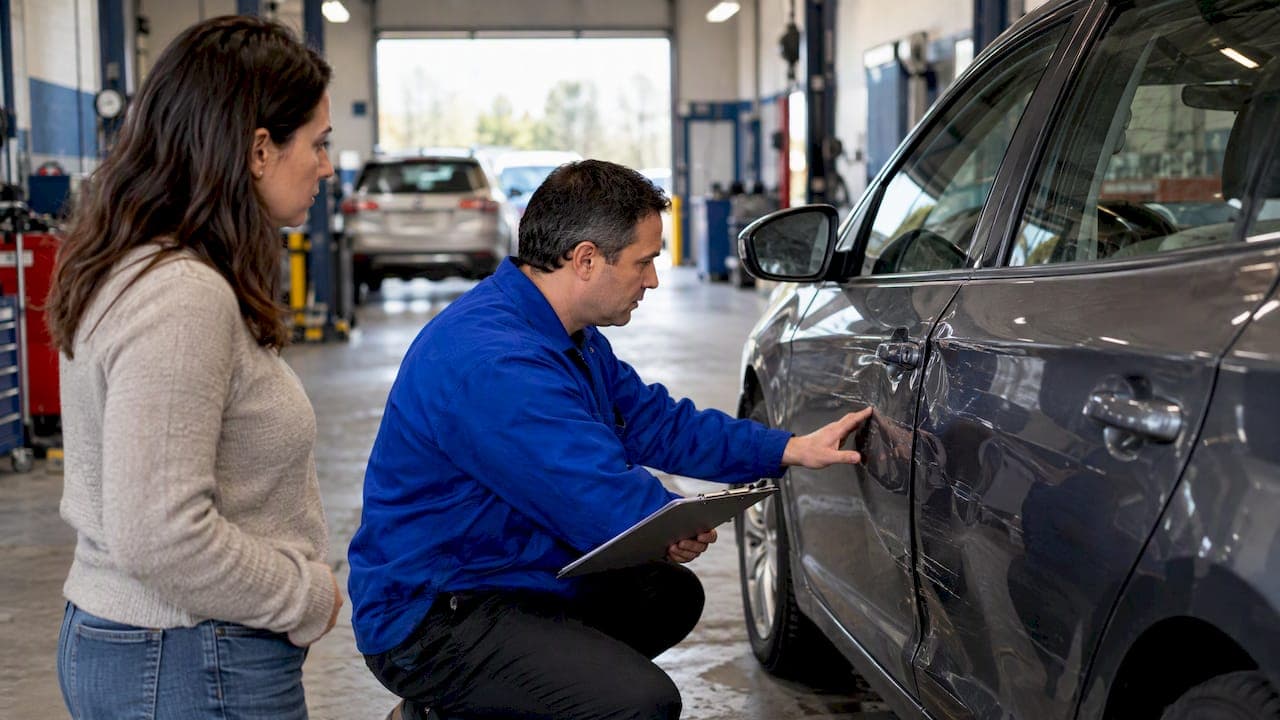
Yes, if another driver caused the crash, you can usually file a third-party claim with their liability insurer to recover vehicle and injury losses. Your ability to collect depends on state rules, the at-fault driver's policy limits, and whether they carried insurance at all. Reporting quickly and documenting everything from the start protects your right to compensation.
TL;DR:
- In no fault states, use PIP for initial medical bills and pursue the other driver for injuries only after meeting state thresholds.
- Comparative negligence can reduce compensation according to your share of fault, while contributory negligence in some states can bar recovery even if you were partly responsible.
- Prompt medical care, scene photos, witness details, and complete records support your claim; gaps in treatment can let insurers challenge injury severity.
- If policy limits cannot cover your losses, notify your insurer about uninsured or underinsured motorist coverage and ask whether stacking across vehicles is allowed.
- Initial settlement offers are often low, so document losses in a written demand; consider an attorney for serious injuries, disputed fault, or claims near policy limits.
Table of Contents
- What makes a claim "third party" instead of "first party"
- How do you actually file a third-party claim with the other driver's insurer?
- What happens after you file: investigation, offers, and negotiation
- How your state's fault system changes where you file
- When the other driver has no insurance or not enough
- When legal help makes sense for your claim
- A quick-priority checklist for the first 72 hours
- Starting a free case evaluation with CarCollisionLawyer
- FAQ
- Sources
What makes a claim "third party" instead of "first party"
A third-party claim is filed against the at-fault driver's liability coverage, not your own policy. A first-party claim, by contrast, uses your own coverage, such as personal injury protection (PIP), medical payments coverage, or collision, regardless of who caused the crash. The distinction matters because third-party claims typically let you pursue a broader range of losses.
Through a liability claim against the other driver's insurer, you can generally seek:
- Vehicle repair or replacement costs beyond what your own collision coverage pays.
- Medical bills tied to injuries from the crash.
- Lost wages from missed work during recovery.
- Pain and suffering and other non-economic losses.
How much you actually recover depends on the at-fault driver's policy limits and the rules your state applies to liability claims. A driver carrying only the state minimum may not have enough coverage to pay for serious injuries, which is where your own uninsured or underinsured motorist coverage can step in.
How do you actually file a third-party claim with the other driver's insurer?
Filing a third-party claim is mostly about sequence: collect evidence first, open the claim promptly, then send documentation as it becomes available.
- At the scene, exchange names, contact details, insurance information, and license plate numbers with the other driver, and get the responding officer's name and report number.
- Photograph everything: vehicle damage from multiple angles, the accident scene, road conditions, skid marks, and visible injuries.
- Collect witness information, including phone numbers, since independent accounts carry weight if fault is disputed later.
- Contact the at-fault driver's insurer directly, or ask your own insurer to help open the claim on your behalf; many insurers also accept claims through online portals.
- Stick to facts when speaking with any adjuster. Describe what happened without speculating about fault or minimizing your injuries, since recorded statements can be used to challenge your claim later.
- Submit documentation as it becomes available: the police report, repair estimates, medical records and bills, pay stubs showing lost income, and receipts for related out-of-pocket costs. Our guide on evidence that wins claims walks through what adjusters weigh most heavily.
- Expect a claims adjuster to reach out within days to begin reviewing your file. Keep a simple log of every call, email, and letter, noting dates and names.
Pro Tip: See a doctor promptly after the crash and attend every follow-up appointment: gaps in treatment are one of the most common reasons insurers argue an injury wasn't serious.
What happens after you file: investigation, offers, and negotiation
Once your claim is open, the insurer assigns an adjuster who inspects the vehicle, reviews the police report, and examines medical records. For contested cases, the adjuster may interview you, the other driver, and witnesses before reaching a liability decision.
Damages get valued using repair estimates, itemized medical billing, and, for serious or long-term injuries, expert opinions on future care needs. Our breakdown of the claim process timeline covers what to expect week by week.
Initial settlement offers are frequently low, and negotiation is the norm rather than the exception. A written demand letter laying out your damages, supported by documentation, typically prompts a counteroffer, and the process can go back and forth several rounds.
- If negotiations stall, you can file a complaint with your state department of insurance.
- Many policies include an appraisal clause for disputed vehicle-damage valuations.
- Filing a lawsuit becomes an option when the insurer won't offer a fair settlement before the statute of limitations runs out.
Industry analysis has linked rising litigation activity to higher liability claim severity over the past decade, according to Insurance Information Institute research. That trend means insurers often negotiate more cautiously, so arriving prepared with complete documentation matters more than ever.
How your state's fault system changes where you file

Most states run on an at-fault (tort) system, meaning you file directly against the at-fault driver's liability insurer for both vehicle damage and injury costs. A smaller group of states use no-fault systems, where you typically turn to your own PIP coverage first for medical bills, regardless of fault.
No-fault doesn't always block a third-party injury claim. Most no-fault states set a threshold, often based on injury severity or medical cost, that lets you step outside PIP and sue the at-fault driver once you cross it.
- At-fault states: file your injury and vehicle claims with the other driver's insurer.
- No-fault states: PIP covers initial medical costs; serious injuries may clear the threshold for a third-party claim.
- Comparative negligence states reduce your recovery by your percentage of fault.
- A handful of contributory negligence states can bar recovery entirely if you're found even partly at fault.
Our explainer on liability and what you owe covers these negligence frameworks in more depth, and every state sets its own statute of limitations, so confirm your deadline early.
When the other driver has no insurance or not enough
Uninsured motorist (UM) coverage pays when the at-fault driver carries no liability insurance; underinsured motorist (UIM) coverage fills the gap when their policy limits fall short of your losses. Both are claims against your own policy, even though the other driver caused the crash.
A significant share of drivers were uninsured in recent years, according to Insurance Research Council data cited by the Insurance Information Institute, with uninsured drivers making up a notable portion of drivers on the road.
- Notify your carrier promptly to open a UM or UIM claim.
- Gather the same evidence used in a standard third-party claim: police report, photos, medical records, and wage documentation.
- Ask whether your policy allows stacking UIM coverage across multiple vehicles for a higher payout.
- Consider pursuing the at-fault driver directly through a lawsuit if insurance proceeds still fall short.
Our guide to filing an uninsured motorist claim walks through the notification and documentation steps in detail.
When legal help makes sense for your claim
Most straightforward property-damage claims don't need an attorney. Certain situations usually do:
- The injury is serious, permanent, or requires ongoing care.
- Fault is disputed, or the insurer is pushing back on liability.
- The insurer refuses to negotiate in good faith or stops responding.
- Total damages approach or exceed the at-fault driver's policy limits.
Attorneys who handle these cases typically gather additional evidence, prepare demand letters, negotiate directly with insurers, and file suit when needed. Most personal injury attorneys work on contingency, meaning they're paid a percentage of your settlement rather than an upfront fee. Our partner resource on how contingency fees work breaks down typical arrangements in plain terms.
A case evaluation can help you figure out which category your claim falls into before you commit to anything.
Pro Tip: If you're unsure whether your injuries or the dispute justify an attorney, a free evaluation costs nothing and gives you a clearer read on your options.
A quick-priority checklist for the first 72 hours
In the first three days after a crash, prioritize five things: call 911, get the police report number, photograph the scene and your injuries, notify your own insurer, and start medical treatment if you haven't already.
Three mistakes show up again and again: admitting fault at the scene, delaying medical care, and signing a settlement release before you understand the full extent of your injuries. For anything beyond a minor fender bender, a free evaluation is worth the ten minutes it takes.
— Gerard
Starting a free case evaluation with CarCollisionLawyer
We built CarCollisionLawyer around one goal: giving you a clear, no-cost read on whether your third-party claim is worth pursuing further, without pressuring you into a decision before you're ready.
Our free evaluation looks at the specifics of your crash, injuries, and the at-fault driver's coverage, then matches you with a vetted attorney in your area if your case looks worth pursuing.
- Submit your accident details through our free evaluation in a few minutes.
- Hear back with an honest assessment of your claim's strength, with no obligation to move forward.
- If you choose to proceed, most personal injury attorneys we connect you with work on contingency, so you owe nothing upfront.
If your claim involves a serious injury, a disputed fault determination, or an insurer that's stopped responding, starting with an evaluation is a reasonable next step. Visit our accident injury compensation page to see what information you'll need.
This article is general information, not a substitute for advice from a qualified lawyer. Consult a qualified legal professional about your own circumstances before acting on anything here.
FAQ
What is the maximum coverage amount for a third-party claim?
There's no fixed maximum. Your recovery through a third-party claim is capped by the at-fault driver's liability policy limits, which vary by state minimum requirements and the specific policy purchased. When damages exceed those limits, your own underinsured motorist coverage can potentially cover the remaining gap.
Can I claim against a third party insurer directly?
Yes, in at-fault states you can typically file directly with the at-fault driver's liability insurer for vehicle damage and injury costs. In no-fault states, you generally turn to your own PIP coverage for medical bills first, and only pursue the at-fault driver's insurer for injury costs once you meet your state's seriousness threshold.
What is the procedure for third party claims?
The process starts with exchanging information at the scene, documenting damage and injuries, and getting a police report. You then open the claim with the at-fault driver's insurer, submit supporting records, and work through an adjuster's investigation before reaching a settlement or escalating the dispute.
How do you file a 3rd party insurance claim?
Contact the at-fault driver's insurance company directly, either by phone or through their online claims portal, and provide the police report, photos, and the other driver's information. Many people also ask their own insurer to help initiate the claim, especially when the at-fault driver's company is slow to respond.