
Twelve states run on no-fault car insurance: Florida, Hawaii, Kansas, Kentucky, Massachusetts, Michigan, Minnesota, New Jersey, New York, North Dakota, Pennsylvania, and Utah. Kentucky, New Jersey, and Pennsylvania are "choice" no-fault states, meaning drivers can opt for full tort coverage instead. In practice, this means you file your medical claim with your own insurer through Personal Injury Protection (PIP), and you generally can't sue the other driver unless your injury clears your state's threshold for a serious injury.
TL;DR:
- True no-fault states require all drivers to carry PIP and generally restrict lawsuits for injuries below a specific threshold, with property damage still handled through liability insurance.
- Choice no-fault states allow drivers to opt for full tort coverage, maintaining the right to sue regardless of injury severity, often resulting in higher premiums.
- Filing a PIP claim fast after an accident is crucial for medical bills and establishing evidence, especially since property damage claims go through liability coverage separately.
- Injury thresholds vary widely between states, with verbal thresholds based on injury descriptions and monetary thresholds based on bill amounts, influencing when lawsuits are allowed.
- No-fault laws are governed by the accident location, not your residence, which can cause unexpected legal consequences if crossing state lines after a crash.
Table of Contents
- Which States Have No-Fault Car Insurance Laws?
- How PIP Claims Actually Work After a Crash
- When Can You Actually Sue After a No-Fault Accident?
- The Trade-Offs Nobody Explains Upfront
- What To Do Right After a Crash in a No-Fault State
- When It's Time To Call an Attorney
- The State Lines Nobody Warns You About
- Sources
Which States Have No-Fault Car Insurance Laws?
The 12 no-fault states break down into two categories that work very differently once you're actually filing a claim.
- True no-fault states: Florida, Hawaii, Kansas, Massachusetts, Michigan, Minnesota, New York, North Dakota, and Utah require every driver to carry PIP and generally bar lawsuits below the injury threshold.
- Choice no-fault states: Kentucky, New Jersey, and Pennsylvania let drivers pick between a no-fault PIP policy and a traditional tort policy that preserves full lawsuit rights.
- Add-on states (not part of the 12) offer optional PIP coverage but never restrict your right to sue, which is a meaningfully different setup from true no-fault.
Puerto Rico has also run a no-fault style compulsory system for decades, though it operates outside the continental state framework and isn't counted among the 12.
The distinction between "true" and "choice" matters more than most drivers realize. If you live in Kentucky, New Jersey, or Pennsylvania and never filled out an opt-out form when you bought your policy, you're defaulted into no-fault coverage, tort rights and all, even if you assumed otherwise.
How PIP Claims Actually Work After a Crash
No-fault insurance means your own PIP policy pays your medical bills, regardless of who caused the crash. PIP typically covers:
- Emergency and follow-up medical treatment
- A portion of lost wages while you recover
- Essential services (like hiring help for childcare or housework you can't do)
- Funeral costs in fatal accident cases
Property damage works differently. Vehicle repairs still get sorted out through liability coverage, which means an insurer has to determine who was actually at fault. A driver in a no-fault state can be 100% not at fault and still pay their own medical bills through PIP first, while the at-fault driver's liability insurance covers the car repair costs. That split confuses a lot of people the first time it happens.
Picture a rear-end collision in Michigan. The injured driver's hospital bills go through their own PIP claim immediately, no fault investigation required. Meanwhile, the bumper and trunk repairs get billed to the at-fault driver's liability carrier, since PIP never touches property damage.
Quick fact: According to the Insurance Information Institute, no-fault laws require injured drivers to file with their own insurer for medical costs, and reserve lawsuits for cases that clear a specific state threshold.
When Can You Actually Sue After a No-Fault Accident?
States use one of two threshold models to decide when a driver can step outside PIP and sue for pain and suffering.
- Verbal thresholds define "serious injury" by description, things like permanent disfigurement, loss of a body part, or a fracture. Massachusetts and New York are examples of states leaning on verbal thresholds.
- Monetary thresholds set a dollar amount your medical bills must exceed before you can sue, regardless of how the injury is described.
The Cornell Legal Information Institute notes that "serious injury" definitions vary widely from state to state, which means an injury that clears the bar in one state might fall short in another. That inconsistency is exactly why the same accident can produce a lawsuit in one jurisdiction and a denied claim in the next.
Choice no-fault states add another layer. In Kentucky, New Jersey, and Pennsylvania, drivers who select the tort option up front keep full rights to sue for any injury, no threshold required, in exchange for typically higher premiums.
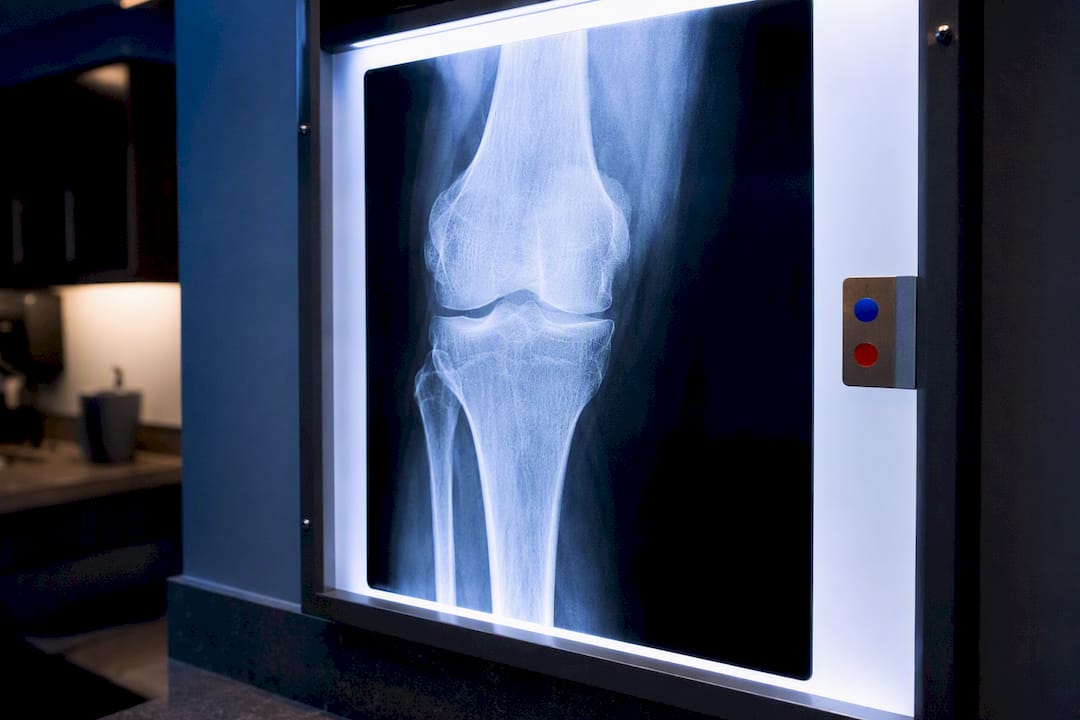
Pro Tip: Get your injuries documented in detail within the first few days, not weeks. Permanency findings, disfigurement photos, and objective imaging (MRIs, X-rays) are what actually move a case past the threshold. Vague notes in a chart won't cut it later.
The Trade-Offs Nobody Explains Upfront
No-fault systems were built to speed up small claims and keep fender-benders out of court. That trade-off cuts both ways.
What works in your favor:
- Faster payment for medical bills since fault doesn't need to be proven first
- Fewer minor lawsuits clogging the system
- More predictable claims handling for everyday accidents
What works against you:
- Limited or no recovery for pain and suffering unless you clear the threshold
- Wildly inconsistent rules from state to state
- Higher PIP costs that can drive up premiums, sometimes paired with more fraud exposure
That last point shows up in the premium data. Michigan, New York, and New Jersey, all no-fault states, rank among the states with higher average premiums, partly a byproduct of generous PIP minimums and the litigation that still surrounds contested claims.
What To Do Right After a Crash in a No-Fault State
- Get medical attention immediately, even for injuries that seem minor. This starts your PIP claim clock and creates the paper trail you'll need later.
- Call the police and get an official report. Insurers and attorneys both rely on this document.
- Photograph the scene, your vehicle, and any visible injuries before anything gets cleaned up or repaired.
- Collect witness names and contact information on the spot.
- Notify your insurer promptly to open your PIP claim, and keep copies of every medical bill and record.
- If you're in Kentucky, New Jersey, or Pennsylvania, check your policy to confirm whether you opted for tort coverage. It changes your entire legal position.
Pro Tip: Save digital and paper copies of every document. Claims get denied more often over missing paperwork than over disputed facts. For a deeper look at claim-killing errors, see common car accident lawsuit mistakes and this list of common auto insurance claim mistakes from our partners.
When It's Time To Call an Attorney
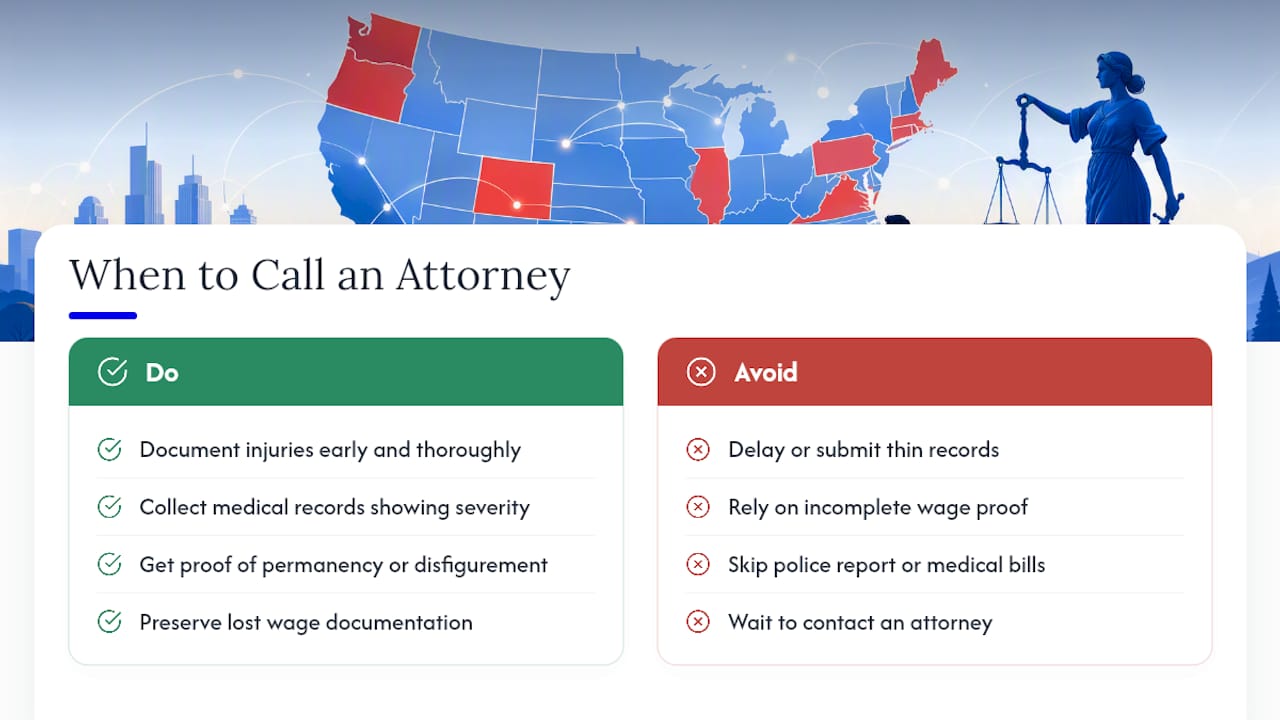
Attorneys evaluating a no-fault case look at a narrow set of facts: medical records showing the injury's severity, proof of permanency or disfigurement, lost wage documentation, and clear causation tying the crash to your condition. Cases that clear a state's threshold almost always have one thing in common: early, thorough documentation. Thin or delayed records are the most common reason a viable claim gets undervalued or dismissed before it's even reviewed.
A free case evaluation typically asks for your police report, medical bills, and a short injury summary, exactly what an attorney needs to gauge whether your case can move past PIP and into a lawsuit. Carcollisionlawyer's free evaluation process connects drivers with local attorneys who handle exactly this kind of threshold analysis. For more on what factors shape a payout once a case clears that bar, our guide to settlement factors and real recovered damages examples walk through how those numbers actually get built.
The State Lines Nobody Warns You About
Here's the part most explainers skip: no-fault law follows the accident location, not your home state. Drive from a tort state into Michigan and crash there, and Michigan's no-fault rules govern your claim, not the rules back home. I've seen this catch people off guard more than almost any other detail in this system.
The bigger issue is how uneven the thresholds themselves are. New York's verbal threshold and Michigan's serious-impairment standard sound similar on paper, but courts interpret them differently, and a soft-tissue injury that clears one state's bar might get tossed in another. That inconsistency isn't a bug in the system. It's the direct result of each state legislature writing its own definition of "serious" decades apart from the others, with no coordination since.
My honest read: no-fault insurance does exactly what it promises for minor injuries, fast payment, no litigation. But it quietly punishes people with moderate injuries that fall in the gap between "clearly minor" and "obviously catastrophic." That middle zone is where documentation stops being a formality and starts being the entire case. If you're unsure which side of that line you're on, that uncertainty itself is the reason to get a professional read on your medical records before a deadline makes the decision for you.
— Gerard
This article is general information, not a substitute for advice from a qualified lawyer. Consult a qualified legal professional about your own circumstances before acting on anything here.
Sources
- Background on no-fault auto insurance | Insurance Information Institute (III)
- No-fault insurance | Legal Information Institute, Cornell Law School
- No-fault states — WorldPopulationReview
- What are the no-fault states for car insurance? | WalletHub