
Bodily injury (BI) liability pays for injuries you cause to other people; personal injury protection (PIP) pays for injuries to you and your passengers, no matter who caused the crash. Whether PIP is even part of your policy, and how it interacts with a BI claim, depends entirely on your state's insurance laws. Get that state check wrong, and you can leave real money on the table.
TL;DR:
- Most drivers buy minimum bodily injury limits, which may be insufficient for serious injuries that can quickly surpass policy caps.
- State laws determine whether PIP is mandatory, optional, or unavailable, affecting how quickly and to whom claims should be filed.
- Serious injuries exceeding PIP limits often require pursuing additional compensation through bodily injury liability claims or lawsuits against the at-fault driver.
- Higher bodily injury limits and umbrella policies significantly reduce personal financial exposure in severe accidents.
- Prompt documentation, medical care, and legal consultation are essential if injuries are complex, bills exceed policy limits, or fault disputes arise.
Table of Contents
- Bodily Injury vs. PIP: The Core Difference
- What Bodily Injury (BI) Liability Covers
- What Personal Injury Protection (PIP) Covers
- Which States Require PIP, and How Does No-Fault Change Your Claim?
- When You Need Both Coverages, and How They Work Together
- Understanding Liability Limits: What 100/300 Really Means
- How the Claims Process and Timing Actually Work
- When Should You Talk to an Attorney?
- An Editorial Take on Coverage Choices
- Get a Free Case Evaluation Before You Accept Any Settlement
- Sources
- FAQ
Bodily Injury vs. PIP: The Core Difference
Here's the fastest way to remember it: BI protects your wallet from other people's claims. PIP protects your body, regardless of blame.
- Bodily injury liability pays the other driver, their passengers, or a pedestrian when you're found at fault. It never pays your own medical bills.
- Personal injury protection pays your medical costs and often lost wages, whether you caused the wreck or not, in states that require or offer it.
- PIP frequently covers more than medical bills including household services and, in some policies, funeral costs, depending on state law.
- Fault determines the payout path. No-fault rules mean you often file PIP before anything else moves.
- Check two things today: whether your state mandates PIP, and whether your BI limits are high enough to cover a serious injury lawsuit.
- Call an attorney if medical bills exceed your PIP limit or the other driver's insurer disputes fault.
What Bodily Injury (BI) Liability Covers
BI liability is fault-based coverage baked into nearly every auto policy sold in the United States. It doesn't pay you. It pays the people you hurt, once an insurance adjuster or a court determines you caused the crash.
Once fault is established, BI covers the other party's medical expenses, pain and suffering, lost income, and any judgment that results from a lawsuit. BI and PIP cover different people entirely: PIP handles your side, BI handles theirs.
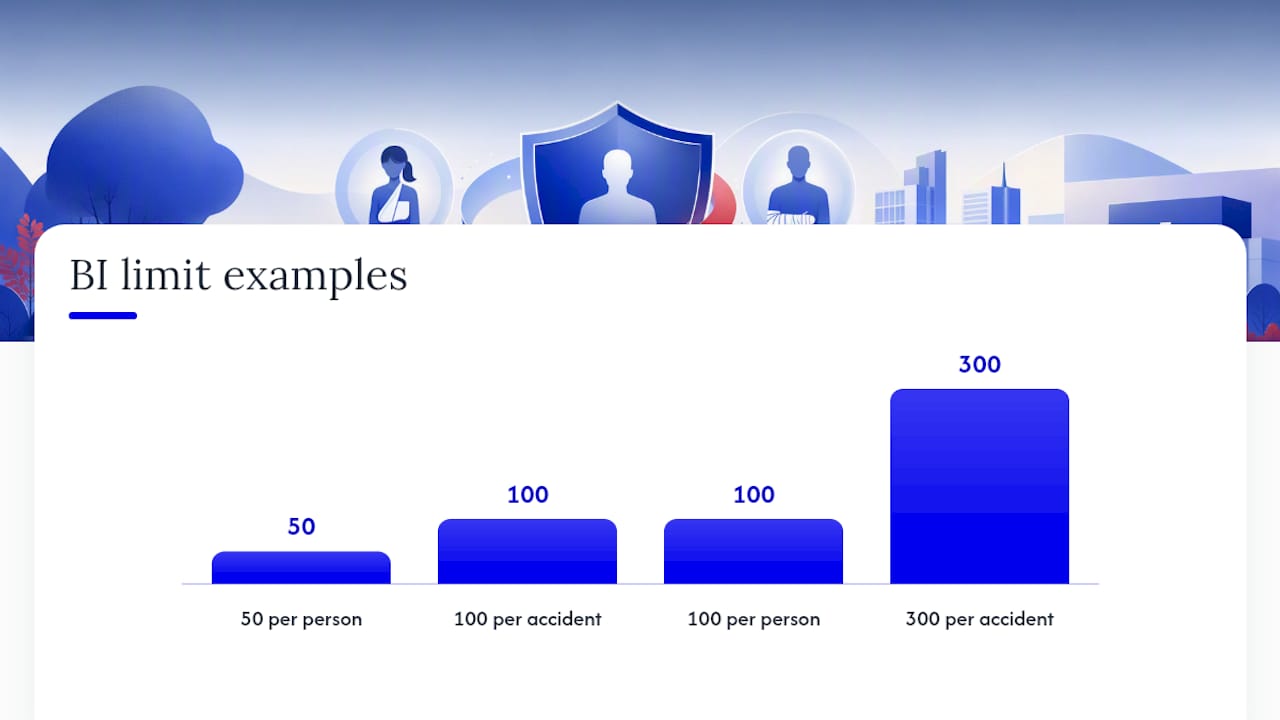
Limits appear as two numbers, like 50/100 or 100/300. The first is the maximum paid per injured person; the second is the cap for the entire accident.
- State minimums vary by state and can be relatively low, sometimes around typical minimum coverage amounts.
- A single serious injury, a broken femur requiring surgery, a traumatic brain injury, can blow past that minimum in a single hospital stay.
- Anything owed above your limit becomes your personal financial exposure unless the victim can't collect it at all.
That gap between the state minimum and the real cost of a serious injury is where most uninsured judgments come from.
What Personal Injury Protection (PIP) Covers
PIP flips the BI script. It pays you, your passengers, and in some states even pedestrians hit by your car, regardless of who caused the accident.
Coverage typically extends well past emergency room bills:
- Medical treatment and rehabilitation
- A percentage of lost wages while you recover
- Household services you can't perform yourself, like childcare or cleaning
- Funeral costs, in states where policy wording allows it
PIP has real limits, though. It generally will not pay for injuries to the other driver or damage to either vehicle, and it typically excludes injuries covered by workers' compensation. Some policies also cap certain services, like chiropractic visits, after a set number of sessions.
PIP differs from MedPay and health insurance in one important way: it can be primary. That means it pays before your health plan, potentially covering copays and deductibles your health insurance would leave on you.

Pro Tip: File your PIP claim immediately after treatment, even if you're not sure who was at fault. In states where PIP acts as primary coverage, waiting can mean losing benefits your health plan won't replace.
Which States Require PIP, and How Does No-Fault Change Your Claim?
Roughly a dozen states run no-fault systems, meaning PIP is mandatory and you file with your own insurer first no matter who caused the crash. Several other states make PIP optional, letting drivers add it for extra protection, while the rest don't offer it at all.
Because rules and thresholds vary so much by state, the safest move is confirming your own state's requirements rather than assuming your policy works like a friend's in another state. Our breakdown of no-fault states and how 12 states decide who pays after a crash walks through the specifics state by state.
In true no-fault states, you generally can't sue the other driver for pain and suffering unless your injury crosses a statutory threshold, often defined by medical cost, permanent disfigurement, or death. That threshold is the gatekeeper between a routine PIP claim and a full bodily injury lawsuit.
- Confirm whether your state mandates PIP or leaves it optional.
- Learn your state's injury threshold for suing beyond PIP.
- Read your policy's PIP section, not just the declarations page, for exact filing rules.
When You Need Both Coverages, and How They Work Together
Most accidents fall into one of two buckets, and knowing which one you're in changes your entire strategy.
- Minor injury scenario. A sprained wrist and a few physical therapy visits usually stay within PIP limits. You file with your own insurer, get reimbursed for bills and partial wages, and the claim closes without ever touching the at-fault driver's BI policy.
- Serious injury scenario. Surgery, extended time off work, or permanent impairment often exceeds PIP's cap fast. PIP pays first, then a bodily injury claim, or a lawsuit, pursues the remaining damages from the at-fault driver's BI coverage.
- Coordination and subrogation. Health insurers and PIP carriers sometimes have subrogation rights, meaning they can seek reimbursement once you recover money from the at-fault party. Keep every bill and payment record so nothing gets double counted or missed.
If your injury looks serious enough to outlast PIP, start preserving evidence and consider legal advice before you sign anything with an adjuster.
Understanding Liability Limits: What 100/300 Really Means
Insurance limits look like code until someone explains the math. A 100/300 policy pays up to $100,000 per injured person and $300,000 total per accident.
That total matters more than people realize. If two passengers are seriously hurt in the same crash, they split that $300,000 cap, not $100,000 each on top of it. A single claimant with catastrophic injuries can burn through the full per-person limit alone, leaving nothing for a co-passenger.
- Higher BI limits, like 250/500, cost relatively little extra but shrink your personal exposure dramatically.
- An umbrella policy adds another layer of protection once your standard auto limits run out.
- Anyone with real assets to protect, a house, savings, future wages, should treat low state minimums as a starting point, not a target.
How the Claims Process and Timing Actually Work
- Get medical care immediately and document every injury, even ones that seem minor at first.
- Notify your insurer promptly. In no-fault states, filing PIP quickly can preserve benefits you'd otherwise lose to a delay.
- Gather evidence: medical records, wage statements, photos of the scene, and the police report.
- File the BI claim against the at-fault driver's insurer once fault is clear or a lawsuit becomes necessary.
- Bring in an attorney if your PIP claim gets denied, injuries turn out to be severe, or the insurer disputes who caused the crash.
Pro Tip: Some states enforce strict deadlines for medical treatment to preserve PIP eligibility, such as Florida. State-specific timing rules can affect claims, so verify your state's rules promptly after the accident.
Recovery, meanwhile, often involves physical rehabilitation that PIP is designed to fund; providers like Shephard Health outline what that treatment path typically looks like after a motor vehicle injury.
When Should You Talk to an Attorney?
Certain signs mean it's time to get a professional opinion: medical bills climbing past your PIP limit, an insurer disputing fault, a denied PIP claim, or an injury with lasting impairment. Documentation matters here, too, since thin proof of lost wages is a common reason claims settle low; our lost wages recovery guide covers what to collect. A free case evaluation can tell you quickly whether a bodily injury claim is worth pursuing beyond what PIP already paid.
An Editorial Take on Coverage Choices
Most drivers buy the state minimum BI limit and call it done, then get blind sided when a real injury costs three times that amount. The smarter baseline: meet your state's BI minimum, then push those limits higher than you think you need, and add PIP wherever your state allows it or your health plan has gaps. Document everything early. If injuries turn serious, talk to a lawyer before the insurer's version of events becomes the only one on record.
— Gerard
Get a Free Case Evaluation Before You Accept Any Settlement
Insurance adjusters move fast, and their first offer rarely reflects what a serious injury actually costs once PIP limits run out. You can connect with local attorneys at no cost upfront to find out whether your case supports a bodily injury claim before you sign away your right to pursue one.
The evaluation reviews your accident details, current medical costs, and lost income, then matches you with an attorney suited to your specific injury type and collision. There's no obligation and no fee to find out where you stand. If your PIP claim was denied or your bills already exceed the policy limit, that's exactly the situation this process is built for. Start your free case evaluation today and get a clear answer on what your claim might be worth.
Sources
For deeper reading on PIP mechanics, state-by-state no-fault rules, and how lost wage claims get documented, see guides on what personal injury protection covers and no-fault versus at-fault states.
This article is general information, not a substitute for advice from a qualified lawyer. Consult a qualified legal professional about your own circumstances before acting on anything here.
FAQ
Are PIP and Bodily Injury the Same Thing?
No. PIP pays your own medical bills and related costs regardless of fault, while bodily injury liability pays other people when you're found responsible for the crash.
What Does 100/300 Bodily Injury Coverage Mean?
It means your policy pays up to $100,000 per injured person and a combined maximum of $300,000 for everyone hurt in a single accident.
Do I Need Uninsured Motorist Bodily Injury if I Have PIP?
Yes, in most cases, since PIP covers your medical bills but typically won't replace the full value of pain and suffering or lost future earnings that an uninsured motorist claim can pursue.
Which States Have Mandatory PIP?
Roughly a dozen U.S. states require PIP as part of a no-fault system, while others make it optional or don't offer it at all, so checking your specific state's rules is essential before assuming your coverage matches a neighboring state's.