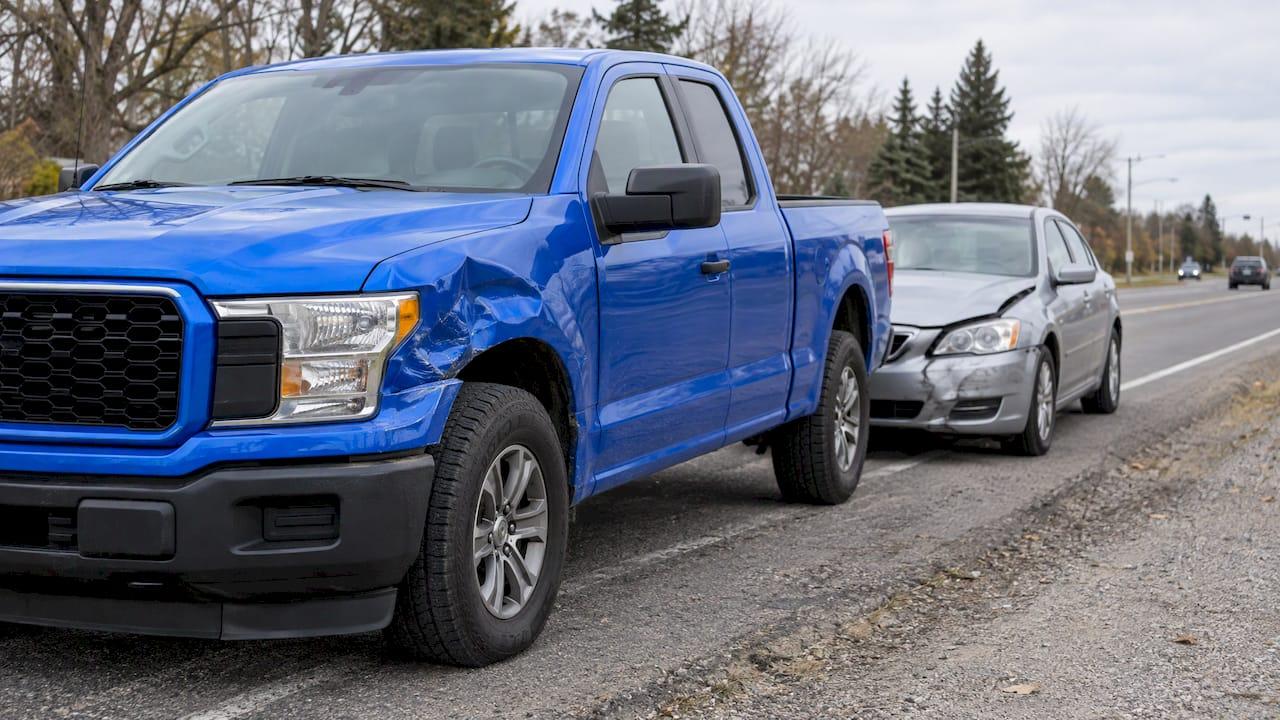
If you were hurt in a car accident while working, you usually have more than one possible claim: workers' compensation through your employer, and in many cases a separate injury claim against whoever caused the crash. The two work differently, run on different deadlines, and affect each other. Getting the order right is what protects your medical bills and your lost pay. Our free evaluation at Carcollisionlawyer helps you find out where you stand and connects you with a vetted local attorney, at no cost and with no commitment.
TL;DR
- A crash is usually treated as work-related when it happens while you are doing your job or traveling in your employer's interest. An ordinary commute generally is not.
- Workers' compensation is a no-fault system that pays medical care and part of your lost wages, typically about two-thirds of your average weekly wage, up to state limits.
- If another driver or a third party caused the crash, you can often pursue them as well, but the workers' comp insurer usually has a right to be repaid from that recovery.
- Notice and filing deadlines are set by each state and can be as short as 30 days to notify your employer. Report the injury in writing right away.
- A free evaluation can show which claims fit your situation before you commit to anything.
Table of Contents
- When a car accident counts as work-related
- What to do right after the crash
- Claim one: workers' compensation
- How lost wages are calculated
- Claim two: against the other driver or another party
- Do you have to pay workers' comp back?
- Which claim fits your crash
- Get a free evaluation of your work crash
- Our perspective
- FAQ
- Sources
When a car accident counts as work-related
Everything else depends on this question. Workers' comp covers injuries connected to your job, and each state applies its own test. A useful reference point is how the federal workplace safety agency, OSHA, draws the line for its own recordkeeping. In a January 2022 interpretation letter, OSHA says an injury is work-related if an event or exposure in the work environment caused or contributed to it. It also says that an employee directed to come back to the workplace outside the normal commute, for a work emergency, is acting in the employer's interest, so an injury on that trip is work-related.
That same letter restates the other side: injuries on the normal trip from home to work and back are generally not work-related, because the commute is a personal activity. OSHA has also said that riding in a company-provided vehicle does not turn a commute into work. These are OSHA's recordkeeping rules, not the test a state workers' comp board applies, but they show the logic.
Situations that usually point to work
- Driving a company vehicle or your own car to a client, job site or delivery during your shift.
- Running an errand your employer asked you to run.
- Traveling for work. OSHA's 2014 interpretation on travel explains that once a traveling employee checks into a temporary lodging, the trip between that lodging and a fixed worksite is a commute, but continued travel toward the ultimate destination is in travel status.
- Driving as your main job, such as delivery or sales work. If that is you, see our guide on a delivery driver accident claim.
The commute and its exceptions
Many states follow a going-and-coming rule: injuries on the way to or from a regular workplace are excluded. Exceptions exist. Pennsylvania's Commonwealth Court, in Fields (decided September 25, 2017), listed four: transportation is part of the employment contract, the worker has no fixed place of work, the worker is on a special mission, or special circumstances show the worker was furthering the employer's business. California's Workers' Compensation Appeals Board has applied similar reasoning, finding in a March 13, 2026 notice of intention that the rule did not fit a worker whose commute was about 60 miles each way with varying hours.
The practical lesson: do not decide on your own that your crash was not work-related. If your employer sent you somewhere, you had no fixed location, or you were on a task, the answer may be different from what you assume.
What to do right after the crash
What you do in the first hours shapes both claims. Public employers publish clear routines. Georgia's Department of Administrative Services, for example, tells drivers on state business to help anyone injured, call police, and report to a supervisor immediately, then report to its claims hotline as soon as possible and never later than 48 hours. The federal General Services Administration tells drivers of its fleet vehicles to stop safely, call emergency services if anyone is hurt, get a police report, exchange insurance details, collect witness information, photograph the scene, and avoid admitting fault.
Private employers set their own rules, but the same steps apply:
- Get safe and get medical care. Call 911 if anyone is hurt. Tell every provider the injury happened while you were working, so the records say so.
- Call the police and ask how to get the report.
- Notify your supervisor right away, then confirm in writing (email works). Keep a copy.
- Document everything. Photograph vehicles, the road and your injuries. Get names and insurance details from other drivers and contact details from witnesses. Our car accident evidence checklist covers what to collect and how.
- Do not admit fault or sign statements for an insurer before you understand your options.
- Keep a log of missed shifts, symptoms, mileage to appointments and every bill.
For a company vehicle in particular, our guide to protecting your claim after a company vehicle accident walks through the extra steps.
Claim one: workers' compensation
Workers' comp is a no-fault system. You generally do not have to prove your employer or anyone else was at fault. You have to show the injury arose from your work and follow the state's notice and filing rules. In return you usually cannot sue your employer for the injury.
What it typically pays
Benefits vary by state, but the building blocks are similar:
- Medical care that is reasonable and necessary for the injury.
- Wage replacement while you cannot work, usually a share of your average weekly wage.
- Disability and death benefits where the injury leaves lasting impairment or is fatal.
Mississippi's commission fact sheet is a clear example of the structure. It describes wage-loss payments of up to two-thirds of average weekly wage, with a weekly cap; for injuries on or after January 1, 2013 that cap was $449.12, with a five-day waiting period unless disability lasts 14 days or more. Those are 2013 figures for one state, and caps are adjusted over time, so check your own state's current numbers.
Deadlines you cannot miss
Two clocks usually run: one to tell your employer, one to file with the state. They differ widely.
| State | Notify employer | File the claim | Source |
|---|---|---|---|
| Texas | Within 30 days of the injury | Within one year of the injury | Texas Labor Code ch. 409 |
| Florida | Within 30 days, with limited exceptions | See the statute | Fla. Stat. §440.185 |
| Virginia | Check the statute | Within two years of the accident | Va. Code §65.2-601 |
| Mississippi | Promptly, try for 30 days | Within two years if no disability benefits were paid | Commission fact sheet |
Miss the notice deadline and your employer and its insurer may be relieved of liability, with exceptions such as the employer already knowing about the injury. Rules change, so confirm the current deadline with your state's workers' compensation agency. Our overview of state-by-state time limits on car accident claims covers the injury-claim side.
How lost wages are calculated
The most common worry after a work crash is the paycheck. Workers' comp replaces part of it, not all of it. In New York, for example, the Board bases lost-wage benefits on average weekly wage over the 52 weeks before the injury, using gross earnings including overtime rather than take-home pay, then takes two-thirds and adjusts it for the degree of disability.
Waiting periods matter too. Tennessee's workforce department explains that temporary disability benefits begin on the eighth day, and are paid back to the first day if disability lasts 14 days or longer. Florida law pays 66 2/3 percent of average weekly wages for temporary total disability, for up to 104 weeks, ending earlier at maximum medical improvement.
A worked example. Say your gross pay averaged $1,200 a week over the prior year, overtime included. Two-thirds is $800 a week, before any state cap. If your state's cap is lower, you get the cap. The gap between $1,200 and what you actually receive is exactly the kind of loss a separate claim against an at-fault driver may address. The numbers here are illustrative, not a promise of any result.
For the personal-injury side of lost income, read our step-by-step guide to recovering lost wages after a car accident.

Claim two: against the other driver or another party
If a coworker or your employer caused the crash, workers' comp is generally your path. If someone else did, such as a driver who ran a red light, a negligent contractor, or a company that maintained a vehicle poorly, you may have a second route. Washington's Department of Labor & Industries says a worker hurt by someone other than a co-worker or employer may take legal action against that third party while still receiving workers' compensation.
Why bother? Workers' comp does not generally pay for pain and suffering, and it replaces only part of your wages. A third-party claim is based on fault and can seek losses that comp does not cover. Our comparison of workers' comp versus a personal injury claim lays out the differences.
Timing is the trap. New York's Workers' Compensation Law §29, for instance, requires the third-party action to be started within six months after compensation is awarded and in any event before one year from accrual, a much tighter window than many people expect. Other states differ, so do not wait for your comp claim to finish before looking at the second one.
Do you have to pay workers' comp back?
Often, yes, from the third-party recovery. This is the question most people ask only after settling, and it is better to understand it first. How it works depends on the state:
- New York: the compensation provider has a lien on the recovery, after reasonable and necessary expenses including attorney's fees.
- Ohio: payment of benefits creates a right of recovery against the third party, and in a settlement the claimant receives the uncompensated-damages share of the net recovery while the subrogee receives its share, unless the parties agree to a more fair division.
- Pennsylvania: the employer may reclaim past medical or wage benefits paid and take credit against future benefits.
- Washington: the agency must be reimbursed from the recovery, and settlements that would leave it with less than it paid need its written approval.
- Federal employees: under FECA, a recipient must reimburse the government, with the claimant keeping a minimum of 20% of the recovery after expenses, per Department of Labor guidance.
The takeaway: a settlement number is not what you keep. Know the lien or reimbursement amount before you accept anything, because it changes what a fair offer looks like. An attorney who handles these cases can explain how it applies in your state.
Which claim fits your crash
| Your situation | Likely route |
|---|---|
| Driving for work, no other driver at fault | Workers' comp |
| Driving for work, another driver at fault | Workers' comp plus a third-party claim |
| Normal commute, another driver at fault | Usually a standard car accident claim, unless an exception applies |
| Special errand or travel for your employer | Possibly work-related; get it evaluated |
| Family member killed in a work crash | Death benefits and possibly a wrongful death claim |
If you are unsure which row describes you, that is the point of getting the facts assessed early. If you lost a family member, the deadlines are often tied to the date of death or the accident, so act promptly. Virginia, for example, requires death-benefit claims within two years of the accident and within two years of the date of death, under §65.2-601.
Get a free evaluation of your work crash
Work crashes are tangled: an employer, a comp insurer, an at-fault driver's insurer, and several clocks. Our free evaluation asks about your injury and what happened, then connects you with a vetted local attorney who can look at your options. It costs nothing and carries no obligation.
You can start at the free evaluation page. For a view of what comes after, see the car accident injury claim timeline.
Our perspective
People tell us the same thing after a work crash: they were told to just file with workers' comp and leave it there. For some, that is right. For many, it leaves out the person who actually caused the crash, and it leaves out the part of the loss that comp was never designed to cover.
What makes these claims hard is not one rule, it is that two systems overlap. The deadlines differ, the repayment rules differ by state, and a decision in one claim can shape the other. Early, specific information matters more than anything else.
That is why we built our free evaluation around your injury and your circumstances rather than a generic form. You describe what happened, whether it was a car, truck, motorcycle or bicycle crash, and whether you were hurt or lost someone. We then match you with a vetted local attorney who can speak to your situation, with no cost and no obligation, when you are least able to chase answers.
Gerard
FAQ
Can I file workers' comp and sue the other driver?
Often yes. If someone other than your employer or a co-worker caused the crash, many states let you collect workers' comp and also pursue that person. The comp insurer will usually have a right to be repaid from your recovery, so the order and timing matter.
Is my commute covered by workers' comp?
Usually not. Most states exclude the ordinary trip between home and a regular workplace, though exceptions exist, such as a special errand for your employer or a job with no fixed workplace. Whether yours qualifies depends on your state and the facts.
How long do I have to report a work car accident?
It depends on the state and the employer. Some states require notice to your employer within 30 days, and public employers can require same-day or 48-hour reports. Tell your supervisor immediately and confirm in writing, then check your state agency for the filing deadline.
Will workers' comp replace my full paycheck?
No. Typically it pays about two-thirds of your average weekly wage, up to a state maximum, and some states have a short waiting period before the first days are paid. A separate claim against an at-fault party may address losses that comp does not.
Sources
- OSHA interpretation letter, January 4, 2022
- OSHA interpretation letter, April 13, 2015
- OSHA interpretation letter, October 20, 2014
- Pennsylvania Commonwealth Court, Fields, 2017
- California WCAB, Hernandez notice of intention, March 13, 2026
- Georgia DOAS, actions at the time of an accident
- U.S. GSA, accident management center
- Mississippi Workers' Compensation Commission fact sheet
- Texas Labor Code chapter 409
- Florida Statutes §440.185
- Florida Statutes §440.15
- Virginia Code §65.2-601
- New York Workers' Compensation Board, lost wage benefits
- Tennessee Department of Labor, beginner's guide to workers' comp
- Washington L&I, injured by a third party
- New York Workers' Compensation Law §29
- Ohio Revised Code §4123.931
- Pennsylvania L&I, third-party settlement reporting
- U.S. Department of Labor OWCP, FECA third-party liability