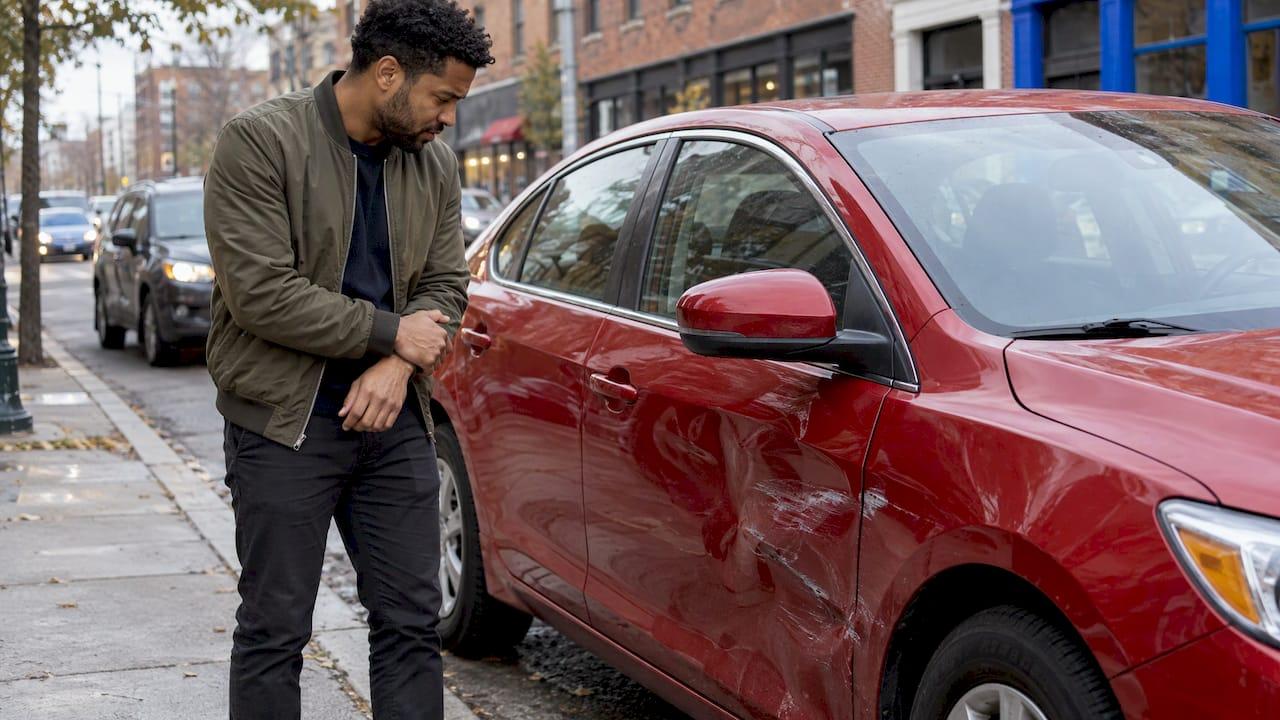
If you were injured in a crash involving a Turo car, several policies may be in play: the Turo trip's liability coverage, the guest's personal auto policy, the host's own policy, and the other driver's insurance. Which one pays depends on who was driving, who was at fault, and your state's rules. Turo's protection plans cover damage to the car, not your injuries. Medical bills and lost income are usually claimed through liability coverage, PIP, medical payments, or your own health insurance. Here is how the pieces fit and what to do next.
TL;DR
- Every Turo trip in the U.S. includes third-party liability coverage issued to Turo by Travelers, but it is secondary and generally limited to state minimums unless a state statute makes it primary.
- Turo guest protection plans limit what a renter owes for vehicle damage. They are not insurance and do not pay your medical bills.
- Report the crash to Turo and the police right away, photograph everything, and get medical care before you talk settlement with anyone.
- If several insurers are pointing at each other, that is the moment to get a free case evaluation, not to accept the first offer.
Table of Contents
- What Turo accident insurance actually is
- Who pays your injuries, by your role in the crash
- What to do in the first 48 hours
- Why Turo crashes get complicated
- Seeking payment for medical bills, lost income and other losses
- When a lawyer is worth calling
- Free evaluation for Turo crash injuries
- Our perspective
- FAQ
- Sources
What Turo accident insurance actually is
People search "Turo accident insurance" as if it were one product. It is really three separate layers, and mixing them up is the most common reason claims stall.
1. Third-party liability coverage. Turo's help center says all U.S. trips include third-party auto liability insurance issued to Turo by Travelers Excess and Surplus Lines Company. It is secondary or excess coverage up to state minimums, unless state law requires it to be primary. This is the layer that matters most if you were hurt by a Turo driver.
2. Guest protection plans. Premier, Standard and Minimum plans (or declining physical damage protection, where available) set how much a guest may owe for damage to the host's vehicle. Turo describes these as contractual agreements, not insurance. They say nothing about your injuries.
3. Personal and host policies. The guest's personal auto policy and the host's own policy may or may not respond. Many personal policies exclude cars rented out for money. Liberty Mutual explains that the line between personal and commercial use is the main reason personal auto policies often deny peer-to-peer claims.

That is why a single Turo crash can produce two or three claim numbers at once. One host described a guest-caused crash that opened two separate claims under his personal policy. It is normal for the paperwork to look chaotic. It is not a sign you did anything wrong.
Who pays your injuries, by your role in the crash
Your situation decides which coverage to approach first. Use this table as a map, not as a final answer, because state law changes the details.
| Your role | Likely first place to look | Other places to look |
|---|---|---|
| Hit by a Turo driver who was at fault | The at-fault driver's liability coverage, which may include the Turo trip's Travelers coverage | Your own auto policy (med pay, PIP, uninsured/underinsured motorist), health insurance |
| Passenger in a Turo car, driver at fault | Driver's liability coverage, Turo trip coverage | PIP or med pay where available, your own policies |
| Turo guest, other driver at fault | The other driver's liability insurer | PIP under the trip policy where state law requires it, your own medical coverage |
| Turo guest, you caused the crash | PIP or med pay for your own injuries where available | Your health insurance |
| Pedestrian or cyclist hit by a Turo car | The driver's liability coverage, including Turo trip coverage | Your own health insurance, uninsured motorist coverage in some states |
| Turo host hurt in your own car | Depends on your policy and who was driving | Host plan coverage, your health insurance |
Liability coverage for injuries to other people
Turo's guest page says the Travelers policy insures guests against liability to third parties for bodily injury and property damage from the booked trip, up to the minimum required by state law. Guests can't decline it. For hosts, Turo's earnings plans include Travelers coverage for third-party bodily injury and property damage, typically up to $750,000, though limits vary in some places such as New York.
Two things follow. First, state minimums can be low compared with serious injury costs. Second, because the coverage is usually secondary, the guest's own applicable policy may be asked to pay first. That is the cause of the "why is my personal insurer involved?" complaints in forums.

PIP and medical payments
Turo says the Travelers policy provides the minimum PIP coverage allowed by law in states where PIP is required and can't be waived. PIP varies by state, but typically helps guests and passengers with medical expenses, loss of income and funeral expenses. If you live in a no-fault or PIP state, you may have a faster route to some payment, whoever caused the crash.
If you own a car, your own auto policy may also carry medical payments or uninsured/underinsured motorist coverage. Check your declarations page. These coverages often apply when you are hurt as a passenger or pedestrian, not only in your own car.
What to do in the first 48 hours
The steps are the same as for any serious crash, with extra reporting to Turo. Treat the list as a checklist.
- Get safe and get medical help. Call 911 if anyone may be hurt. Some injuries, such as concussions and soft tissue injuries, show up hours or days later, so get examined even if you feel okay.
- Call the police and report to Turo. Turo's terms of service require users, after a collision, to report the damage to Turo immediately and make a police report.
- Exchange information. The National Association of Insurance Commissioners advises swapping names, addresses and insurer details with the other driver, and collecting witness names and contact information.
- Document the scene. The same guidance suggests photographing or sketching the scene, noting time, date, location, skid marks, weather and road conditions, and writing down the responding officer's name and badge number.
- Capture the Turo details. Photograph the license plate, the Turo app trip screen, and the vehicle's condition. Turo's terms ask users to use reasonable efforts to secure witness evidence and give Turo or its claims administrators a written description including the identity and insurance details of everyone involved.
- Tell your own insurer. Prompt notice matters. California's Department of Insurance, for example, tells drivers to notify their agent or insurer immediately and to document injuries, medical expenses and lost wages for medical payments or uninsured motorist claims.
- Keep a paper trail. Save every email, claim number, adjuster name and medical bill in one folder.
For a deeper evidence checklist, see our guide to car accident evidence best practices.
What not to do
Don't give a recorded statement to any insurer before you understand which policy you are dealing with. Don't sign a release or accept a quick payment until you know the full extent of your injuries. Don't post about the crash on social media. And don't assume the first insurer to call you is the one responsible.
Why Turo crashes get complicated
Several insurers, each with a reason to say no
A Turo crash can involve the guest's insurer, the host's insurer, the Turo trip policy and the other driver's insurer. Each may argue another policy is primary. A personal policy may cite a rental-use exclusion. The Turo coverage may say it is excess. You sit in the middle, with bills piling up.
Our article on first party versus third party claims explains who you are claiming against in each case, which is the first thing to settle.
Out-of-state drivers
Renters often drive far from home. A guest who lives in one state and rents in another raises questions about which state's rules, minimums and PIP requirements apply. Turo notes that some terms differ in states like Maryland and New York, so never assume the rules you know at home carry over.
Claims costs on the guest side
If you were the guest, damage costs are separate from injury claims, but they can arrive in the same weeks. Turo states guests may face claims-processing costs up to $150 plus plan-specific deposits or out-of-pocket amounts. Keep these separate in your records so a vehicle damage dispute doesn't muddy your injury claim.
Rear-end and multi-car crashes
Fault is often disputed even when it looks obvious. See why rear-end accidents complicate claims for how adjusters assign blame.
Seeking payment for medical bills, lost income and other losses
An injury claim generally aims to recover several kinds of loss, not only the emergency room bill. These typically include:
- Medical treatment, past and expected future care
- Lost income and reduced earning ability
- Pain, suffering and emotional distress
- Funeral and related costs in a wrongful death case
The route usually starts with the at-fault driver's liability coverage. Where that is thin, or where there is no insurance, your own uninsured/underinsured motorist coverage may help. In PIP states, PIP can pay certain expenses earlier, while fault is still being sorted out.
Two practical points. Keep treating and follow your doctor's plan, because gaps in care give insurers an argument that you weren't really hurt. And track missed work with employer letters and pay stubs. Our guides on medical bills after an accident and the car accident claim process walk through who pays during treatment and what each stage looks like. For timing, read the injury claim timeline.
Deadlines for filing a lawsuit differ by state and by the type of defendant, so ask an attorney licensed in your state about yours early rather than late.
If you also need a car
While your claim is open you may need transportation. Our guide on rental car after an accident covers who pays and how to get one quickly.
When a lawyer is worth calling
Think about talking to a personal injury attorney when any of these is true:
- You were hurt enough to need ongoing treatment, surgery or time off work
- More than one insurer is disputing who covers you
- The Turo coverage or the at-fault driver's limits look too low for your losses
- A loved one died in the crash
- You are being pressured to settle or give a recorded statement
- The crash happened out of state
On a rental-style crash, a lawyer's first job is usually to identify every policy that could apply, including ones you didn't know existed, and to put each insurer on written notice. For ideas on how claim value is built, see how to maximize your car accident settlement.
Free evaluation for Turo crash injuries
We built our service for exactly this kind of tangle. You describe what happened, what kind of injury you have and the type of vehicle involved, and we match you with a vetted local attorney who can review your situation. The evaluation is free and carries no obligation.
If you are ready, start your free case evaluation. It takes a few minutes, and you will learn whether you may be entitled to compensation before you commit to anything. You can also read the privacy policy and terms of use first.
Our perspective
Most people who call a Turo crash "complicated" are right, and the complication is rarely their fault. A rental app, a host, a guest and an insurer for each of them means four parties who each have a reason to point elsewhere.
We think the fairest way to handle that is to start with your injury, not with the paperwork. That is why our evaluation asks about the type of injury and the circumstances first, then connects you to an attorney suited to them, whether it is a car, truck, motorcycle or bicycle collision, or the loss of a family member.
The evaluation is free and has no commitment attached. You find out where you stand, then you decide. In our view, that is how it should work when you are hurt and the calls from adjusters are already coming in.
Gerard
FAQ
What insurance company handles Turo claims?
Turo's U.S. trip coverage is a policy issued by Travelers Excess and Surplus Lines Company, and Turo uses claims administrators to process reports. For state-specific insurance questions, such as in Maryland, Turo says consumers can contact the Turo Insurance Agency. The guest's and host's personal insurers may also be drawn in.
Does Turo's protection plan cover my medical bills?
No. The Premier, Standard and Minimum plans limit what a guest owes for vehicle damage, and Turo describes them as contractual agreements, not insurance. Injuries are addressed through liability coverage, PIP where your state requires it, medical payments, or your health insurance.
Can I use my own car insurance after a Turo accident?
Sometimes. If you were hurt as a passenger or pedestrian, your own medical payments or uninsured motorist coverage may apply. If you were the guest, Turo expects you to pursue any policy that applies, though personal policies often exclude rented-out cars. Read your policy or ask your insurer in writing.
Should I report a Turo crash to the police?
Yes. Turo's terms require users to report a collision to Turo and make a police report. A police report also gives your claim an official record of the scene, the parties and the insurance details.
When should I talk to a lawyer?
Talk to one if you have lasting injuries, missed work, a disputed fault finding, or more than one insurer denying responsibility. A free evaluation can show whether your case merits a full attorney review.
Sources
- Turo: Protection plans, in detail (US guests)
- Turo: Earnings plans, in detail (US hosts)
- Turo: Protection plans, PIP details
- Turo: Terms of service
- Liberty Mutual: Does car insurance cover peer-to-peer rentals?
- NAIC: What you should know about filing an auto claim
- California Department of Insurance: So You've Had an Accident, What's Next?