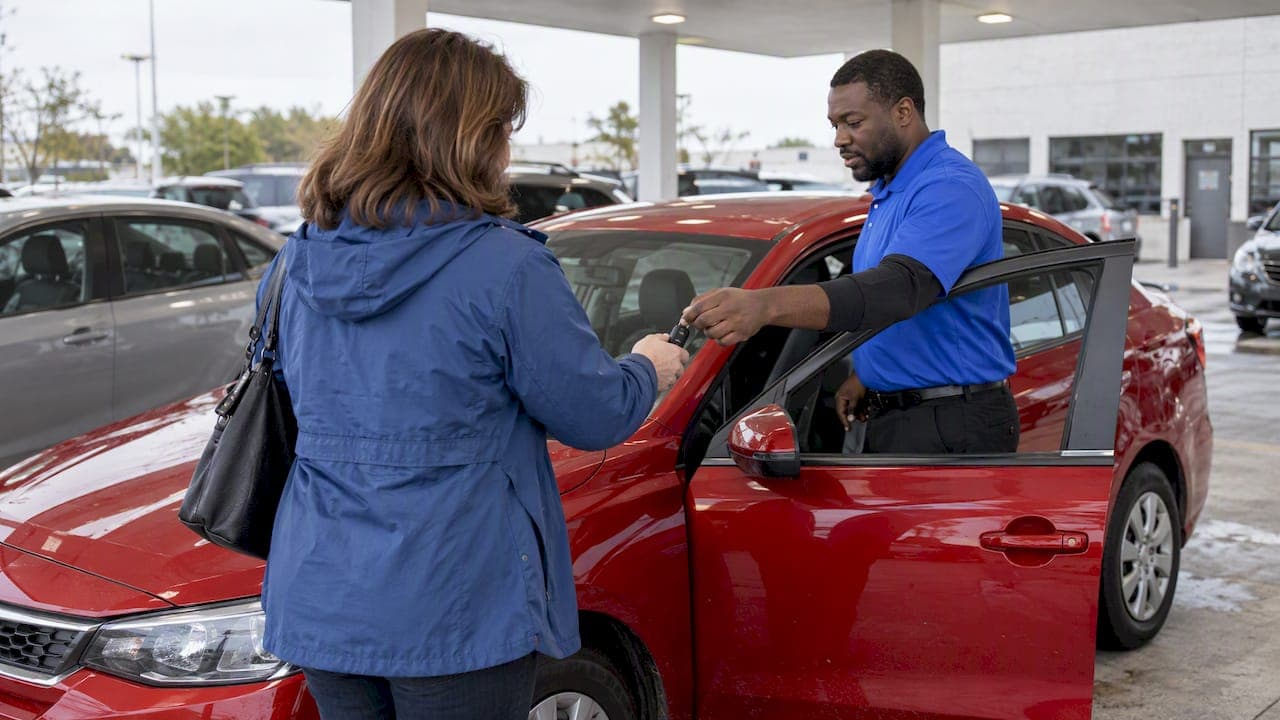
If you have rental reimbursement coverage, use it first: it generally pays for a replacement car up to your policy's daily and total limits, and it moves faster than waiting on another driver's insurer. If you don't, ask the rental counter or your claims rep about direct billing, or pay up front and save every receipt for reimbursement later. Documenting the crash and naming your rental need to the claims adjuster right away speeds up payment either way.
TL;DR:
- Rental reimbursement coverage typically caps daily payments at $30 to $70, with a maximum of 30 days, covering expenses up to the policy’s limits.
- It requires having collision and comprehensive coverage beforehand, as it cannot be added retroactively after an accident occurs.
- Without coverage, you can request direct billing from rental agencies, pay upfront and seek reimbursement, or use insurance-replacement programs, but paper or receipts are essential.
- When relying on the at-fault driver’s insurer, expect delays in liability acceptance, which can extend the rental period beyond two weeks, especially if fault is disputed.
- Alternative options like rideshare, public transit, or borrowing from family can help if rental reimbursement is unavailable or insufficient.
Table of Contents
- How rental reimbursement coverage works: limits, eligibility, and examples
- Options when you don't have rental reimbursement: direct-bill, paying up front, and replacement-rental programs
- Who pays and typical timelines: at-fault insurer vs. your policy vs. out-of-pocket
- Rental waivers, credit-card coverage, and liability: what to buy at the counter
- Immediate documentation and claim actions checklist to preserve reimbursement rights
- How to choose the right rental car after an accident
- Impact of the accident on your rental options if your own vehicle is declared a total loss
- How rental car availability or type may be affected by accident circumstances or timing
- Alternative transportation options if a rental car is not covered or available
- When it makes sense to get legal help for unpaid rental expenses
- Free case evaluation for disputed or costly rental claims
- FAQ
- Sources
How rental reimbursement coverage works: limits, eligibility, and examples
Rental reimbursement is an optional add-on to your auto policy, separate from collision or comprehensive coverage, which pay for damage to your car, and separate from loss-of-use claims against the at-fault driver; for a deeper insurer-side explanation, see auto insurance coverage types explained. It specifically covers the cost of a replacement vehicle while yours is being repaired.
Most policies cap this benefit at a daily dollar amount and a total number of days. Progressive's coverage page cites examples like $50 a day with a $1,500 per-claim ceiling, and notes daily limits commonly fall between $30 and $70 with coverage lasting up to 30 days. Say your repair shop estimates 14 days of work and your plan caps reimbursement at $45 a day: you'd be covered for the full $630, assuming it stays under your per-claim maximum.
Eligibility usually requires that you already carry collision and comprehensive coverage, and the rental reimbursement add-on has to be in place before the crash happens. Adding it afterward protects you going forward but won't apply retroactively to the accident you just had.
- Rental reimbursement pays a daily amount up to a cap, not unlimited expenses.
- It typically requires collision and comprehensive coverage on the same policy.
- Coverage must exist before the accident, not added after the fact.
After an accident, the repair typically takes around two weeks, and drivers without rental reimbursement often face significant rental costs for that period, according to the Insurance Information Institute. That gap is exactly what this coverage is built to close.
Using your own rental reimbursement, when you have it, is almost always faster than waiting on the other driver's insurance company to accept fault and authorize payment.

Options when you don't have rental reimbursement: direct-bill, paying up front, and replacement-rental programs
Without rental reimbursement, you still have paths to a replacement car. They just require more paperwork and patience.
- Ask for direct billing. Many rental locations, including Enterprise's accident rental program, will bill an insurer directly if you provide a claim number, the adjuster's contact information, and sometimes a police report. Request this before you leave the counter, not after.
- Pay up front and seek reimbursement. Keep every receipt, log your daily mileage, and get a written repair timeline from the shop. These documents support your claim when you submit for reimbursement later.
- Use a replacement-rental program. Some rental companies run insurance-replacement programs with accident-specific rates, though they still typically require a credit card on file for a deposit or damage hold.
- Check credit-card coverage. Some cards offer primary rental coverage, but most only supplement your existing policy as secondary coverage, so confirm which kind you have before counting on it.
Pro Tip: Call the rental counter before you arrive and ask specifically whether they accept direct billing for accident claims; not every location handles it the same way.
A non-owner policy is also worth asking about if you don't currently own a car but need to rent regularly while yours is repaired or replaced.
Who pays and typical timelines: at-fault insurer vs. your policy vs. out-of-pocket
If another driver caused the crash, their liability insurer is generally responsible for a reasonable rental once they accept fault. The catch is timing: investigations, disputed fault, or an unresponsive adjuster can delay that acceptance for days or longer, leaving you to cover rental costs in the meantime or lean on your own policy. More detail on how liability shifts between insurers appears in this explanation of what you owe after a crash.
Your own rental reimbursement, by contrast, typically pays out faster because you're not waiting on another company's fault determination, just your own policy's daily and total caps.
Repair timing matters for both paths. Since the average repair takes roughly two weeks according to the Insurance Information Institute, insurers often treat that window as the baseline for what counts as a "reasonable" rental period. Parts delays, extended teardown inspections, or a shop backlog can stretch that timeline, and insurers don't always agree to cover the extra days without documentation.
To protect yourself while a dispute plays out:
- Keep a daily log of rental use and mileage.
- Save every repair estimate and any updated timeline from the shop.
- Keep copies of all correspondence with adjusters, including dates and names.
These records become your evidence if an insurer later questions how long you needed the car.
Rental waivers, credit-card coverage, and liability: what to buy at the counter
Loss Damage Waiver (LDW) and Collision Damage Waiver (CDW) cover damage to the rental car itself if you're in another accident while driving it. According to NAIC, these waivers commonly run $10 to $20 a day, with liability supplements around $7 to $14 a day and personal accident insurance $1 to $5 a day. If your personal auto policy already carries collision and comprehensive, or your credit card offers rental coverage, you may be paying for protection you don't need.
Watch for common exclusions: unauthorized drivers, driving under the influence, and off-road use can void coverage regardless of which waiver you bought.
- LDW/CDW covers rental damage; it's often unnecessary if your own policy or card already does.
- Credit-card coverage can be primary or secondary, and secondary only supplements your existing insurance.
- Exclusions like unauthorized drivers or impaired driving can void any waiver you purchased.
Pro Tip: Call your credit card issuer before your rental to confirm whether its coverage is primary or secondary, since that single detail determines whether buying the counter waiver makes sense.
A pragmatic rule: skip the counter waiver when your own coverage is solid, and buy it when you're renting something unusual, like a larger vehicle, or your personal coverage has gaps.
Immediate documentation and claim actions checklist to preserve reimbursement rights
What you do in the hours and days after a crash shapes how smoothly your rental gets paid for.
- At the scene: take photos of all vehicles and damage, exchange insurance information, collect witness contact details, and call police for a report if your state requires one or injuries are involved.
- After the tow: get a written repair estimate and expected timeline from the shop, since this becomes your proof of how many rental days you actually need.
- When you open a claim: ask explicitly about direct-billing options, get your claim number in writing, and save every receipt and piece of correspondence.
- If the at-fault insurer delays: document each date and conversation, escalate to a supervisor if the adjuster goes quiet, and consider a free legal evaluation if costs are mounting or a denial looks likely.
Many insured drivers without rental reimbursement face substantial out-of-pocket expenses for a typical two-week repair, per the Insurance Information Institute, which is why early documentation matters even if you expect the other driver's insurer to pay eventually. A ten-step evidence checklist can help you organize what to collect from day one.
How to choose the right rental car after an accident
Match the rental to what you actually need for the repair period, not what feels like an upgrade. If your damaged car was a compact sedan, renting the same class keeps costs predictable and avoids pushback from an adjuster who may question a jump to a larger, pricier vehicle.
Think about your daily use. A commuter who drives thirty minutes to work needs reliability and fuel economy, not cargo space. A contractor or parent who regularly hauls equipment or kids may have a legitimate case for a larger vehicle or one with specific features, but should expect to justify that choice if an insurer is paying the bill.
Check what your policy or the at-fault insurer's rental program actually allows. Some rental reimbursement plans cap the daily rate regardless of vehicle class, meaning you'd pay the difference out of pocket for anything above a standard compact or midsize car.
A few practical questions to ask before you choose:
- Does the daily rate fit within your coverage's cap, or will you owe the difference?
- Do you need all-wheel drive, towing capacity, or extra seating for your actual daily routine?
- Is the rental available at a location convenient to your repair shop, so pickup and return don't eat into your time?
Choosing conservatively, especially early on, keeps the reimbursement conversation simple.
Impact of the accident on your rental options if your own vehicle is declared a total loss
A total loss changes the rental equation. Once your insurer declares your vehicle a total loss and makes a settlement offer, your right to a rental car often ends around that point unless you've worked out something different with the adjuster, according to NAIC. Some insurers extend a courtesy rental for a short period after a total-loss determination, but this varies by company and isn't guaranteed.
This timing matters because total-loss evaluations can take longer than a straightforward repair estimate. The insurer typically has to assess the vehicle's pre-accident value, compare it to repair costs, and finalize a settlement offer before cutting you a check. If you're relying on rental reimbursement during that window, check your policy's total-day cap, since a lengthy total-loss review can bump against that limit even though you still don't have a car.

Once you accept a settlement, start planning for your next vehicle rather than assuming the rental will continue. If you're shopping for a replacement car, ask your insurer directly whether they'll extend rental coverage a few extra days to bridge the gap, since some will accommodate a short request even if it's not standard practice.
How rental car availability or type may be affected by accident circumstances or timing
Rental availability isn't always guaranteed the moment you need it. Local demand, especially after a regional weather event or a surge in accidents in your area, can thin out inventory at nearby rental locations, pushing you toward a different vehicle class than you expected or a location farther from your repair shop.
Timing matters too. If your accident happens on a weekend or holiday, staffing at rental counters may be lighter, and direct-billing arrangements with insurers can take longer to process since adjusters aren't available until the next business day. Booking as early as possible, even before your claim is fully approved, can help secure a vehicle while the paperwork catches up.
The type of rental you're offered can also depend on what's in stock rather than what you'd prefer. If your reimbursement coverage caps you at a compact or midsize rate, you may still be offered a larger vehicle at the same price simply because that's what's available, which works in your favor, but you shouldn't count on it.
Confirming your reservation a day or two in advance, when your timeline allows it, reduces the chance of showing up to an empty lot.
Alternative transportation options if a rental car is not covered or available
When a rental isn't covered, isn't available, or the daily cost doesn't make sense for your situation, a few alternatives can bridge the gap.
- Rideshare or taxi services work well for short-term needs, especially if your daily commute is short or you can work remotely for part of the repair period.
- Public transit is a practical option in cities with reliable service, and some insurers will reimburse transit costs as part of a loss-of-use claim if you ask.
- Borrowing a vehicle from family or friends avoids rental fees entirely, though you'll want to confirm your own insurance extends to a borrowed car if you're in another accident.
- A short-term car share service can fill the gap for occasional trips without the commitment of a full rental agreement.
Whichever option you choose, keep receipts and records, since some of these costs may be recoverable from the at-fault driver's insurer even without a formal rental agreement.
When it makes sense to get legal help for unpaid rental expenses
If an insurer keeps denying your rental claim, drags out a simple repair timeline, or acts in obvious bad faith, that's the point to stop negotiating alone. A free case evaluation can tell you quickly whether your rental expenses belong in a larger damages claim, especially if other costs are piling up too.
— Gerard
Free case evaluation for disputed or costly rental claims
Chasing a slow adjuster or fighting a denied rental claim on your own eats time you don't have. A free, no-obligation case evaluation is available that looks at your rental expenses alongside any other losses from the crash, then connects you with an attorney suited to your situation.
This makes sense if you're facing a denial, stuck in a dispute over what counts as a "reasonable" number of rental days, or staring at an out-of-pocket rental bill that's grown larger than it should have.
- A free review of whether your rental costs and other damages add up to a valid claim.
- No upfront cost or obligation to proceed after the evaluation.
- A direct path to an attorney if your situation calls for one.
If your rental expenses are part of a bigger dispute, start your free evaluation to see where you stand.
This article is general information, not a substitute for advice from a qualified financial advisor. Consult a qualified financial professional about your own circumstances before acting on anything here.
FAQ
Am I entitled to a rental car after an accident?
You're entitled to a rental car if you carry rental reimbursement coverage on your own policy, or if the at-fault driver's insurer accepts liability and agrees to cover a reasonable replacement period. Without either, you can still rent one yourself and seek reimbursement, but entitlement isn't automatic.
What kind of rental car will I get after an accident?
Most insurers and rental reimbursement plans cover a vehicle comparable to the one you were driving, often capped at a standard compact or midsize daily rate. You can usually request a larger vehicle, but you may owe the difference if it exceeds your coverage's daily limit, as described in Progressive's rental reimbursement guide.
How long until I can get a rental car after an accident?
If you have rental reimbursement, you can often rent a car within a day once you open a claim and provide documentation. If you're waiting on the at-fault driver's insurer to accept liability, it can take several days to weeks depending on how quickly fault is determined.
How do rental cars work after an accident?
You either use your own rental reimbursement coverage, request direct billing through the at-fault insurer with your claim number and police report, or pay out of pocket and submit receipts for reimbursement later. Repairs typically take about two weeks on average, which is the window most insurers use to judge a reasonable rental period, according to the Insurance Information Institute.