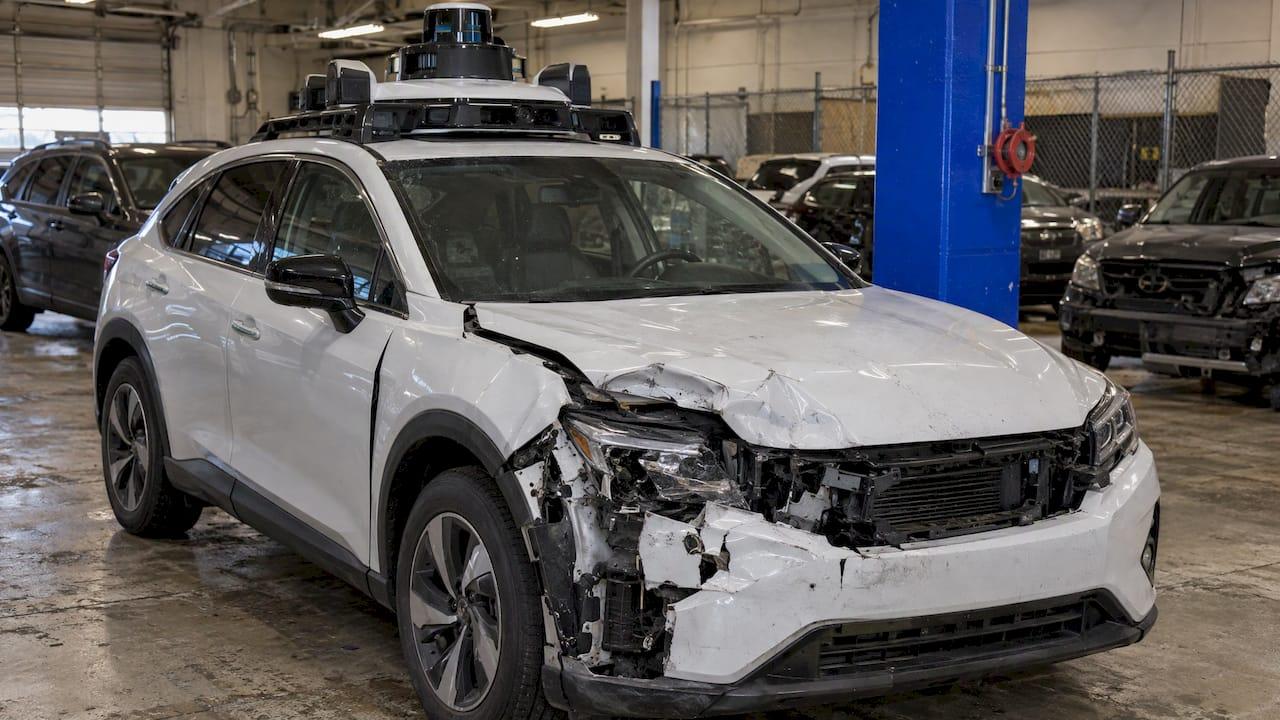
When a self-driving or driver-assist vehicle hurts you, the answer to who is liable depends on how the crash happened. Liability may fall on the human driver, the vehicle manufacturer, the software developer, or a third party responsible for maintenance, mapping data or roadway conditions, according to a review of liability in self-driving crashes. The less the human was driving, the more a claim looks like a product liability case instead of an ordinary car accident claim.
This guide explains who can be responsible, how the level of automation changes the picture, how state law differs, what evidence matters and what compensation you may be able to seek. It is general information, not legal advice for your situation.
TL;DR
- Most cars on the road today offer only partial automation, so ordinary negligence rules usually still apply to the person behind the wheel.
- As the system takes over more of the driving, claims may shift toward manufacturers, software developers, fleet operators and component suppliers under product liability theories.
- No dedicated federal liability statute exists yet. States and courts decide fault, and state laws differ.
- Crash data from sensors, cameras and event data recorders can decide the case, and it can be overwritten, so act quickly.
- You can start with a free evaluation to see whether you may be entitled to compensation and get matched with a local attorney.
Table of Contents
- Who can be held liable after an autonomous vehicle crash
- Why the automation level matters
- When the human driver may still be responsible
- When the manufacturer or software developer may be liable
- How state law and federal rules shape the claim
- Insurance and fault allocation
- Evidence that can decide an autonomous vehicle case
- What compensation you may be able to seek
- Our perspective
- See where you stand with a free evaluation
- FAQ
- Sources
Who can be held liable after an autonomous vehicle crash
Under conventional tort law, a crash caused by driver error triggers a negligence claim, and the at-fault driver or their insurer bears responsibility. Self-driving technology changes that. When no human is in control, liability may shift toward manufacturers, software developers, fleet operators and component suppliers under strict or negligence-based product liability theories, as the National Law Review explained in May 2026.
In practice, the list of possible defendants looks like this:
- The human driver or operator. Still the first target when the system required supervision and the person failed to provide it.
- The vehicle manufacturer. Responsible when a design or manufacturing defect, or a missing warning, contributed to the crash.
- The software or automated driving system developer. Responsible when the driving software misjudged the road, for example by failing to predict how a pedestrian would move.
- A fleet operator or remote operator. Relevant for robotaxis, delivery vehicles and autonomous trucks.
- A component supplier. Relevant when a faulty sensor or other part played a role.
- A maintenance shop, mapping provider or road authority. Relevant when negligent repairs, bad map data or a roadway hazard contributed.
Often more than one party shares fault. Naming only one can leave money on the table, which is one reason injured people look for an attorney who handles multi-party claims. Our guide to how car accident liability works covers the basics of splitting fault between drivers.
Why the automation level matters
The Society of Automotive Engineers (SAE) describes driving automation in levels from 0 to 5. Level 0 to 2 means a human is driving or supervising the whole time. Levels 3 to 5 mean the system performs the driving task under defined conditions, with Level 4 and 5 needing no human fallback.
Most vehicles on the road today are Levels 0 to 2, and traditional car accident liability rules typically apply, with liability based primarily on the at-fault driver's negligence. As automation increases, liability may shift toward manufacturers and technology developers.
| Level | What the system does | Who is likely in the spotlight |
|---|---|---|
| 0 to 2 | Assists with steering, braking or speed. The human must supervise. | The driver, with a possible product claim if a feature malfunctioned |
| 3 | Drives in limited conditions and asks the human to take over | Both driver and manufacturer, especially around the handoff |
| 4 | Drives itself within a defined area, with no human intervention needed | Vehicle maker, automated driving system provider or remote operator |
| 5 | Drives itself everywhere | Technology providers, suppliers and manufacturers |
The Level 3 handoff is the murkiest. According to the National Law Review, both manufacturer and driver may face exposure if the system issues a takeover request too late or the human fails to respond. For Level 4 deployments, the vehicle maker, the system provider or the remote operator could be found at fault.
Legal scholars disagree about whether levels should drive liability at all. Authors writing in the American Bar Association's Jurimetrics journal argue that the SAE levels are unsuitable as a basis for liability rules because manufacturers may manipulate the definitions. They also propose that, while a vehicle is in autonomous mode, an occupant should have no duty to watch the road, and no contributory negligence for failing to intervene. That is an academic proposal, not the rule everywhere, so do not assume it protects you in your state.
When the human driver may still be responsible
If you were in a car with a driver-assist feature and the other driver says the car was driving itself, do not accept that as the end of the story. A driver is generally expected to supervise Level 2 systems. A Delaware legislative report notes that a Level 2 driver is held liable if the system alerted the driver to take control and was operating as the manufacturer designed it.
That means the at-fault driver in a crash with a partially automated car may still be the person in the driver's seat. Their auto insurance is usually the first place a claim goes, just as in any other crash. If you were the other motorist, a pedestrian or a cyclist, the practical question is who failed: the person who should have been watching, the system that misjudged, or both.
A few situations commonly keep a human in the frame:
- The driver ignored a takeover alert or system warning.
- The driver used the feature outside the conditions the maker specified.
- The driver was distracted, impaired or asleep.
- The vehicle was poorly maintained or modified.
The 2018 Uber test vehicle crash in Tempe, Arizona shows how complicated this gets. According to the NTSB findings as reported by ADAS & Autonomous Vehicle International, the automated system detected the pedestrian about 5.6 seconds before impact but failed to classify her correctly or predict her path, and the NTSB named the distracted safety operator's failure to monitor the road as the probable cause. Both the technology and the human mattered.
When the manufacturer or software developer may be liable
When a defect contributes to a crash, a manufacturer, software developer, fleet operator or component supplier may face strict or negligence-based product liability claims. According to the National Law Review, plaintiffs may argue design defects, manufacturing defects or failure to warn, and courts increasingly treat the automated driving system as a product.
Those three theories look like this in real life:
- Design defect. The system was built in a way that made it unreasonably dangerous, such as an algorithm that fails to predict pedestrian behavior.
- Manufacturing defect. A particular unit deviated from the intended design, such as a faulty sensor. Law firm commentary lists both algorithm failures and sensor faults as typical allegations.
- Failure to warn. The maker did not adequately explain the system's limits, so users over-relied on it.
A Jones Day white paper from October 2025 says the rise of Level 4 and 5 vehicles is transforming civil liability: as control moves from human drivers to the system, fault-based liability centered on human error becomes less applicable, and technology providers, suppliers and manufacturers move to the center.
Also keep the employer angle in mind. If a commercial fleet runs the vehicle, a company may be responsible for what its vehicles and workers do. Our article on vicarious liability and how GPS and payroll records help explains how those claims are built, and our piece on multi-vehicle wrongful death liability shows how fault is divided among several parties.
How state law and federal rules shape the claim
There is no single national answer. Congress has not enacted a dedicated federal liability statute for self-driving cars. NHTSA requires crash reporting and investigates incidents, but fault is left to courts and states. The National Law Review notes that the SELF DRIVE Act of 2026 (H.R. 7390) was introduced on February 5, 2026, and the Senate's Stay in Your Lane Act was introduced in December 2025. Check whether either has moved before relying on them.
States fill the gap in different ways. The Insurance Institute for Highway Safety reports that some states authorize testing or deployment and set liability coverage requirements, while others have no specific laws for highly automated vehicles. Its figures for required coverage include at least $5 million in California, at least $5 million in Nevada and at least $5 million per vehicle for testing in New York.

A Delaware Division of Legislative Services report adds that in the 27 states that allow deployment, human operators are not required to be physically present, and 13 states allow Level 4 or 5 vehicles to run without a licensed driver. Many states provide that an engaged automated driving system is considered the operator. Liability could then be transferred to the owner or the original manufacturer if a technology defect caused the crash.
Why this matters to you: the state where the crash happened affects who counts as the driver, how fault is shared and which deadlines apply. Filing deadlines for injury and wrongful death claims are set by each state, so ask an attorney in that state early.
Insurance and fault allocation
Today's auto insurance system is built on individual driver liability. A RAND report says that regime may shift toward greater manufacturer liability as autonomous vehicles are deployed, though workshop participants there generally agreed standards would not change until such vehicles were widespread among individuals.
For you as an injured person, that translates into a few practical points:
- Start with the auto policies involved. A crash with a partially automated car usually still begins with the driver's liability coverage and your own coverage.
- Expect a fight over fault. Insurers and manufacturers may point at each other, or at you.
- Expect shared fault. Fault can be divided by percentage among the human, the maker and others, which affects what each pays.
- Do not sign anything quickly. Early settlement offers and recorded statements can limit a later product liability claim.
Our guide on what you owe in a car accident liability case walks through the ordinary insurance side of this.
Evidence that can decide an autonomous vehicle case
In a normal crash, witnesses and photos matter most. In an autonomous vehicle crash, data matters just as much. Relevant records may include event data recorder information, sensor data, software and configuration records, maps, remote-assistance records and maintenance records, and the advice there is to identify the relevant systems and their overwrite cycles and preserve the records.
NHTSA's Standing General Order on Crash Reporting notes that data recording and telemetry capabilities vary widely by manufacturer and system. Automated driving systems typically use multiple sensors and cameras and tend to have relatively advanced recording, so crashes with the system performing the driving task can generally be reported in detail. Event data recorders are governed by 49 CFR Part 563, which sets requirements for covered vehicles but does not generally mandate installation.
The risk is timing. Digital evidence is highly vulnerable to being overwritten, and manufacturers may resist disclosure on proprietary grounds, which makes timely and specific preservation demands critical in litigation. That demand is something an attorney sends, so getting legal help early is part of protecting the evidence.
What you can do yourself right away:
- Call 911, get medical care and make sure a police report is filed.
- Photograph the vehicles, the road, signs, signals and any visible sensors or dashboard messages.
- Write down whether the vehicle was in an assisted or automated mode, and any alerts you or the driver noticed.
- Collect names and contact details for witnesses and the company operating the vehicle, if it was a robotaxi or fleet vehicle.
- Keep medical records, bills and proof of missed work.
- Do not let anyone repair, sell or reset the vehicle until your attorney has had a chance to request preservation.
Our list of car accident evidence best practices goes through the standard evidence steps in more detail.
What compensation you may be able to seek
The categories of damages in an autonomous vehicle case are the same ones that apply in most injury cases. A claims guide from a law firm lists medical expenses, lost wages and loss of earning potential, pain and suffering, and property damage for injured people. For wrongful death, damages may include funeral and burial costs, lost income and financial support, and the family's emotional suffering.
Who can bring a wrongful death claim depends on the state. In Texas, for example, eligible claimants are the spouse, children and parents, and damages may cover pecuniary loss, loss of companionship and society, and mental anguish. Other states have different rules, so confirm yours.
Punitive damages are possible in some cases when a defendant's conduct was especially reckless or intentional, but they are not routine and vary by state. If you lost a family member, these guides explain the legal path: why families can sue after accidents and the benefits of a wrongful death attorney. If the crash involved an autonomous or heavily automated truck, our truck accident wrongful death family guide is a good companion read.
Our perspective
Autonomous vehicle crashes feel overwhelming because everyone points elsewhere. The driver says the car was in control. The manufacturer says the driver should have been watching. The insurer waits to see who blinks. Meanwhile you have medical bills and questions nobody will answer plainly.
We built our service around a simple idea: you should not have to work out the legal theory before you ask for help. Our free, no-obligation evaluation is tailored to your type of injury and what happened, whether that is a physical injury, emotional trauma or the loss of a family member. That specificity matters because a claim involving automated technology is not a standard fender bender, and the right attorney can be the difference between a claim that stalls and one that reaches the real decision makers.
Our advice is to get your situation in front of a vetted local attorney early, while evidence still exists and before anyone asks for a statement. Knowing your options costs you nothing, and waiting can cost you a lot.
Gerard
See where you stand with a free evaluation
If an autonomous or driver-assist vehicle was involved in your crash, you do not need to figure out who is at fault on your own. Our free evaluation asks about your injury and the circumstances, then helps connect you with a vetted local attorney who can look at whether you may be entitled to compensation. There is no immediate commitment.
We serve people hurt in car, truck, motorcycle and bicycle accidents, and families who have lost someone. Start with the evaluation, and bring whatever you have: the police report, photos, medical records and any details about the vehicle's driving mode.
FAQ
Can I sue the manufacturer of a self-driving car?
Possibly. When a defect contributes to a crash, manufacturers, software developers and suppliers may face strict or negligence-based product liability claims, including design defect, manufacturing defect and failure to warn theories. Whether you have a viable claim depends on the facts and the state, so an attorney needs to review the crash data.
Is the driver still liable if the car was on autopilot?
Often, yes. Most vehicles today are partially automated and traditional negligence rules typically apply. A Level 2 driver may be held liable if the system alerted them to take control and was working as designed. Higher automation levels may shift responsibility toward the maker or operator.
Who is liable if a robotaxi or driverless truck crashes?
When no human driver is in control, the vehicle maker, the automated driving system provider, a fleet operator or a remote operator could be at fault, depending on what failed. Several of them can share responsibility, and the state's rules on who counts as the operator matter.
Is there a federal law that decides fault in autonomous vehicle crashes?
Not yet. Congress has not enacted a dedicated federal liability statute. NHTSA handles crash reporting and investigations, while fault is decided by courts under state law. Bills have been introduced, so check their current status.
What should I do first after a crash with an autonomous vehicle?
Get medical care, make sure a police report is filed, document the scene and any system messages, and keep the vehicle and its data untouched. Then speak with an attorney quickly, because sensor and software data can be overwritten.
Sources
- Who Is Liable in a Self-Driving Car Accident? (M&N Law)
- Liability Assignment in Self-Driving Vehicle Accidents (National Law Review)
- I Was Injured by a Self-Driving Vehicle. Who's Liable? (Nolo)
- The Awkward Middle for Automated Vehicles (American Bar Association, Jurimetrics)
- Self-Driving Vehicles: Liability Assignment (GT Advisory)
- Who's Liable When AI Takes the Wheel? (Jones Day)
- Highly automated vehicles: laws and regulations (IIHS)
- Autonomous Vehicles: Legislative Developments Across US States (Delaware Division of Legislative Services)
- Rethinking Insurance and Liability in the Transformative Age of Autonomous Vehicles (RAND)
- Autonomous Vehicle Recording Devices and Crash Evidence
- Standing General Order on Crash Reporting (NHTSA)
- The limits of the autonomous vehicle black box (ADAS & Autonomous Vehicle International)
- Autonomous Vehicle Data Preservation: Legal Challenges
- Self-Driving Car Accident Compensation Claims Guide
- Autonomous Vehicle Wrongful Death Claims in Texas