Yes, more than one person or company can be held liable for a wrongful death, and multi-vehicle crashes are exactly where that plays out most often. When a family loses someone in a multi-car pileup, a truck collision, or a crash triggered by a defective part or a hazardous property, the responsible party is rarely just "the other driver." Multi vehicle wrongful death liability examples typically involve several overlapping defendants at once:
- Multiple drivers who each contributed to the chain of events
- Trucking companies or employers whose hiring, training, or maintenance practices played a role
- Vehicle manufacturers if a defective part contributed to the crash or the fatal injury
- Property owners or contractors whose hazard (poor lighting, a broken guardrail, debris) helped cause the wreck
How much any single defendant actually pays depends heavily on your state's fault rules and how much insurance coverage exists to pay a claim.
Key Takeaways
Multi-vehicle wrongful death claims almost always involve more than one liable party, and how much your family recovers depends on state fault rules and available insurance coverage.
| Point | Details |
|---|---|
| Multiple defendants are common | Drivers, employers, manufacturers, and property owners can all share liability in one crash. |
| Fault rules decide recovery | Comparative and contributory negligence rules can reduce or eliminate a payout based on assigned fault. |
| Insurance pays in layers | Liability coverage pays first, then UIM/UM or umbrella policies fill any remaining gap. |
| Evidence disappears fast | EDR and ELD data get overwritten, so preservation letters need to go out within days. |
| Deadlines vary sharply | Notice-of-claim windows against government entities can be as short as 30 to 90 days. |
Table of Contents
- What Are Common Multi Vehicle Wrongful Death Liability Examples?
- How Is Fault Divided Among Multiple Defendants?
- Who Pays: How Insurance Covers Multi-Car Wrongful Death Claims
- Real-World Scenarios: Multi Vehicle Wrongful Death Case Examples
- How Do You Prove Negligence in a Complex Multi-Car Crash?
- What Damages Can Families Recover, and How Does Shared Fault Change That?
- What Should Grieving Families Do First to Protect Their Claim?
- How Carcollisionlawyer Connects Families With the Right Attorney
- Authoritative Links Used in This Article
- An Editorial Take on Multi-Party Wrongful Death Claims
- Frequently Asked Questions
- Sources
What Are Common Multi Vehicle Wrongful Death Liability Examples?
A single crash can generate several separate legal claims, because each at-fault party breached a different duty. A driver who ran a red light is negligent. An employer who put an unqualified driver behind the wheel of a commercial truck is separately negligent for hiring and supervision. A manufacturer whose brakes failed can face a product liability claim regardless of who was driving. A property owner whose broken traffic signal or unmarked construction zone set the crash in motion may carry premises liability.
These theories don't compete with each other. They stack.
- Negligence covers drivers: speeding, distraction, impairment, following too closely.
- Vicarious liability puts an employer on the hook for an employee's actions during work duties.
- Product liability applies when a defective tire, airbag, or brake system contributes to the death.
- Premises liability applies when a dangerous property condition helps trigger the wreck.
Corporate liability often surfaces through fleet safety policies, negligent hiring records, or skipped maintenance schedules. A truck accident wrongful death claim frequently uncovers all four theories in a single case file.
Pro Tip: Ask your attorney to map out every possible defendant early. Missing a viable party in the first weeks can mean missing evidence that disappears fast, like dashcam footage or maintenance logs.
How Is Fault Divided Among Multiple Defendants?
States handle shared fault differently, and the rule your case falls under can decide whether you recover anything at all. Three main systems govern this:
- Pure comparative negligence: you recover damages reduced by your own fault percentage, even if you were 90% at fault.
- Modified comparative negligence: you recover only if your fault stays below a set threshold, usually 50% or 51%, and your damages still get reduced by your share of fault.
- Contributory negligence (a small handful of states): any fault on your side, even 1%, can bar recovery entirely.
By the numbers: Under modified comparative negligence rules, a claimant found 20% at fault has their damages cut by that same 20%, and many states cut off recovery entirely once a claimant's share crosses 50% or 51%.
Sequencing matters too. In a chain-reaction crash, courts often ask who had the "last clear chance" to avoid the collision, which can shift more blame onto a driver who struck an already-stopped vehicle rather than the one who caused the initial slowdown.
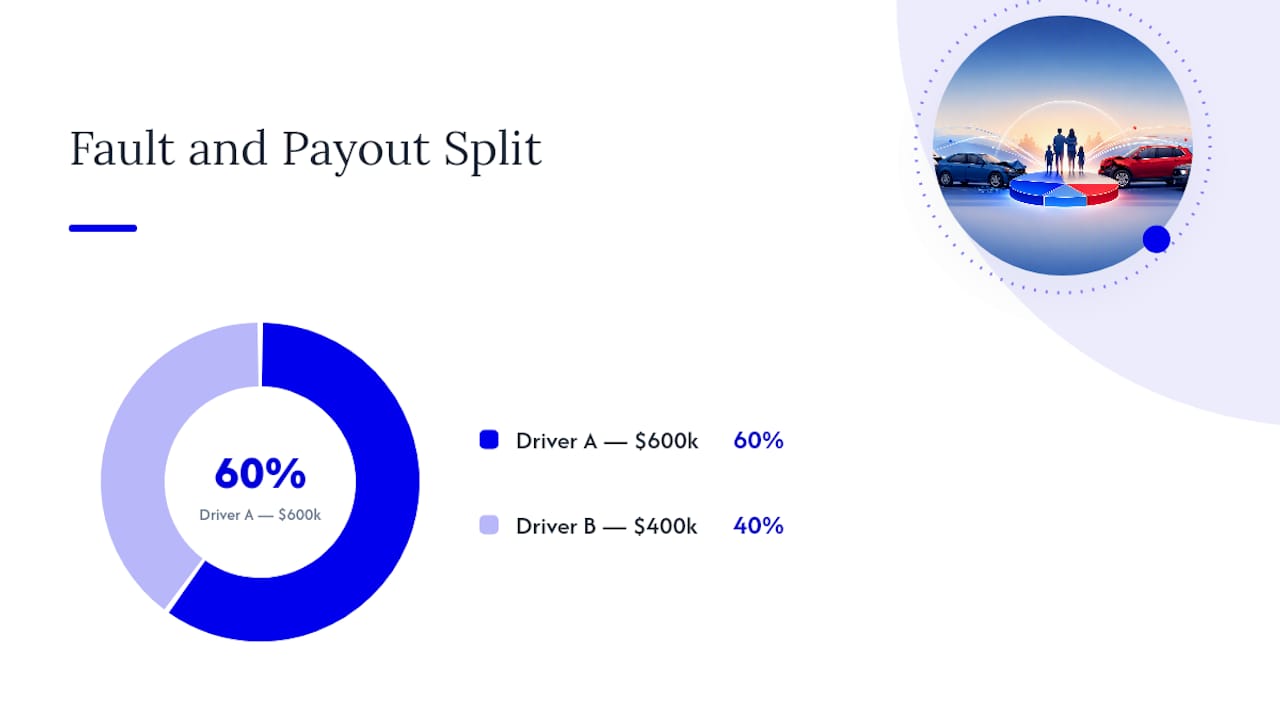
A simple example: say a jury finds Driver A 60% at fault and Driver B 40% at fault for a fatal crash. If the total award is $1,000,000, Driver B's insurer typically pays a share tied to that 40%, while Driver A's insurer covers the larger portion, assuming policy limits allow it.
Who Pays: How Insurance Covers Multi-Car Wrongful Death Claims
Money in these cases flows through layers of coverage, not a single check. Understanding the order matters, because families often assume one insurer will simply "handle it."
- The at-fault driver's liability policy pays first, up to its limit.
- When fault is shared, multiple insurers often pay proportionally based on each driver's assigned percentage.
- If the at-fault party's limits fall short, your family's underinsured motorist (UIM) or uninsured motorist (UM) coverage can fill the gap, and some policies allow "stacking" across multiple vehicles for higher available limits.
- In no-fault states, personal injury protection (PIP) covers certain medical costs regardless of fault, though PIP generally doesn't extend to wrongful death damages the way liability coverage does.
- When every policy limit is exhausted, families often need to pursue civil litigation directly against a defendant's personal assets or look to umbrella policies for additional coverage.
- Liability coverage caps out fast in multi-fatality crashes, since one policy limit often has to stretch across several claimants.
- Checking your own UM/UIM coverage immediately after a crash is one of the most overlooked steps families take too late.
Real-World Scenarios: Multi Vehicle Wrongful Death Case Examples
Concrete scenarios make the legal theories click. Here's how liability plays out in practice.
- Chain-reaction highway pileup. A driver slams on the brakes, a second driver rear-ends them, and a third vehicle plows into the wreckage seconds later. Sequencing analysis typically assigns the heaviest fault to whichever driver failed to react to an already-developing hazard, while drivers further back in the chain may share a smaller percentage. Multiple insurers end up paying proportionally, and the family's own UIM coverage may need to cover any gap.
- Commercial truck crash. The truck driver may have violated hours-of-service rules, but the trucking company can face separate liability for negligent hiring or ignoring ELD violations. One Texas jury awarded $49 million after a fatal trucking collision exposed exactly this kind of corporate negligence, well beyond the driver's individual fault.
- Manufacturer defect. A brake failure or a defective tire contributes to a fatal crash even though a driver was also speeding. Both the driver and the manufacturer can face claims, and a recall history often becomes central evidence.
- Property hazard. A missing guardrail or an unlit construction zone triggers a driver's overcorrection into oncoming traffic. The list of parties who can be named in that kind of case usually includes the contractor, the property owner, and the driver.
How Do You Prove Negligence in a Complex Multi-Car Crash?
Complex crashes live or die on evidence, and a lot of the best evidence disappears within days if nobody preserves it. The core pieces investigators rely on:
- The police report and any citations issued at the scene
- Event Data Recorder (EDR) downloads from each vehicle involved
- Traffic camera, dashcam, or nearby business surveillance footage
- Witness statements gathered while memories are still fresh
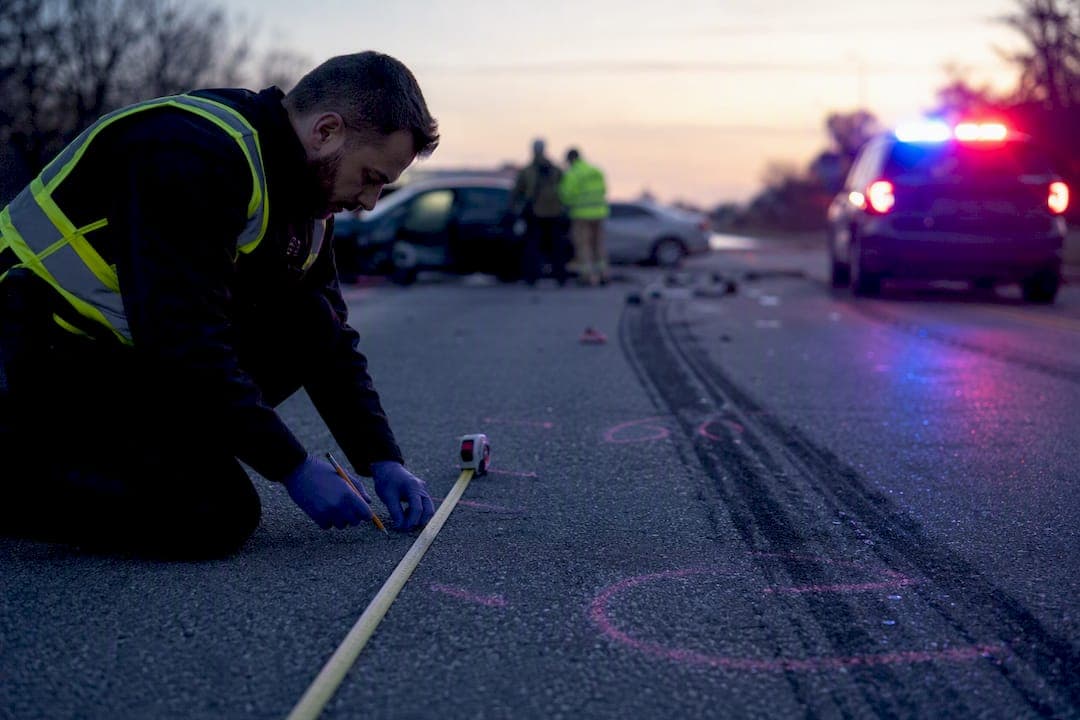
- Physical evidence like skid marks, debris fields, and the pattern of vehicle damage
Accident reconstruction specialists often become the deciding voice in court, since they translate physical evidence into a timeline that shows exactly who had time to react and who didn't.
Pro Tip: Send a preservation letter to every insurer and trucking company within days, not weeks. EDR data and ELD logs get overwritten routinely, and once they're gone, so is a major piece of your case.

What Damages Can Families Recover, and How Does Shared Fault Change That?
Wrongful death claims typically cover a specific list of losses, and it's worth knowing what's actually on the table before settlement talks start.
- Funeral and medical expenses tied to the fatal injury
- Lost income and benefits the deceased would have earned
- Loss of companionship, guidance, and consortium for surviving family
- Pain and suffering, where state law allows it
- Punitive damages in cases involving reckless or intentional misconduct
By the numbers: If a jury awards $800,000 but finds your family's loved one 25% at fault under a modified comparative negligence state, the recoverable amount drops to $600,000, and the reduction applies before any insurance payout is calculated.
Collectability is its own separate problem. A defendant can be found liable and still lack the assets or insurance to pay, which is exactly why checking UIM coverage and umbrella policies matters as much as winning the liability argument. Understanding how wrongful death claims differ from standard injury cases helps families set realistic expectations early.
What Should Grieving Families Do First to Protect Their Claim?
The first two weeks after a fatal multi-vehicle crash often decide how strong the eventual claim will be. Move through these steps in order:
- Request the official police report and keep a copy for your records.
- Photograph the scene, vehicle positions, and any visible road hazards before cleanup crews arrive.
- Collect names and contact information from witnesses at the scene.
- Send preservation letters demanding EDR, ELD, and dashcam data be retained, not deleted.
- Notify every relevant insurer promptly, since delayed reporting can complicate a claim.
- Contact a wrongful death attorney or request a free case evaluation to identify every viable defendant before deadlines pass.
Statutes of limitations and notice-of-claim deadlines vary widely, and government-entity claims can require notice in as little as 30 to 90 days, far shorter than the two to three years typical of standard claims.
Pro Tip: If a government entity, like a city responsible for road maintenance, might share fault, don't wait. Those notice deadlines are often the shortest and the most commonly missed.
How Carcollisionlawyer Connects Families With the Right Attorney
Multi-party wrongful death cases need an attorney who already understands trucking regulations, product liability, and premises law, not just standard car accident claims. Carcollisionlawyer's free evaluation asks targeted questions about your crash, including how many parties may share fault, then matches your family with a vetted attorney suited to that specific mix of claims.
- No cost and no obligation to submit an evaluation
- Matching based on the actual facts of your crash, not a generic intake form
- A faster path to legal counsel while evidence is still fresh
Start your free case evaluation to find out which parties may be liable in your case. If you're weighing broader civil litigation options in a catastrophic multi-party crash, regional civil litigation counsel can also be a resource worth exploring alongside a wrongful death specialist.
Authoritative Links Used in This Article
- Comparative negligence — Legal Information Institute
- Expert witnesses in motor vehicle litigation — Advocate Magazine
- Personal injury/wrongful death overview — United States Courts
- Whose insurance pays in a multi-car accident — MoneyGeek
An Editorial Take on Multi-Party Wrongful Death Claims
Most guidance on this topic treats liability like a single-answer question: find the at-fault driver, file the claim, done. That framing fails families in multi-vehicle deaths, because the real work isn't identifying fault, it's identifying every party who shares it, and doing so before evidence disappears.
The most overlooked issue isn't legal theory, it's timing. Families spend the first weeks grieving while ELD logs, EDR data, and surveillance footage get overwritten on ordinary business schedules. By the time a lawyer gets involved a month later, some of the strongest evidence is already gone.
The conventional advice to "consult a lawyer when you're ready" underserves families here. Readiness isn't the constraint, deadlines are. A short, honest evaluation within the first days, one that maps out which parties might be liable and which insurance policies are actually in play, does more for a family's eventual recovery than almost anything else in this process. That's the priority: move fast on preservation and evaluation, then let the legal strategy catch up.
Frequently Asked Questions
Can more than one driver be held responsible for a wrongful death in a multi-car crash?
Yes. Courts routinely assign fault percentages across multiple drivers based on sequencing, reaction time, and each driver's individual conduct leading up to the collision.
How do multi vehicle wrongful death liability examples typically involve companies, not just drivers?
Trucking companies, property owners, and manufacturers frequently share liability when negligent hiring, hazardous conditions, or defective parts contributed to the fatal crash alongside driver error.
What happens if my family member was partly at fault for the crash that killed them?
It depends on your state's fault rules. Under modified comparative negligence, damages get reduced by the deceased's fault percentage, and recovery can be barred entirely once that percentage crosses the state's threshold.
How long do we have to file a wrongful death claim after a multi-vehicle crash?
Deadlines vary by state and by defendant type. Standard statutes of limitations often run two to three years, but claims against government entities can require notice in as little as 30 to 90 days.
What if the at-fault driver doesn't have enough insurance to cover the loss?
Your family's own underinsured motorist coverage, stacking provisions, or umbrella policies may fill the gap, and in some cases pursuing the at-fault party's personal assets through civil litigation becomes necessary.
This article is general information, not a substitute for advice from a qualified lawyer. Consult a qualified legal professional about your own circumstances before acting on anything here.
Sources
- Comparative negligence — Legal Information Institute (Cornell Law School)
- Whose insurance pays in a multi-car accident? — MoneyGeek