
Wrongful death is defined as a separate legal claim filed by surviving family members after a person dies due to another party's negligence, and it is fundamentally different from a personal injury claim filed by a living injured person. Understanding why wrongful death differs from personal injury matters because the wrong claim type can cost you standing in court, reduce your compensation, or cause you to miss critical deadlines. These two legal paths share a common origin, a negligent act, but they diverge immediately in who files, what damages are available, and how courts evaluate evidence. If you or your family are dealing with the aftermath of a fatal accident, knowing these distinctions is the first step toward protecting your rights.
Why wrongful death differs from personal injury: the core legal split
Wrongful death and personal injury claims both arise from negligence, but they are not interchangeable. A personal injury claim is filed by the injured person themselves, seeking compensation for their own medical bills, lost wages, and suffering. A wrongful death claim is filed by surviving family members or an estate representative after the injured person dies from those injuries.
The core legal split comes down to who suffers the loss. In personal injury, the victim is alive and can testify, present medical records, and describe their pain directly. In wrongful death, the victim is gone. The law shifts its focus to the survivors and the losses they now carry, including lost financial support, lost companionship, and lost guidance. These are two distinct injuries in the eyes of the law, even when they stem from the same accident.

Who can file wrongful death and personal injury claims?
The right to file each claim type belongs to very different parties, and getting this wrong can sink your case before it starts.
In a personal injury case, the injured individual controls the lawsuit from start to finish. They decide when to file, whether to settle, and how to pursue damages. The claim belongs entirely to them.
Wrongful death claims follow a strict plaintiff hierarchy set by state law. The typical order is:
- Spouse of the deceased (first priority)
- Children of the deceased (second priority)
- Parents of the deceased (third priority)
- Estate representative (when no qualifying family member exists or steps forward)
This hierarchy is not flexible. Strict standing requirements mean that even a financially dependent sibling or long-term partner may be excluded from filing if they fall outside the legal hierarchy. The estate often acts as the legal vehicle to pursue the claim when family members cannot navigate the process or when no qualifying relative exists.
Pro Tip: Confirm your legal standing before taking any action. Filing a wrongful death claim as the wrong plaintiff can result in dismissal, even if you were financially dependent on the deceased.
How do the damages and compensation differ?
The types of compensation available in each claim reflect the nature of the loss being compensated.
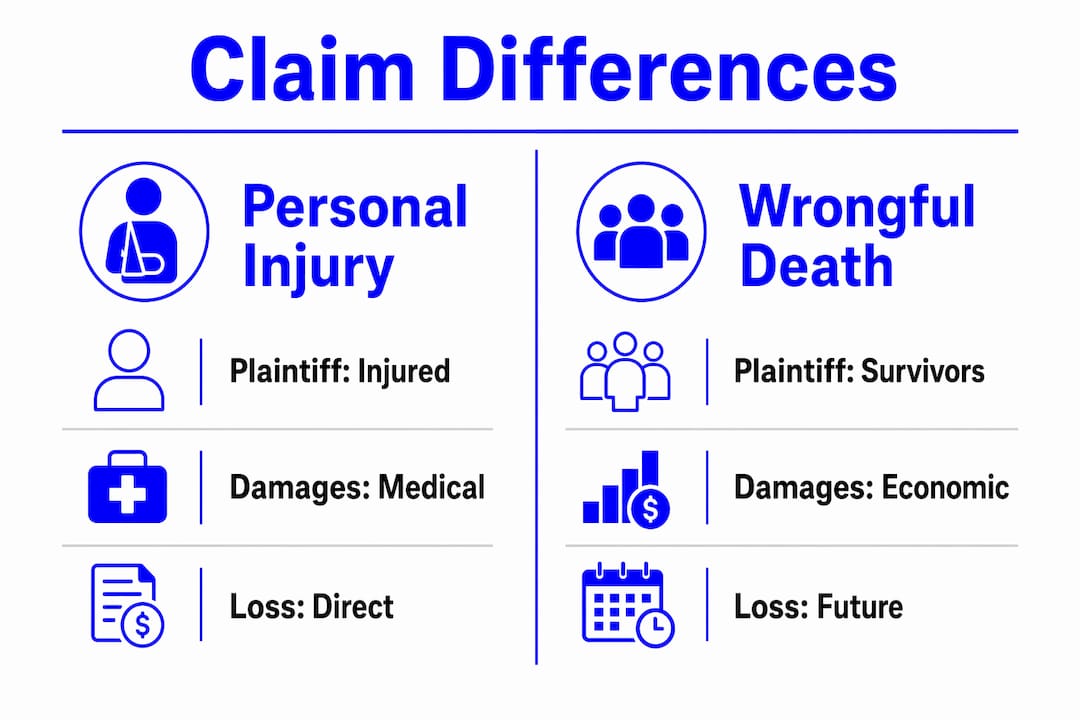
Personal injury damages focus on the injured person's direct experience. Courts award compensation for medical bills, rehabilitation costs, lost wages during recovery, and pain and suffering. The injured person is the center of the claim, and every dollar of damages connects back to their physical and financial harm.
Wrongful death damages shift the focus entirely to the survivors. Wrongful death damages emphasize lost future financial support, loss of companionship, and loss of guidance rather than medical expenses. Courts also recognize intangible losses, including the emotional value of a parent's presence or a spouse's partnership, which are harder to quantify but legally compensable.
| Damage Type | Personal Injury | Wrongful Death |
|---|---|---|
| Medical expenses | Yes, current and future | No (victim is deceased) |
| Lost wages | Yes, for injured person | Yes, projected lifetime earnings |
| Pain and suffering | Yes, for injured person | Limited or excluded |
| Loss of companionship | No | Yes, for surviving family |
| Loss of guidance | No | Yes, especially for children |
| Household services | No | Yes, economic value of services |
Damages in wrongful death include both economic losses like lost earnings and household services, and intangible losses like love and guidance, even for non-income earners such as children or retirees. That last point surprises many families. A stay-at-home parent or retired grandparent still provides measurable economic and emotional value that courts can compensate.
Pro Tip: In wrongful death cases, document every role the deceased played in the household, from childcare to financial planning. These details directly affect the compensation your family can recover.
What are the procedural differences between wrongful death and personal injury claims?
Procedure is where many families lose their claims, not because they lack a valid case, but because they miss a deadline or file under the wrong legal theory.
-
Statute of limitations start dates differ. Personal injury limits typically run 2–3 years from the date of injury. Wrongful death limits usually begin at the date of death, which may be days, weeks, or months after the original injury. Missing either deadline bars your claim permanently.
-
Survival actions add a layer of complexity. A survival action allows the estate to recover damages for pain and suffering the victim experienced between the injury and their death. This is separate from the wrongful death claim. Both can run simultaneously, but they require separate legal filings and different evidence.
-
Evidence standards differ significantly. Personal injury cases rely heavily on the injured person's direct testimony, medical records, and treatment timelines. Wrongful death cases cannot use the victim's voice. Instead, attorneys build the case through family testimony, financial projections, and expert witnesses.
-
Control of the lawsuit shifts. In personal injury, the injured person controls every decision. In wrongful death, survivors and estate representatives share control and must coordinate, which can create conflict when family members disagree on strategy or settlement.
-
Standing challenges are unique to wrongful death. A personal injury plaintiff only needs to prove they were injured. A wrongful death plaintiff must also prove they have legal standing under state law, which is a threshold question courts address before any evidence is heard.
How do legal frameworks and evidence differ between the two claim types?
Wrongful death is not simply a personal injury claim that continues after the victim dies. It is a separate legal action with unique evidentiary demands focused entirely on the survivors' losses. This distinction shapes every aspect of how attorneys build and argue the case.
The evidence required in each claim type reflects the different injuries being compensated:
- Personal injury cases rely on medical records, treatment timelines, physician testimony, and the injured person's own account of their suffering and limitations.
- Wrongful death cases require actuarial and financial experts to calculate lost lifetime earnings and the economic value of household services the deceased would have provided.
- Family testimony carries unusual weight in wrongful death cases. Spouses, children, and parents describe their relationship with the deceased to help the court understand and quantify intangible losses.
- The absence of the deceased forces attorneys to reconstruct a life rather than document an injury. This requires more preparation, more expert witnesses, and a deeper investigation into the deceased's career trajectory, health history, and family role.
- Losses in wrongful death are inherently subjective, requiring families to share personal stories about their relationship to quantify damages. That emotional dimension makes wrongful death litigation both more complex and more demanding than standard personal injury work.
What practical considerations should you know before filing?
Choosing the right legal path early protects your family's ability to recover full compensation. Several factors determine which claim applies to your situation and how to proceed.
- Act quickly on deadlines. Statutes of limitation for both personal injury and wrongful death are strict. Missing the filing window eliminates your claim regardless of how strong the underlying case is.
- Confirm who has legal standing. Not every family member qualifies to file a wrongful death claim. Verify your position in the plaintiff hierarchy before taking any legal steps.
- Consider whether both a survival action and a wrongful death claim apply. If the victim survived for any period after the injury before dying, the estate may pursue both claims simultaneously. This can significantly increase total compensation.
- Hire an attorney with fatal accident experience. Wrongful death litigation requires financial experts, actuarial analysis, and a specific litigation strategy that general personal injury attorneys may not have. Look for counsel who has handled fatal accident cases specifically.
- Understand that accident injury compensation calculations differ between claim types. The formulas courts use for wrongful death are more complex and require specialized expert input that affects the final award.
Pro Tip: Consult a wrongful death attorney within the first 30 days after a fatal accident. Early legal involvement preserves evidence, secures witness statements, and prevents procedural missteps that are nearly impossible to correct later.
Key takeaways
Wrongful death and personal injury are legally distinct claims with different plaintiffs, damages, evidence standards, and deadlines, and confusing them can cost your family the compensation it deserves.
| Point | Details |
|---|---|
| Different plaintiffs | Personal injury is filed by the injured person; wrongful death is filed by surviving family or the estate. |
| Different damages | Wrongful death compensates survivors for lost support and companionship, not the victim's medical bills. |
| Separate deadlines | Statutes of limitations differ: personal injury runs from injury date, wrongful death from the date of death. |
| Survival actions exist | If the victim survived briefly before dying, the estate can file a survival action alongside the wrongful death claim. |
| Standing is strict | Only specific family members in a legal hierarchy may file wrongful death claims, regardless of financial dependency. |
What I've learned from watching families navigate these claims
Most people assume wrongful death is just a personal injury case that gets transferred to the family after someone dies. That assumption is wrong, and it costs families real money.
The legal complexity of wrongful death cases is genuinely underestimated. You are not just proving negligence. You are reconstructing an entire life, projecting decades of future earnings, and putting a dollar value on love and guidance. That requires a different kind of attorney, a different kind of expert, and a different emotional commitment from the family.
The other thing I see consistently is families waiting too long to get legal advice because they are grieving. That is completely understandable. But the statute of limitations does not pause for grief. Evidence disappears. Witnesses move. Insurance companies begin building their defense the day the accident happens.
The misconception I find most damaging is the belief that any personal injury attorney can handle a wrongful death case. Some can. Many cannot. The actuarial analysis alone, projecting a person's lifetime earnings and household contributions, requires specialized expertise that most general practitioners do not have. If you are facing a fatal accident case, ask specifically about the attorney's wrongful death experience before you sign anything.
— Gerard
Get the right legal help for your case
If you are trying to understand whether you have a wrongful death or personal injury claim after a serious accident, the most important step is connecting with an attorney who knows the difference and can act fast.
Carcollisionlawyer connects accident victims and surviving families with experienced attorneys who handle both personal injury and wrongful death cases. The free evaluation process means you can understand your legal options and potential compensation without any upfront commitment. Whether you were injured in a car, motorcycle, or truck accident, or you lost a family member due to someone else's negligence, Carcollisionlawyer matches you with specialized legal support built for your specific situation. Start your free evaluation at Carcollisionlawyer today.
FAQ
What is the main difference between wrongful death and personal injury?
A personal injury claim is filed by the injured person to recover their own losses. A wrongful death claim is filed by surviving family members or an estate representative to recover losses caused by the victim's death.
Who is eligible to file a wrongful death claim?
Eligibility follows a legal hierarchy set by state law, typically starting with the spouse, then children, then parents, and finally the estate representative. Individuals outside this hierarchy may lack legal standing even if they were financially dependent on the deceased.
Can a wrongful death claim and a survival action be filed at the same time?
Yes. If the victim survived for any period after the injury before dying, the estate can file a survival action to recover damages for that period, while surviving family members file a separate wrongful death claim.
How long do you have to file a wrongful death claim?
Wrongful death statutes of limitations typically begin at the date of death, while personal injury limits run from the date of injury. Most states set a 2–3 year window, but the exact deadline varies by state and claim type.
Do wrongful death cases require different experts than personal injury cases?
Yes. Wrongful death cases rely on actuarial and financial experts to calculate lost lifetime earnings and household services, while personal injury cases primarily use medical experts to document injury and treatment.