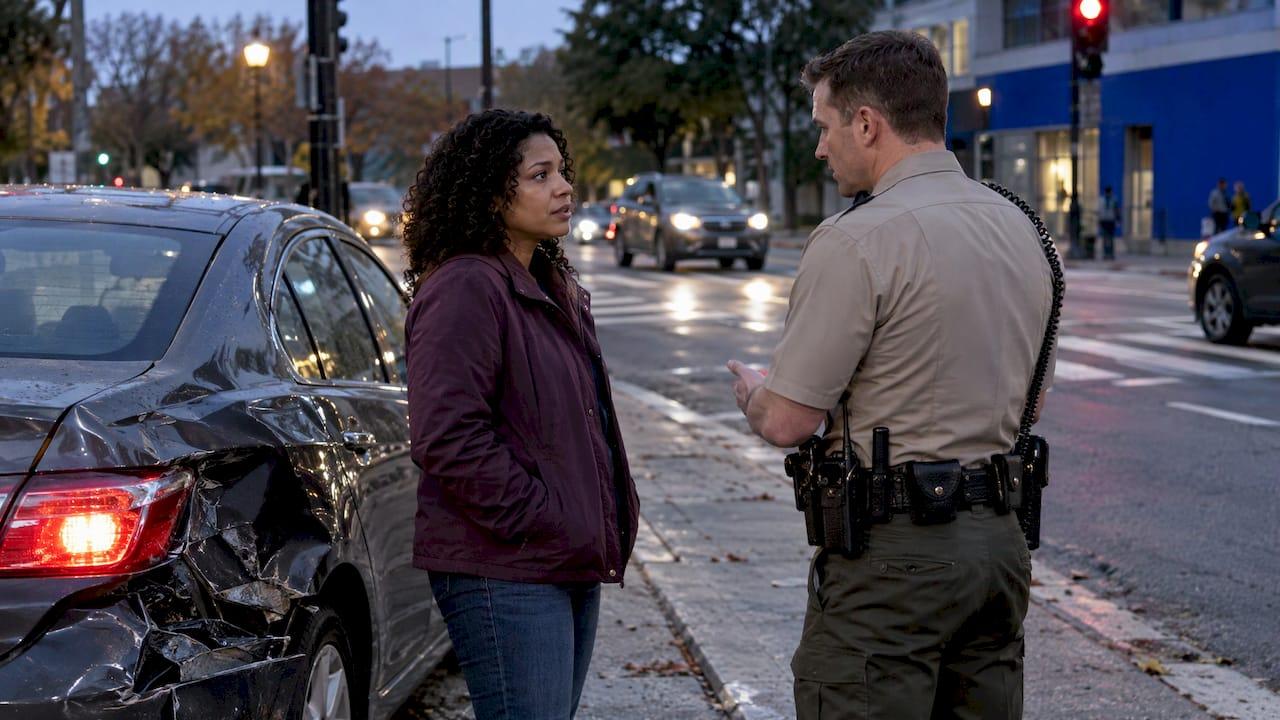
If a drunk driver injured you or killed someone you love, you may be able to ask a court for punitive damages: money meant to punish the driver, paid on top of the compensation that covers your losses. Whether you can get them, and how much, depends on your state's law and on the evidence of how drunk the driver was and what the driver knew. A free evaluation at Carcollisionlawyer can match you with a vetted local attorney who can tell you how your state treats these claims.
TL;DR
- Punitive damages punish the driver and deter others. Compensatory damages repay your actual losses. In a drunk driving case you can often seek both.
- Every state sets its own rule. Some tie punitive damages to a blood alcohol level or a test refusal, and some ask whether the driver showed conscious disregard for others.
- Some states cap punitive awards, and at least one, North Carolina, lifts its cap for qualifying impaired driving cases.
- Evidence decides the claim: police and test records, witness accounts and proof of where and how much the driver drank.
- A free, no-obligation evaluation can show you whether your facts point toward punitive damages before you commit to anything.
Table of Contents
- What punitive damages are, and how they differ from compensatory damages
- Why drunk driving can support punitive damages
- How the rules differ from state to state
- Caps on punitive damages
- The proof that matters
- Criminal case versus civil claim
- Who else may be responsible
- How fault rules can affect your recovery
- What to do in the first days
- Start with a free evaluation
- Our perspective
- FAQ
- Sources
What punitive damages are, and how they differ from compensatory damages
After a crash, the law separates two kinds of money.
Compensatory damages repay what the crash cost you. That means medical bills, lost income, future care, property damage, and the harm that is harder to price, such as pain, suffering and emotional trauma. In a wrongful death claim, families seek compensation for their loss under their state's wrongful death law. The amount is tied to your actual losses.
Punitive damages, also called exemplary damages, are different. They are not meant to make you whole. A judge or jury may award them to punish a defendant whose conduct was especially wrongful and to discourage others from doing the same. The money goes to the injured person, but the purpose is the defendant's conduct, not your invoice.
A simple example shows the gap. Suppose a driver with a very high blood alcohol level runs a red light and breaks your leg. Your hospital bills, months of missed work and physical therapy are compensatory. A separate award that reflects how reckless it was to drive in that condition is punitive. Courts rarely award the second kind in ordinary crashes, because most collisions are treated as negligence: a mistake, not a conscious choice to put others at risk. Drunk driving is the situation where that line is most often argued, because the decision to drink and then drive happened before the crash.
We cover how this works in everyday collisions in our guide to punitive damages after a car accident.

Why drunk driving can support punitive damages
The core idea is conscious choice. A driver who is merely careless did not decide to hurt anyone. A driver who chose to drink heavily and then get behind the wheel knew, or should have known, that the choice endangered others.
California's highest court said this directly in 1979. In Taylor v. Superior Court, the court held that driving while intoxicated can amount to "malice" for punitive damages purposes when it happens under circumstances showing a conscious disregard of the probable dangerous consequences, and it ordered part of the plaintiff's punitive damages complaint reinstated. The driver did not have to intend the crash. The deliberate decision to drive impaired was enough to bring the claim into reach of the law.
That reasoning, or something close to it, runs through many states. The details differ a great deal, and the details decide your case.
How the rules differ from state to state
There is no single national rule. Punitive damages in civil cases are a matter of state law, so the same crash can lead to different outcomes in different places. Here are three states with published statutes or rulings that show the range of approaches.
Virginia: willful or wanton conduct, with alcohol-based proof
Virginia's statute, Va. Code § 8.01-44.5, covers personal injury or death arising from operating a motor vehicle. The fact finder may award punitive damages if the evidence shows malice toward the plaintiff, or conduct so willful or wanton that it shows a conscious disregard for the rights of others.
For drunk driving, the statute spells out what "sufficiently willful or wanton" means. The evidence must show all three of the following:
- The driver had a blood alcohol concentration of 0.15% or more (or 0.15 grams or more per 210 liters of breath) when the incident occurred.
- The driver knew or should have known, when drinking began or while drinking or driving, that his or her ability to operate a vehicle was impaired.
- The intoxication was a proximate cause of the injury or death. "Proximate cause" means the drinking was a direct and foreseeable reason the harm happened.
The statute also provides for certain test certificates to serve as prima facie evidence when its conditions are met, which means they count as enough proof on their face unless the other side rebuts them.
Minnesota: a lower threshold and refusal to test
Minnesota takes a more direct route. Under Minn. Stat. § 169A.76, in a civil action involving a motor vehicle accident, a court or jury may consider punitive damages when evidence shows the accident was caused by a driver with an alcohol concentration of 0.08 or more. The same statute reaches a driver who was under the influence of alcohol and refused a test required by law, and a driver under the influence of an intoxicating substance who knew or had reason to know that the substance could cause impairment.
Two things stand out. The alcohol threshold is lower than Virginia's, and a refusal to take a test can itself open the door. That is why preserving the police record of a refusal can matter.
California: malice through conscious disregard
California does not use a fixed blood alcohol number in the Taylor decision. It asks whether the circumstances show conscious disregard of probable dangerous consequences. That makes the facts around the drinking important: how much, over how long, whether the driver had been warned or had prior incidents, and whether the driver kept driving despite obvious impairment. A fixed number may help prove impairment, but the question is the driver's state of mind.
A quick comparison
| State | What opens the door to punitive damages | Where it is written |
|---|---|---|
| Virginia | Willful or wanton conduct or malice; for alcohol, BAC of 0.15% or more plus knowledge of impairment plus causation | Va. Code § 8.01-44.5 |
| Minnesota | Alcohol concentration of 0.08 or more, test refusal, or knowingly impairing substance | Minn. Stat. § 169A.76 |
| California | Intoxicated driving that shows conscious disregard of probable dangerous consequences | Taylor v. Superior Court |
This table is not a full list of states, and statutes get amended. If your crash happened elsewhere, the first step is to find out what your state's law and courts say now. A local attorney does that for a living.
Caps on punitive damages
Many people ask whether punitive damages are capped. The answer is that it depends on the state. Some states limit punitive awards by a fixed dollar figure or a multiple of compensatory damages, and others have no cap at all. Some states carve out exceptions for the very cases this article is about.
North Carolina is a clear example. Its general cap on punitive damages in G.S. 1D-25(b) does not apply when the claim is for harm from the defendant's operation of a motor vehicle and the defendant's actions would amount to driving while impaired under the state's DWI laws. The carve-out is written in N.C. Gen. Stat. § 1D-26, which dates from 1995. In practice, a drunk driving victim there is not held to the ceiling that applies to many other punitive claims.
Because caps change by legislation and court decision, do not rely on a figure you saw in an old article. Ask the attorney who evaluates your case which limit, if any, applies in your state today.
The proof that matters
Punitive damages require more than a crash and a drunk driver. The law asks about the driver's conduct and mental state, and it usually sets a higher bar of proof than an ordinary injury claim. Strong cases tend to have the following.

Evidence of how impaired the driver was. Breath or blood test results, the time the test was taken, and the officer's observations of the driver all help. In Virginia and Minnesota, the statutes tie the claim directly to these numbers.
Evidence of a test refusal. Minnesota's statute names refusal as a basis. Even where a statute is silent, a refusal is part of the story a court will hear.
Evidence of what the driver knew. Receipts from a bar or restaurant, social media posts, text messages, witness accounts of how much the driver drank and whether anyone tried to stop the driver, and a record of earlier impaired driving incidents all speak to knowledge and choice.
Evidence that the intoxication caused the harm. Virginia's statute makes this the third element. Dashcam video, traffic camera footage, the crash report and accident reconstruction help show that the way the driver was driving, and not something unrelated, caused your injury.
Much of this disappears fast. Surveillance video is overwritten, bar records are not kept forever, and memories fade. Our guide on how to preserve evidence to sue a drunk driver lists what to save and how, and the 10 car accident evidence steps apply to any crash.
Criminal case versus civil claim
A drunk driver may face criminal charges brought by the state. The penalties there, such as fines, license suspension, probation or jail, go to the government's interests. They do not pay your medical bills.
Your civil claim is separate. You, or your family in a wrongful death case, bring it against the driver to recover your losses, and in the right circumstances to seek punitive damages. The two cases can run side by side. A conviction or a guilty plea in the criminal case can be powerful evidence, but a civil claim does not depend on it, and the standards of proof are different. An experienced attorney will explain how the timing works in your state, including the deadline for filing a civil suit, which is set by state law and is usually shorter than people expect.
Who else may be responsible
Sometimes the driver is not the only party worth looking at. If the driver was working at the time, an employer may share responsibility under the legal doctrine of vicarious liability, where one party answers for another's actions. Our article on vicarious liability in car crash claims explains how payroll and GPS records can matter. Some states also have laws that allow claims against businesses that served an obviously intoxicated person, and those rules vary a lot by state. These are questions for a local attorney, who can check how your state handles them.
How fault rules can affect your recovery
Your own conduct can change the numbers. If the other side argues you were partly at fault, for example for not wearing a seat belt or for how you moved through an intersection, state fault rules decide how that argument affects you. Some states reduce your recovery by your share of fault. A few bar recovery entirely when you share even a small amount of blame. See our explanations of comparative negligence, contributory negligence states and the seat belt defense. Knowing these rules early helps you avoid statements to an insurer that could be used against you.
What to do in the first days
- Get medical care and follow it. Your health comes first, and medical records are also the basis for your compensatory claim.
- Keep the crash report number. The police report records the officer's observations and any test results or refusal.
- Write down what you remember. Include the time, the place, what the other driver said and did, and the names of witnesses.
- Save photos, video and messages. Photos of the scene and your injuries, dashcam footage and anything the other driver sent you should be backed up.
- Keep every bill and pay record. Medical bills, pharmacy receipts, and proof of missed work all feed the compensatory claim.
- Be careful with insurers. Adjusters may ask for a recorded statement. Speak with an attorney before you give one.
- Talk to a personal injury attorney soon. Evidence disappears and filing deadlines run, so early review protects your options.
Emotional trauma counts too. Anxiety, sleep problems, fear of driving and similar effects after a crash are part of the harm, and they are better documented through ongoing treatment records. Our guide on accident phobia diagnosis and compensation goes into this.
Start with a free evaluation
A drunk driving case has more moving parts than most injury claims: a criminal case, state-specific punitive rules, possible caps and evidence that can vanish. We built our free evaluation around the nature of your injury and your circumstances, so you do not have to work out which questions matter before you ask for help. You describe what happened, whether it was a car, truck, motorcycle or bicycle crash, or the loss of a family member, and we work to connect you with a vetted local attorney who can assess your claim. There is no cost and no obligation to go forward.
Start your free case evaluation and find out whether punitive damages may be part of your claim. You can also browse real-world numbers in our article on car accident damages recovered.
Our perspective
People often come to us after the worst day of their lives, and the first thing they ask is whether the other driver will be held accountable. Punitive damages are the part of the civil system that speaks to that question. They will not undo an injury, but they can reflect how serious it is to put a drunk driver on the road.
What we have built is meant to make the first step easy. The evaluation is free and asks about your specific injury and circumstances, because a broken bone, a lasting emotional injury and a wrongful death claim each call for different handling. Matching you with a vetted local attorney matters because punitive damages are decided under state law, and a lawyer who works in your state's courts knows its standards.
Our advice is simple. Do not wait to find out where you stand. Evidence is easiest to secure early, and a short conversation can tell you whether punitive damages belong in your claim.
Gerard
FAQ
Can I get punitive damages in any drunk driving case?
No. Punitive damages are available only where your state's law allows them and the evidence meets its standard. Some states tie them to a blood alcohol level or a test refusal, and others look at whether the driver showed conscious disregard for others. A local attorney can tell you how your state treats your facts.
Are punitive damages in addition to my medical bills and lost wages?
Yes. Compensatory damages cover your actual losses, such as medical bills, lost income and pain and suffering. Punitive damages are a separate award meant to punish the driver. A court decides each part on its own terms.
Is there a cap on punitive damages?
It depends on the state. Some states limit punitive awards, and others do not. North Carolina, for example, does not apply its general cap to qualifying impaired driving claims under N.C. Gen. Stat. § 1D-26. Ask your attorney which rule applies where you live.
Can a family seek punitive damages after a drunk driving death?
Often the answer is yes, depending on the state. Virginia's statute, for instance, covers actions for personal injury or death from operating a motor vehicle when its standard of proof is met. Families should speak with an attorney soon, because wrongful death claims have their own filing deadlines.
Do I need a criminal conviction to claim punitive damages?
Not necessarily. The civil claim is separate from the criminal case and has its own standards. A conviction or test result can be strong evidence, but your attorney will explain how the two cases fit together in your state.
Sources
- Va. Code § 8.01-44.5, Punitive damages for persons injured by intoxicated drivers
- Minn. Stat. § 169A.76, 2026
- Taylor v. Superior Court, 24 Cal.3d 890 (1979)
- N.C. Gen. Stat. § 1D-26