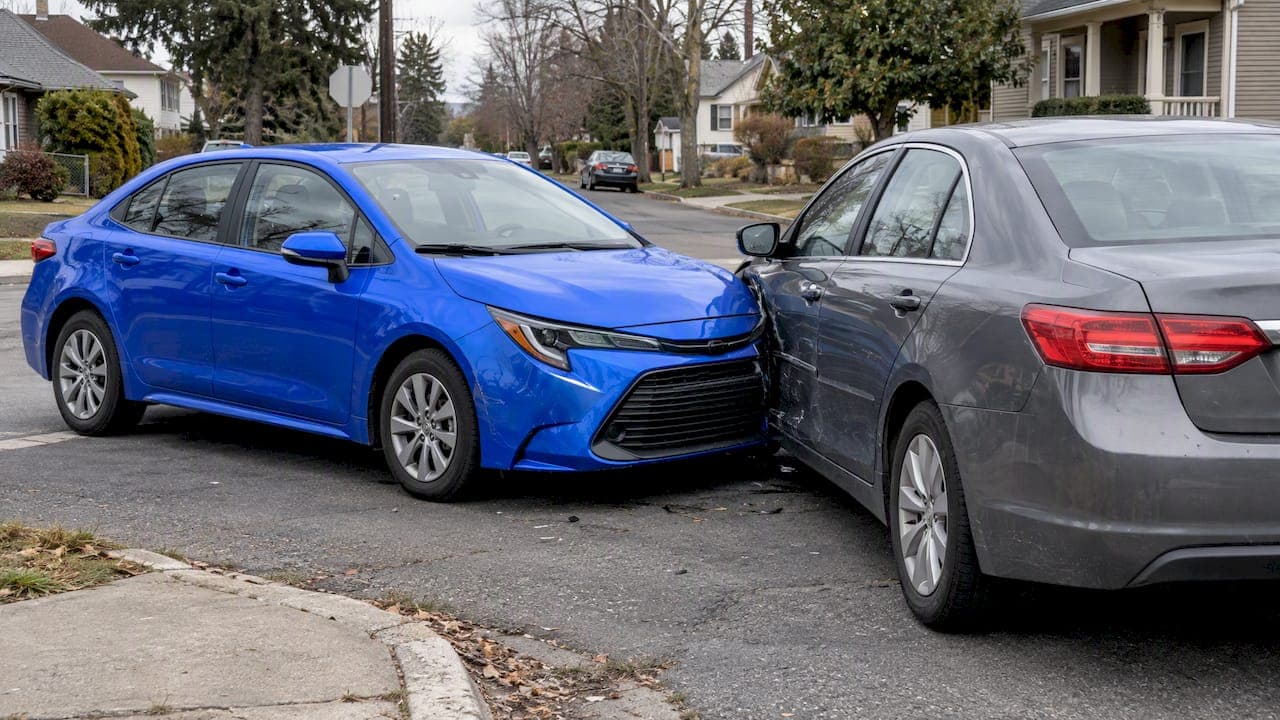
Five U.S. jurisdictions still follow pure contributory negligence: Alabama, the District of Columbia, Maryland, North Carolina and Virginia. In those places, if a court finds you even 1% at fault for a crash, you can generally recover nothing from the other party. Cornell's Legal Information Institute reports that the other 45 states have moved to some form of comparative negligence. If you were hurt in one of the five, the rule shapes everything about your claim, from what you say to the insurer to when you call a lawyer.
TL;DR
- Alabama, D.C., Maryland, North Carolina and Virginia are the contributory negligence jurisdictions. Everywhere else uses a comparative system.
- Under the rule, any fault on your part can bar your whole claim, however small.
- Contributory negligence is a defense, so the other side must prove your fault. Narrow exceptions such as last clear chance and emergency situations can still help you.
- Insurers in these states look hard for any sliver of blame. Do not guess about fault in recorded statements.
- A free evaluation can show whether you have a claim worth pursuing before you commit to anything.
Table of Contents
- Which states still use contributory negligence
- How the rule works
- Contributory negligence examples
- Exceptions that can save a claim
- What this means for your claim after a crash
- How contributory negligence compares with other systems
- Our perspective
- Get a free evaluation of your accident
- FAQ
- Sources
Which states still use contributory negligence
The list is short and has been stable for years. Cornell's overview names the same five jurisdictions, and consumer-law references such as FindLaw describe the all-or-nothing doctrine as used in only a handful of states.
| Jurisdiction | Rule for a partly at-fault plaintiff |
|---|---|
| Alabama | Pure contributory negligence |
| District of Columbia | Pure contributory negligence, with some newer exceptions for certain road users |
| Maryland | Pure contributory negligence, with some newer exceptions for certain road users |
| North Carolina | Pure contributory negligence |
| Virginia | Pure contributory negligence |
Laws change, so confirm the current rule for your state and crash date. TortAdvisor's state-by-state chart (updated August 2026) and Justia's 50-state survey are good places to check the baseline before you talk to an attorney.
A note on recent changes: lawmakers in D.C. and Maryland have been creating exceptions to the strict rule for some people outside vehicles, such as pedestrians and cyclists. How those exceptions apply depends on the statute's wording and your facts, so ask a local attorney if you were walking or biking when you were hit.
How the rule works
Contributory negligence is a common law rule. Cornell's definition says it bars a plaintiff from recovering for another person's negligence if the plaintiff was also negligent in causing the harm. There is no percentage and no reduction. You either have no fault, or you lose.
That is the opposite of comparative systems. In a pure comparative state, your damages are reduced by your share of fault. In a modified comparative state, you recover only if your share stays under a threshold, usually 50% or 51%. If you want to see how that works in car claims, we explain it in How 1% Can Cost You: Comparative Negligence in U.S. Car Claims.

Who has to prove what
Contributory negligence is an affirmative defense. According to an American Bar Association committee summary, the burden rests on the defendant. The defendant must show you failed to use the care an ordinary person would use in the same situation, and that this failure helped cause your harm.
You still have to prove the other driver was negligent first. Only then does the question of your own conduct come up. That order matters: a defendant who cannot back up an accusation with evidence has not carried the burden.
Why the rule is so harsh
Cornell's Legal Information Institute notes the rule is often criticized because it produces results many people see as unfair. Its one practical advantage is simplicity. Courts do not have to calculate precise fault percentages, because anyone who shares blame is disqualified.
Contributory negligence examples
The rule is easiest to see in ordinary crashes. These are illustrations, not predictions, and real outcomes depend on the evidence and the jurisdiction.
Example 1: the rolling stop. A driver runs a red light and hits you in an intersection in Virginia. The defense argues you were checking your phone at the green and would have seen the car if you had looked up. If a jury accepts that, even partly, the claim can fail entirely. In a comparative state, you would likely recover most of your damages minus your share.
Example 2: the speeding motorcyclist. A car turns left across a motorcycle's path in North Carolina. The rider was going a few miles an hour over the limit. The insurer argues that speed contributed. In a contributory state, this argument can be the whole defense.
Example 3: the pedestrian outside the crosswalk. A pedestrian crosses mid-block and is hit by a driver who was texting. Under the strict rule, the crossing location can be used to bar the claim. This is the type of situation where newer exceptions in D.C. and Maryland may matter, so get local advice.
Example 4: the cyclist without a light. A cyclist riding at dusk without a front light is hit by a car that drifts into the bike lane. The defense points to the missing light as contributing fault, whatever the driver did.
Example 5: the seat belt question. Not wearing a belt is usually treated as something that affects the size of damages rather than who caused the crash, and that treatment varies by state. We cover it in How Seat Belt Defense Reduces Damages, Not Liability.

Exceptions that can save a claim
The rule is strict, but courts have carved out limits. These do not guarantee a recovery. They give a good lawyer something to work with.
Last clear chance
This is the best-known exception. Cornell's entry on last clear chance explains the doctrine applies when both sides were negligent. In states with contributory negligence, it can let a plaintiff recover if the defendant had the final opportunity to avoid the harm and failed to take it. For example, a driver who sees you stranded in the road with plenty of time to stop, and doesn't, may face this argument even if you were careless to get there.
Sudden emergencies
People do not make perfect choices in a crisis. According to Working with the Law, courts consider the situation a plaintiff faced, and a person acting in a sudden, dangerous moment is not held to the standard of someone with time to think. If you swerved because the other car crossed the center line, a defense claiming you should have braked differently is weaker.
Gross or willful conduct
In general, courts treat intentional or extremely reckless conduct by a defendant differently from ordinary carelessness. Whether that applies in your case depends on state law and the facts, and it is a question for a licensed attorney in your state.
What this means for your claim after a crash
In a contributory state, the first weeks matter more than they do elsewhere. Here is what we suggest.
- Get medical care and keep records. Treatment protects your health and documents your injuries.
- Photograph everything. Vehicle positions, skid marks, signals, lighting, road signs and your injuries. Evidence that proves the other driver's fault also disproves your own.
- Collect witness names and numbers. A neutral witness who says you were obeying the law is valuable.
- Be careful with the other side's insurer. Adjusters are trained to look for any evidence that you share blame, and with an all-or-nothing rule, even a small admission can be enough to deny a claim. Avoid speculating about speed, distraction or what you could have done differently.
- Do not post about the crash. Social media posts can be read as admissions.
- Speak with a personal injury attorney early. Deadlines for filing suit vary by state, and the sooner someone reviews the facts, the more evidence can be preserved. Our guide on preserving evidence after a U.S. car crash goes into detail.
If the other driver worked for a business at the time, there may be additional parties to consider. See Vicarious Liability: GPS and Payroll Help Prove U.S. Car Crash Claims. If your state uses no-fault insurance, your own insurer's coverage works differently, covered in 12 U.S. No Fault States.
How contributory negligence compares with other systems
| System | Effect of your fault | Where it applies |
|---|---|---|
| Pure contributory | Any fault bars recovery | Alabama, D.C., Maryland, North Carolina, Virginia |
| Modified comparative (50% or 51% bar) | Recovery reduced by your share, barred above the threshold | Many states |
| Pure comparative | Recovery reduced by your share, no bar | Several states |
The Justia survey lists the approach for each state. Note that which state's law applies depends on where the crash happened, not where you live. If you are a Virginia resident hurt in a neighboring state, that state's fault rule may control.
For a broader view of how fault and insurance interact, read Negligence in Car Accidents: What You Need to Know and How 12 U.S. States Decide Who Pays After a Crash.
Our perspective
We built this site for people who are hurt and unsure what to do next. In contributory negligence states, the biggest mistake we see in the questions readers ask is waiting. People assume that because they might have made a mistake, they have no case, and they stop. That assumption is often wrong, since the other side must prove your fault, and exceptions exist.
The opposite mistake is just as costly: giving a detailed recorded statement to an adjuster before knowing how the rule applies. Where a single percent of blame can end a claim, how you describe the crash matters.
We are not a law firm and we do not give legal advice. What we do is help you describe your accident and injuries, so you can be matched with a vetted attorney who practices where you live and can tell you how your state's rule applies. Fault rules are only one factor in a claim's value, and our settlement factors guide covers the rest.
— Gerard
Get a free evaluation of your accident
Not sure whether the rule affects your case? Our free evaluation asks about your crash and your injuries, then connects you with an attorney suited to your situation. It carries no obligation, and you can use it to find out whether you may be entitled to compensation. If you prefer to read first, start with our page on accident injury compensation.
FAQ
Is contributory negligence used in every state?
No. Only Alabama, Maryland, North Carolina, Virginia and the District of Columbia follow the pure rule, according to Cornell's Legal Information Institute. The remaining states use pure or modified comparative negligence. Check your state's current law, since legislatures and courts can change it.
Is contributory negligence an affirmative defense?
Yes. The defendant carries the burden of proving that you failed to act with reasonable care and that it helped cause your injury, as an ABA committee summary explains. You still have to show the other party was negligent.
Can I recover anything if I was partly at fault in a contributory state?
Generally not, unless an exception applies. Last clear chance, the sudden emergency doctrine and newer statutory exceptions for some road users may help in particular cases. A personal injury attorney licensed in your state can tell you whether any of them fit your facts.
What is a simple example of contributory negligence?
A driver runs a stop sign and hits you, but evidence shows you were speeding. In a contributory negligence state, a jury that finds your speeding contributed even slightly may bar your claim. In a comparative state, your recovery would instead be reduced.
Sources
- Cornell LII: Comparative negligence
- Cornell LII: Contributory negligence
- Cornell LII: Last clear chance
- FindLaw: What is contributory negligence?
- Justia: Comparative and contributory negligence laws, 50-state survey
- TortAdvisor: Car accident fault rules by state
- ABA committee summary on comparative and contributory negligence
- Working with the Law: Contributory negligence