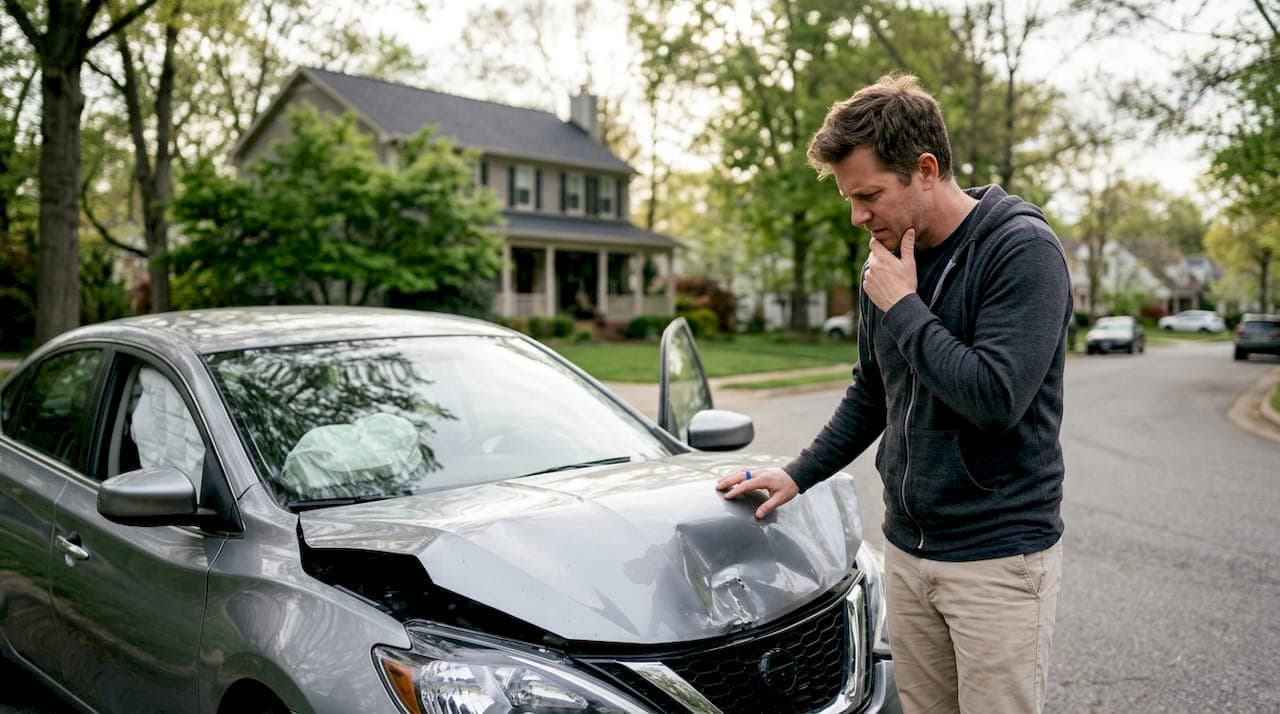
Negligence in car accidents is defined as a driver's failure to exercise the reasonable care that a prudent person would use under the same circumstances, making that driver legally responsible for resulting harm. Understanding car accident negligence determines who pays for medical bills, vehicle repairs, and lost wages after a crash. Every valid negligence claim rests on four legal elements: duty of care, breach, causation, and actual damages. Miss any one of those four, and the claim fails entirely. Carcollisionlawyer connects injured drivers with attorneys who know exactly how to build that four-part case.
What is negligence in car accidents, and why does it matter?
Negligence is the legal standard courts use to decide fault after a collision. It is not about bad intentions. A driver can be perfectly calm and still be negligent by simply failing to act as a reasonable person would. That distinction matters because it shifts the focus from character to conduct, which is something courts can actually measure.
The reasonable person standard is the benchmark attorneys use rather than just pointing to traffic violations. The question is not whether the driver broke a law. The question is whether a careful, prudent driver would have acted differently in that exact situation. That framing gives attorneys a powerful tool to argue fault even when no citation was issued.
Negligence laws in accidents directly control compensation. If you cannot prove negligence, you cannot recover damages. That makes understanding the concept the first practical step after any serious crash.
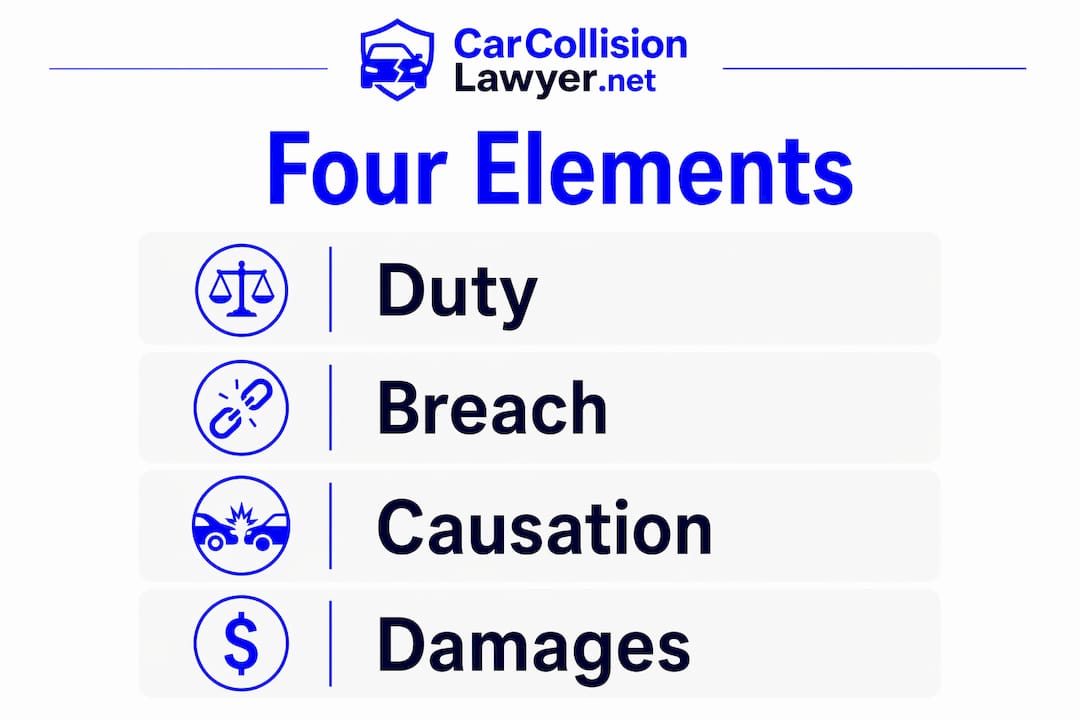
What are the four elements of negligence in car accident cases?
All four elements must be proven for a negligence claim to succeed. Missing even one collapses the entire case. Here is what each element requires:
- Duty of care. Every driver on a public road automatically owes a duty of care to other drivers, passengers, cyclists, and pedestrians. This duty is not optional. It exists the moment you get behind the wheel.
- Breach of duty. A breach occurs when a driver deviates from reasonable conduct expected of a careful person. Speeding, ignoring traffic signals, and texting while driving are all clear examples of breach.
- Causation. You must show that the breach directly caused the accident and your injuries. A driver who ran a red light but whose action had no connection to your specific harm has not legally caused your damages.
- Actual damages. You must have suffered measurable harm: medical expenses, lost income, property damage, or pain and suffering. A near-miss with no injury produces no recoverable damages.
Pro Tip: Document every expense from day one. Medical bills, pharmacy receipts, and missed-work records all feed directly into the damages element of your claim.
Understanding car accident negligence at this structural level helps you see why attorneys ask so many specific questions after a crash. They are mentally checking each of the four boxes before advising you on whether a claim is worth pursuing.
What types of negligence exist in car accident law?
Courts recognize two main types of negligence in car accidents: ordinary negligence and gross negligence. The difference between them is not just academic. It directly affects how much compensation you can recover.
Ordinary negligence is a simple failure to exercise reasonable care. A driver who misjudges a gap and rear-ends another car at low speed has likely committed ordinary negligence. The standard of proof is a preponderance of the evidence, meaning it is more likely than not that the defendant was negligent.
Gross negligence involves reckless disregard for safety. A driver who is drunk, traveling at twice the speed limit, and weaving through traffic is not just careless. That driver is consciously ignoring a known risk to others. Gross negligence requires clear and convincing evidence, a higher legal bar. The payoff for meeting that bar is access to punitive damages, which go beyond compensating the victim and are designed to punish the wrongdoer.
| Feature | Ordinary negligence | Gross negligence |
|---|---|---|
| Definition | Failure to exercise reasonable care | Reckless disregard for others' safety |
| Standard of proof | Preponderance of the evidence | Clear and convincing evidence |
| Damages available | Compensatory damages | Compensatory and punitive damages |
| Common examples | Mild speeding, rolling a stop sign | Drunk driving, street racing |
A common misconception is that any bad driving automatically qualifies as gross negligence. Courts set a high bar. Aggressive but momentary lapses usually land in ordinary negligence territory.
What evidence is essential to prove negligence after a car accident?
Strong evidence is what separates a winning claim from a dismissed one. The types of evidence that matter most fall into a clear hierarchy.
- Police reports and traffic citations. These are the starting point. A citation for running a red light signals fault immediately. However, traffic tickets are considered hearsay in many courts and are rarely sufficient on their own to establish liability.
- Witness statements. Bystanders who saw the crash can corroborate your account of events. Collect names and contact information at the scene before anyone leaves.
- Technical evidence. Black box data, traffic camera footage, and accident reconstruction reports provide an objective timeline of vehicle speed, braking, and positioning. This type of evidence is often decisive in contested cases where both drivers tell conflicting stories.
- Medical records. Your medical records do two jobs at once. They prove you were injured, and they connect those injuries to the crash. Gaps in treatment give insurers an opening to argue your injuries came from a pre-existing condition.
- Photographs and video. Scene photos, dashcam footage, and surveillance video capture physical evidence that disappears quickly. Skid marks fade. Debris gets cleared. Vehicles get repaired.
Pro Tip: Seek medical attention within 24 hours of any crash, even if you feel fine. Early medical documentation prevents insurers from attributing your injuries to causes unrelated to the accident.
Victims frequently make the mistake of relying solely on the police report. Many jurisdictions treat police reports as hearsay, which means a judge can limit how much weight they carry. Objective technical evidence and thorough medical documentation are what actually win contested negligence claims.
How does negligence impact liability and compensation outcomes?
Negligence determines fault and financial responsibility in virtually every car accident claim. Once fault is established, it controls who pays and how much. The financial stakes are real: medical bills, vehicle repairs, lost wages, and compensation for pain and suffering all flow from the negligence finding.
Comparative fault rules add a layer of complexity. Most states reduce your compensation by your own percentage of fault. If a court finds you 20% responsible for a crash, your $100,000 award drops to $80,000. Some states bar recovery entirely if you are more than 50% at fault. Understanding how courts calculate verdicts in negligence cases helps you set realistic expectations before settlement talks begin.
Common negligent behaviors that affect compensation outcomes include:
- Speeding. Courts treat speed above the posted limit as automatic evidence of breach.
- Distracted driving. Phone records and app data can prove a driver was texting at the moment of impact.
- Driving under the influence. A DUI charge dramatically strengthens a gross negligence argument and opens the door to punitive damages.
- Tailgating. Following too closely removes reaction time and is a recognized breach of the duty of care.
- Running red lights or stop signs. These violations directly establish breach and are among the clearest examples of negligence in driving.
The car accident settlement factors that insurers weigh include the severity of the breach, the clarity of causation, and the documented extent of damages. A clean negligence case with strong evidence commands a higher settlement than one with gaps in any of the four elements.
What are common examples of negligence in car accidents?
Real-world examples make the legal principles concrete. Common negligent behaviors include distracted driving, running red lights, impaired driving, tailgating, and failing to use headlights at night. Each one breaches the duty of care in a specific, demonstrable way.
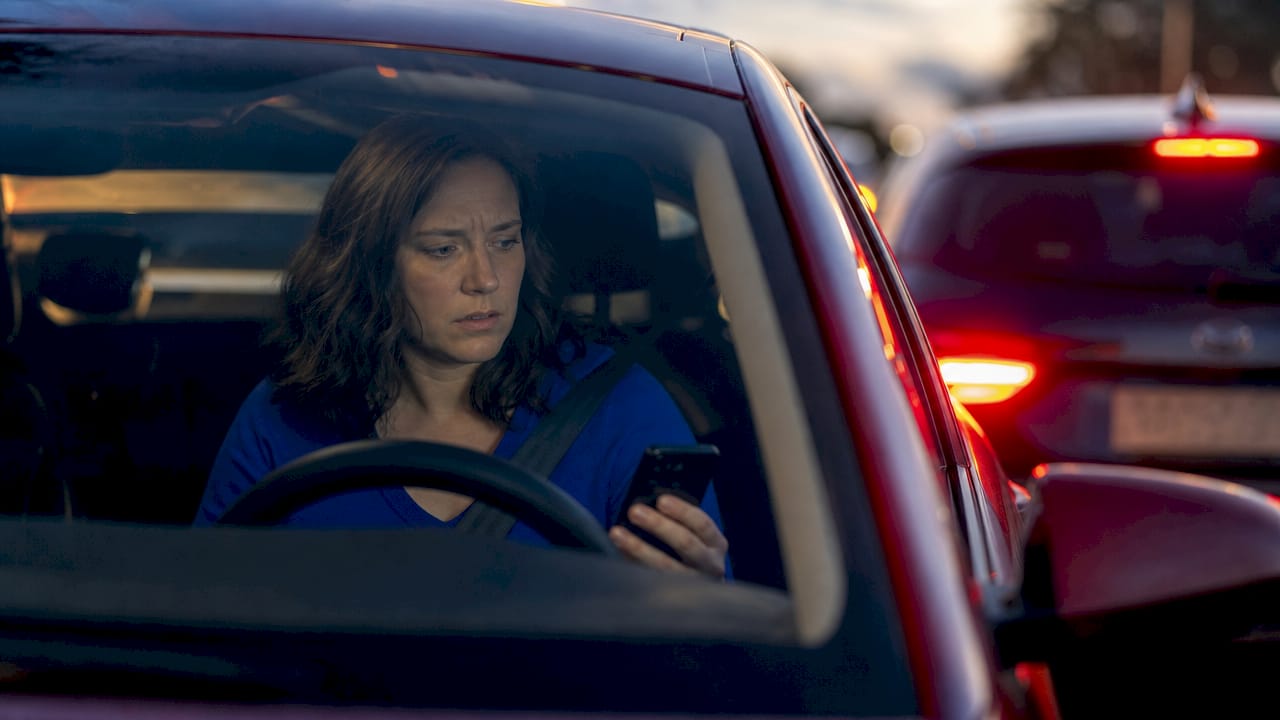
A driver who checks a phone at 45 mph and rear-ends a stopped car has breached the duty of care through distraction. The causation link is direct. The damages are physical and financial. That is a textbook negligence case. A driver who runs a red light and T-bones a car in an intersection creates an equally clear breach, with the traffic signal data and witness accounts serving as proof.
Driving without headlights at night is a subtler example, but courts treat it as a clear breach. Visibility is a basic safety requirement, and ignoring it puts every other road user at risk. Impaired driving, whether from alcohol, drugs, or prescription medication, often crosses from ordinary negligence into gross negligence territory, depending on the blood alcohol level and the circumstances of the crash.
Courts assess these examples by asking one central question: would a reasonable driver have done the same thing? When the answer is clearly no, negligence is established. The liability consequences for the at-fault driver then follow from that finding.
Key Takeaways
Proving negligence in a car accident requires all four elements: duty, breach, causation, and damages, supported by technical evidence and prompt medical documentation.
| Point | Details |
|---|---|
| Four elements are non-negotiable | Duty, breach, causation, and damages must all be proven or the claim fails. |
| Gross negligence unlocks punitive damages | Reckless behavior like drunk driving can trigger compensation beyond actual losses. |
| Technical evidence beats police reports | Black box data and camera footage carry more legal weight than citations alone. |
| Seek medical care immediately | Early treatment creates the causation link insurers cannot easily challenge. |
| Comparative fault reduces your recovery | Your own percentage of fault directly cuts your final compensation amount. |
Why most people misread their own negligence case
Most people who come to me after a crash think their case is either airtight or hopeless. It is almost never either. The airtight cases fall apart because the claimant waited two weeks to see a doctor, giving the insurer a causation argument on a silver platter. The hopeless cases turn out to have solid technical evidence that nobody thought to request.
The single biggest mistake I see is treating the police report as the whole case. Officers write reports quickly, often without access to dashcam footage or black box data. In a contested claim, that report is just the opening chapter. The real story lives in the vehicle's event data recorder, the traffic camera at the intersection, and the emergency room notes from the night of the crash.
The second mistake is misunderstanding comparative fault. People assume that if the other driver was mostly at fault, they will recover everything. They do not account for the fact that their own behavior, a slightly illegal lane change, a broken taillight, gets factored in. Knowing your own exposure before negotiations start puts you in a far stronger position.
My honest advice: treat evidence collection as a 48-hour emergency. Witnesses forget. Cameras overwrite. Vehicles get repaired. The claim timeline moves faster than most people expect, and the evidence window closes even faster.
— Gerard
When a negligence claim needs professional legal support
Negligence cases look straightforward on paper. In practice, insurers challenge causation, dispute damages, and use comparative fault arguments to reduce payouts. That is where having the right attorney changes the outcome.
Carcollisionlawyer connects you with experienced attorneys who handle negligence claims every day. The free evaluation process means you can find out what your case is worth without any upfront commitment. Whether your case involves distracted driving, a DUI, or a disputed intersection crash, the right legal team knows how to gather technical evidence, counter insurer arguments, and fight for full compensation. Start your free case evaluation and find out what you may be entitled to recover.
FAQ
What is negligence in a car accident claim?
Negligence in a car accident is a driver's failure to exercise reasonable care, causing injury or damage to another person. Proving it requires establishing duty of care, breach, causation, and actual damages.
What are the types of negligence in car accidents?
The two main types are ordinary negligence, a simple failure to act carefully, and gross negligence, which involves reckless disregard for others' safety. Gross negligence can result in punitive damages on top of standard compensation.
What constitutes negligence in car accidents involving distracted driving?
A driver who uses a phone, adjusts a GPS, or engages in any activity that diverts attention from the road breaches the duty of care. Phone records and app data can confirm distraction at the moment of impact.
How does comparative fault affect my negligence claim?
Comparative fault rules reduce your compensation by your own percentage of responsibility for the crash. In some states, being more than 50% at fault bars recovery entirely.
Is a police report enough to prove negligence?
A police report is useful starting evidence but is treated as hearsay in many courts. Technical evidence like black box data, camera footage, and medical records is required to fully establish breach and causation.