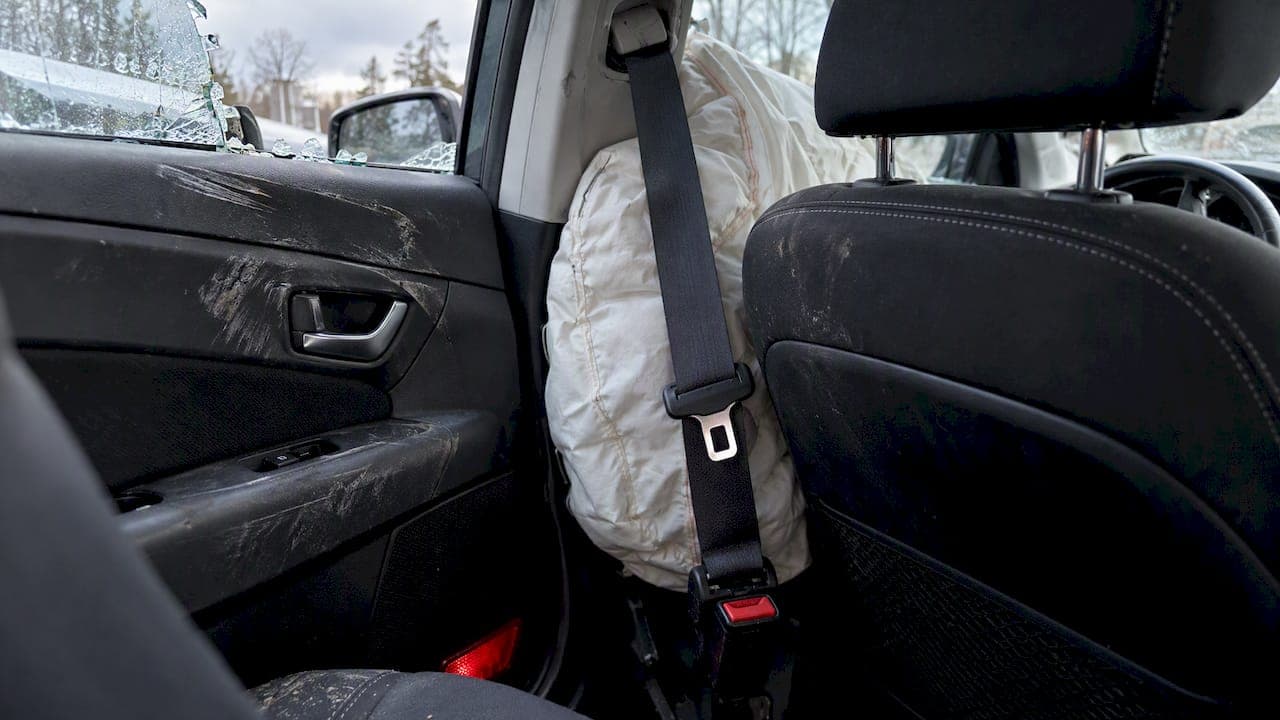
The seat belt defense can reduce what an accident victim recovers, but only in states that allow it, and only when a defendant proves a real link between non-use and the specific injuries claimed. In most cases it targets damages, not fault: a defendant typically cannot use it to escape liability for causing the crash. Proving it almost always requires expert testimony connecting non-use to injury aggravation, which makes it harder to raise than it sounds.
TL;DR:
- The seat belt defense only reduces damages in states that permit it and requires expert proof linking non-use to specific injury aggravation.
- It cannot be used to entirely deny liability or cause a full dismissal of the claim, and proving causation is often legally challenging.
- Many states have enacted laws either allowing, limiting, or banning the defense, leading to a fragmented legal landscape across jurisdictions.
- Courts use strict relevance and prejudice tests before admitting non-use evidence, often limiting it to a debate over injury extent rather than fault.
- Plaintiffs should act quickly to preserve evidence, photograph injuries, and disclose seat belt non-use early to their attorneys for effective case evaluation.
Table of Contents
- How the Seat Belt Defense Works: Mitigation, Causation, and Fault Rules
- State-by-State Landscape: Permitted, Barred, or Unsettled Jurisdictions
- When Courts Admit Seat Belt Evidence: Evidentiary Tests and Exceptions
- Evidence Defendants Use and How Plaintiffs Rebut It
- Impact on Damages and Settlement Strategy
- Practical Steps for Plaintiffs Who Were Unbelted
- Research Synthesis: Law-Review Findings and Federal Statistics
- Historical Development and Landmark Cases Involving the Seat Belt Defense
- Variations in Application Depending on Type of Vehicle or Accident Scenario
- Author Perspective: Practical Framing for Readers Deciding Whether to File or Settle
- Get a Free Case Evaluation Before You Talk to the Insurer
- FAQ
- Sources
How the Seat Belt Defense Works: Mitigation, Causation, and Fault Rules
The seat belt defense rests on a simple idea: an injured person has a duty to take reasonable steps to limit harm, and buckling up is one of those steps. That duty falls under mitigation of damages, a doctrine separate from liability. A defendant who caused a crash through reckless driving is still liable for the crash itself; the dispute is over how much they owe for injuries that a seat belt might have prevented or reduced.
Because mitigation only reduces damages, the defense cannot erase a claim outright in jurisdictions that permit it. What it can do is shrink the final number a jury or insurer is willing to pay, if the defense meets its proof burden.
That burden is causation, and it is the hardest part of the defense to satisfy. A defendant has to show, through biomechanical or medical expert testimony, that wearing a seat belt would have prevented or lessened the specific injury at issue, not just that non-use was careless in the abstract. According to FindLaw's explanation of the seat belt defense, most courts that allow the evidence treat it as relevant to apportioning damages rather than as a complete bar to recovery.
A few related doctrines shape how this plays out:
- Comparative negligence states may let a jury assign a percentage of fault to the plaintiff for not buckling up, reducing the award by that share.
- Contributory negligence states, a shrinking minority, can bar recovery entirely if the plaintiff's own conduct contributed to the harm, making the stakes of a seat belt defense much higher.
- Negligence per se arguments sometimes arise when a state's seat belt statute itself defines the standard of care, though courts are often reluctant to treat a seat belt law violation as automatic negligence.
- Statutory bars override all of the above in states that have legislated the issue away entirely.
State-by-State Landscape: Permitted, Barred, or Unsettled Jurisdictions
Where you filed your claim, or where the crash happened, often matters more than the facts of the crash itself. Law-review research describing the seat belt defense across jurisdictions identifies four rough categories of treatment.
- Allowed, limited to damages: courts admit the evidence but confine its use to reducing compensation, never to deny that the defendant caused the wreck.
- Statutorily allowed: a handful of states have passed laws that expressly permit the defense under specified conditions.
- Statutorily barred: legislatures in many states have passed laws, sometimes modeled on policy language like the one summarized in ALEC's model seat belt admissibility policy, that forbid courts from considering non-use in civil actions at all.
- Unsettled or judicially mixed: appellate courts have issued conflicting rulings, or the state's highest court has not resolved the question, leaving trial courts inconsistent.
Many U.S. jurisdictions have rejected the seat belt defense in some form, according to the Notre Dame Law Review's survey of state treatment, while a minority permit limited admission tied to proven causation. That split means two drivers in nearly identical crashes, one in a barring state and one in a permitting state, can see very different damages outcomes for an unbelted injury.
The practical consequence of a statutory bar is bigger than it looks on paper. Where the legislature has closed the door, defense counsel typically does not even plead the issue, because raising inadmissible evidence can backfire with a judge or jury. Where the question depends on appellate precedent instead of a statute, the outcome can shift as new rulings come down, and insurers price that uncertainty into settlement offers. Readers weighing a claim should also understand how no-fault and at-fault systems interact with this: a no-fault state may route minor claims through insurance before a lawsuit is even possible, changing when the seat belt defense becomes relevant at all.
When Courts Admit Seat Belt Evidence: Evidentiary Tests and Exceptions
Even in a state that permits the defense, a defendant cannot simply mention that you were unbelted and expect a jury to hear it. Courts run the evidence through standard relevance and prejudice screening before it ever reaches a jury.
- Relevance threshold: the evidence has to connect logically to a disputed fact, usually the extent of injury, not just paint the plaintiff as careless in general.
- Probative value versus prejudice: judges weigh whether the evidence genuinely helps resolve damages against the risk that a jury will punish the plaintiff emotionally for not buckling up.
- Causal link requirement: an expert must testify, with some degree of medical or biomechanical certainty, how the specific injuries would have differed had the plaintiff worn a belt.
- Exceptional-circumstances carve-outs: some courts exclude the evidence even where technically allowed, citing concerns about speculative "what if" testimony or excessive expert battles, a pattern documented in the Florida Law Review's analysis of the safety belt defense.
Courts frequently narrow admissibility to a single question: how much, if any, of the injury would not have occurred with a belt on. That narrow framing is why judges often instruct juries that the evidence bears only on damages, never on who caused the underlying collision.
Pro Tip: If you're unsure whether your state allows this evidence, ask your attorney early whether the issue has been pled, since many states require defendants to raise it affirmatively or lose the right to argue it later.
Evidence Defendants Use and How Plaintiffs Rebut It
Defendants build a seat belt defense from a combination of physical, medical, and expert evidence, and plaintiffs have real tools to push back on each piece.
- Seat belt latch or trace evidence: investigators look for a buckled latch, belt webbing marks on the body, or the absence of either to argue non-use.
- Witness and scene testimony: police reports and bystander accounts sometimes note whether a belt was fastened at the scene.
- Medical imaging and injury pattern analysis: doctors may be asked whether the injury pattern is consistent with a restrained or unrestrained occupant.
- Biomechanical experts: these specialists model crash forces to estimate what injuries a belt would have prevented, a step the Florida Law Review describes as both essential and expensive for defendants to mount.
Plaintiffs rebut this evidence by challenging the expert's methodology, offering an alternative explanation for the injury pattern, or showing that the crash forces were severe enough that a belt would not have changed the outcome. Attorneys often lean on expert witnesses who specialize in injury causation to counter a defense biomechanical report point by point.
Pro Tip: Preserve the clothing you wore in the crash, photograph the vehicle interior before repairs, and write down the names and contact information of any witnesses before memories fade.
Impact on Damages and Settlement Strategy
Where the defense applies, it usually shows up as a percentage reduction rather than a full bar on recovery. Juries in comparative-negligence states may answer special interrogatories that separate the crash's cause from the extent non-use worsened the injury, letting the court apportion damages accordingly, a process detailed in the Florida Law Review's trial commentary.
- Apportionment versus a full bar: most permitting states reduce damages by a jury-assigned percentage rather than eliminating the claim.
- Cost-benefit for defendants: biomechanical and medical experts are expensive, so insurers often reserve the defense for higher-value claims where a reduction is worth the litigation cost.
- Settlement leverage: a credible seat belt defense gives insurers a bargaining chip, while a statutory bar removes that leverage entirely.
These dynamics interact with other settlement factors like injury severity and liability clarity, so the seat belt defense is rarely the only variable driving an offer.
Practical Steps for Plaintiffs Who Were Unbelted
If you were not wearing a seat belt when the crash happened, act quickly to protect your claim.
- Photograph everything: the vehicle interior, your injuries, and the belt mechanism itself before repairs or cleanup happen.
- Preserve the clothing you wore, since fabric can show or disprove belt contact.
- Collect witness contacts at the scene while memories are fresh.
- Gather complete medical records documenting your injuries from the first visit forward.
- Disclose non-use to your attorney immediately, since hiding it damages your credibility far more than the fact itself.
A good step-by-step evidence checklist, like the one in our guide to car accident evidence best practices, helps you organize this quickly.
Pro Tip: Full disclosure to your lawyer about seat belt use, even if it feels damaging, lets them evaluate your state's rule and line up the right experts before a defense attorney raises it first.
Research Synthesis: Law-Review Findings and Federal Statistics
Legal scholarship and federal safety data point in a consistent direction: courts treat the seat belt defense cautiously, and non-use is common enough that it rarely functions as automatic negligence.
- Law-review surveys find courts split, with many states rejecting the defense and others admitting it only on proven causation, per the Notre Dame Law Review.
- Seat belt use nationally stood at 91.3% in 2025, yet unbelted occupants accounted for 48% of passenger vehicle fatalities with known restraint status in 2024, a gap that keeps the defense relevant in policy debates even where courts resist it.
- Statutory bans in many states remove settlement leverage entirely, since defense counsel in those jurisdictions rarely raises an argument the court will not hear.
That combination, high national compliance paired with a meaningful share of unrestrained fatalities, keeps lawmakers and litigators revisiting whether non-use evidence belongs in a civil courtroom at all.
Historical Development and Landmark Cases Involving the Seat Belt Defense
The seat belt defense emerged in the 1960s and 1970s as belts became standard equipment and some defense attorneys argued that failing to use one amounted to a form of fault. Early courts were divided from the start. Some, worried about turning every crash trial into a referendum on the plaintiff's habits, rejected the defense outright under traditional contributory negligence rules, where any plaintiff fault could wipe out a claim entirely.
Appellate decisions, including the reasoning explored in scholarship on Miller v. Miller and the safety belt defense, pushed courts toward a middle path: admit the evidence, but only to reduce damages, and only with expert proof of a causal link. That compromise became the dominant model as states adopted comparative negligence over the following decades, since comparative systems could absorb a partial reduction without the harsh all-or-nothing result contributory negligence produced.
Legislatures entered the picture once mandatory seat belt laws spread nationwide. Many states paired their belt-use mandates with statutes expressly barring the evidence from civil trials, worried that it would discourage settlements or unfairly penalize injured plaintiffs for a safety law violation that carries only a traffic fine on its own. That legislative trend is the main reason the state-by-state landscape looks as fragmented today as it did decades ago.

Variations in Application Depending on Type of Vehicle or Accident Scenario
Not every seat belt defense claim looks the same, and the vehicle or crash type can change how strong the argument is. In rollover crashes, where ejection risk is high, biomechanical experts often find the clearest causal link between non-use and catastrophic injury, making the defense more viable for insurers to raise.
Commercial truck collisions involving smaller passenger vehicles complicate the analysis, since the forces involved can be severe enough that experts may concede a belt would not have prevented serious injury regardless. That undercuts the causation element the defense depends on.
Motorcycle and bicycle cases fall outside this defense entirely, since seat belts do not apply; those claims involve separate helmet-use arguments governed by different statutes and case law. Rideshare and taxi passengers raise their own wrinkle: some passengers in back seats are less likely to buckle up, and a handful of state laws exempt rear passengers from mandatory belt use altogether, which can undercut a defendant's negligence per se argument even in states that otherwise allow one.

Author Perspective: Practical Framing for Readers Deciding Whether to File or Settle
In states with a statutory bar, the seat belt defense is close to a non-issue, and I would not let it delay filing a claim. In permitting states, it becomes a real risk only when your injuries plausibly match what a belt would have prevented, which an early case review can help clarify before you ever talk to opposing counsel. A free evaluation can flag that risk quickly, so gather your medical records and photos first and let the review tell you what matters.
— Gerard
Get a Free Case Evaluation Before You Talk to the Insurer
We offer a free evaluation to help you understand where you stand, including whether a seat belt defense is likely to come up in your state and what it could mean for your claim. 
Have your crash photos, medical records, and police report ready; they help our intake give you a sharper read on your situation. There is no obligation and no cost to find out where you stand. Start your free case evaluation today and get matched with an attorney suited to your injury and circumstances.
This article is general information, not a substitute for advice from a qualified lawyer. Consult a qualified legal professional about your own circumstances before acting on anything here.
FAQ
Which US state does not enforce seat belt laws?
New Hampshire is the only state without a mandatory adult seat belt law, though this affects traffic enforcement, not necessarily civil admissibility of non-use evidence. State reports show observational seat belt use in New Hampshire rose to 82.3% in 2025 from 75.5% in 2021, even without a mandate.
What percentage of Americans don't wear seat belts?
National seat belt use reached 91.3% in 2025. That small share still accounted for nearly half of passenger vehicle fatalities with known restraint status the prior year.
Can a police officer pull you over for not wearing a seat belt?
Yes, in most states, though the rule depends on whether your state has a primary or secondary seat belt law. A primary law allows an officer to stop you for the belt violation alone, while a secondary law requires another traffic violation first; either way, enforcement is separate from whether a civil court later admits non-use evidence in a lawsuit.
Why doesn't New Hampshire require seat belts for adults?
New Hampshire has historically favored personal-choice policies over mandatory safety laws for adult drivers and passengers, leaving seat belt use a matter of individual decision rather than state mandate. The state still runs active safety outreach, and usage climbed over recent years even without a legal requirement, according to NHTSA's New Hampshire annual report.
Sources
- What Is the 'Seat Belt Defense'? - FindLaw
- Seat Belt Defense: A Comprehensive Guide for the Trial Lawyer and Suggested Approach for the Courts (Notre Dame Law Review)
- The Safety Belt Defense at Trial and in Out-of-Court Settlement (Florida Law Review)
- GHSA — State seat belt use overview