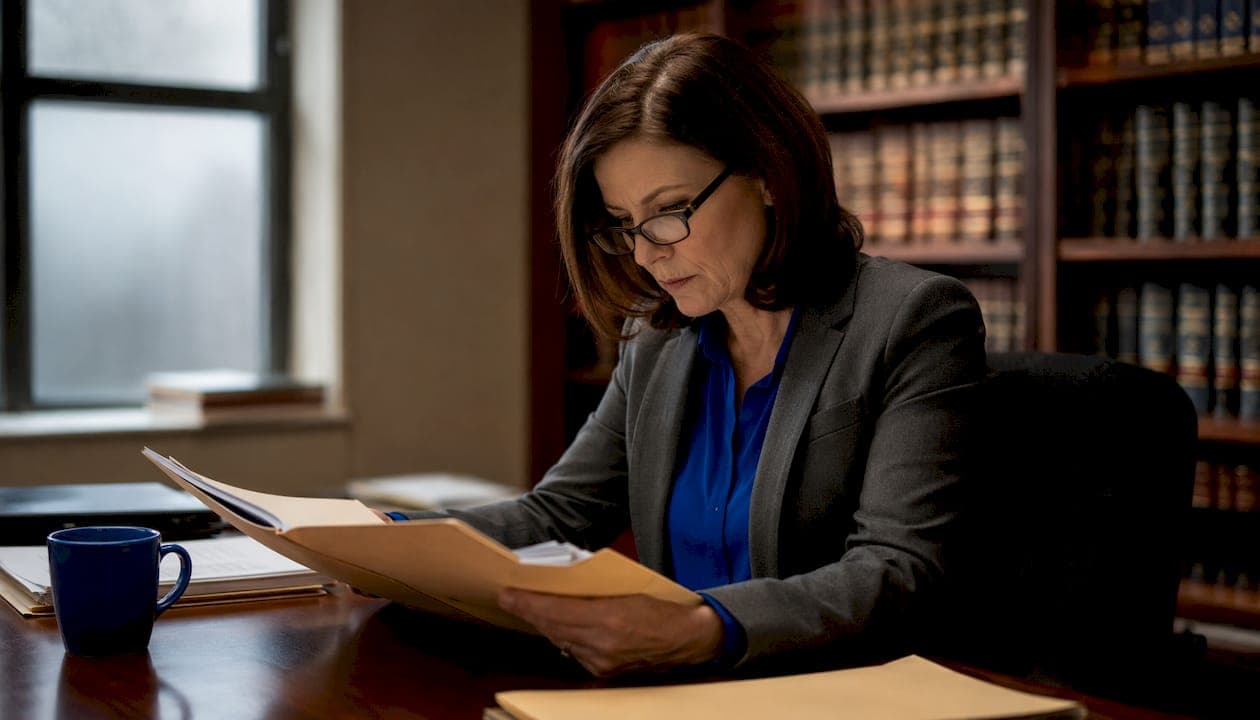
In U.S. psychological-injury litigation, the four experts who carry the most weight are the psychiatrist, clinical psychologist, forensic psychologist, and neuropsychologist. Together they cover diagnosis, causation, cognitive impairment, and the forensic credibility that courts demand. Of those four, the forensic psychologist or forensic psychiatrist typically owns the causation argument — the question of whether the incident actually caused the mental health condition — while the neuropsychologist is indispensable when traumatic brain injury or cognitive decline is part of the claim. For prognosis and treatment planning, the treating psychiatrist or clinical psychologist usually carries the most weight with a jury.
Beyond the psychological specialists, most psychological-injury cases also involve:
- Treating physicians (primary care, orthopedic, neurologist) who document physical injuries that co-occur with psychological harm
- Vocational rehabilitation experts who assess how the psychological impairment limits work capacity
- Life-care planners who project future treatment and support costs
- Forensic economists who translate vocational and care limitations into present-value damages figures
- Independent Medical Examination (IME) examiners retained by the defense to challenge diagnosis and causation
- Lay witnesses (family members, coworkers, supervisors) who describe observable behavioral changes
Table of Contents
- What expert witness types appear in psychological-injury litigation?
- How do psychiatrists, psychologists, neuropsychologists, and forensic clinicians differ?
- What admissibility standards do U.S. courts apply to psychological experts?
- What should you expect from an IME and defense experts?
- How do you vet and choose a psychological expert for your case?
- What does psychological expert involvement cost and how long does it take?
- What happens when a psychological expert actually testifies?
- How do experts handle causation disputes and pre-existing conditions?
- Key Takeaways
- Why the expert you pick matters more than most attorneys admit
- Carcollisionlawyer can match you with the right attorney today
- Authoritative sources and further reading
What expert witness types appear in psychological-injury litigation?
Every psychological-injury case draws from a predictable cast of expert categories. Knowing who does what prevents duplication and helps you build a coherent damages narrative.
Primary psychological experts
- Psychiatrist: A licensed medical doctor (M.D. or D.O.) who diagnoses mental health conditions, prescribes medication, and can speak to biological mechanisms of injury. Retained when medication management, neurological overlap, or a formal DSM-5 diagnosis from a physician carries strategic weight. Psychiatrists and psychologists are the most common mental-health expert witnesses in U.S. emotional distress claims.
- Clinical psychologist: A doctoral-level psychologist (Ph.D. or Psy.D.) who administers standardized psychometric testing, reviews therapy records, and renders diagnostic opinions. Best suited for cases where objective test data needs to anchor the diagnosis.
- Forensic psychologist: A psychologist with specialized training in applying psychological science to legal questions. Conducts independent evaluations specifically for court use, addresses malingering, and frames opinions around legal standards rather than clinical treatment goals.
- Neuropsychologist: A psychologist with advanced training in brain-behavior relationships. The go-to expert for traumatic brain injury (TBI), post-concussive syndrome, or any claim involving cognitive decline.
Medical and physical injury experts
- Neurologist or physiatrist: Documents neurological sequelae of TBI or chronic pain conditions that feed secondary depression or anxiety.
- Treating primary care physician: Establishes the timeline of physical symptoms and referrals to mental health care — useful for corroborating onset dates.
Functional and vocational experts
- Vocational rehabilitation specialist: Evaluates how psychological impairment limits the claimant's ability to work, identifies transferable skills, and projects earning capacity loss.
- Life-care planner: Projects the cost of future psychiatric care, therapy, medications, and support services over the claimant's life expectancy.
Economic and financial experts
- Forensic economist: Converts vocational and life-care projections into present-value dollar figures, accounting for inflation, discount rates, and work-life expectancy.
Defense and examination experts
- IME examiner: A defense-retained clinician (psychiatrist or psychologist) who reviews records, conducts a clinical interview, and may administer targeted testing to challenge the plaintiff's diagnosis or causation theory.
How do psychiatrists, psychologists, neuropsychologists, and forensic clinicians differ?
The distinctions matter practically. Retaining the wrong specialty can leave a gap in your damages proof that opposing counsel will exploit.
Psychiatrist
A psychiatrist holds a medical degree and completed a psychiatric residency. That medical foundation lets them speak to the neurobiological basis of conditions like PTSD, major depressive disorder, and anxiety disorders. They can prescribe medication, which matters when a treatment plan includes pharmacotherapy. In court, a psychiatrist's diagnosis carries the authority of a physician's clinical judgment. The limitation: most psychiatrists do not administer the standardized psychometric batteries that courts increasingly expect to see backing a causation opinion. For a deeper look at how psychiatrists function in injury claims, the mechanics differ meaningfully from what a psychologist provides.

Clinical psychologist
Clinical psychologists are the testing specialists. They administer and interpret standardized instruments that generate objective, quantifiable data. Common tools include:
- MMPI-2-RF (Minnesota Multiphasic Personality Inventory-2 Restructured Form): Measures psychopathology and includes validity scales that flag symptom exaggeration.
- PAI (Personality Assessment Inventory): A broad-spectrum clinical instrument with embedded negative-impression management scales.
- WAIS-IV (Wechsler Adult Intelligence Scale): Assesses cognitive functioning and can detect processing-speed deficits consistent with TBI.
- PCL-5 (PTSD Checklist for DSM-5): A standardized self-report measure for PTSD symptom severity.
Courts increasingly expect psychometric backing for psychological diagnoses. A clinical psychologist who can explain test validity scales to a jury is harder to cross-examine than a clinician relying solely on interview impressions.
Forensic psychologist
The forensic psychologist's primary obligation is to the court, not the client. That impartiality is the credential. Forensic specialists are trained to evaluate response bias, apply symptom validity testing, and structure opinions around legal standards rather than therapeutic goals. They separate the treating and forensic roles that, when blurred, invite admissibility objections. A treating clinician can testify to what they observed in therapy; a forensic specialist conducts an independent evaluation and renders causation opinions. Mixing those roles in one witness is a common mistake that defense counsel targets.
Neuropsychologist
When the claim involves TBI, post-concussive syndrome, or cognitive decline, the neuropsychologist is the most important expert in the room. Neuropsychological batteries — including WAIS subtests, memory tests, and performance validity measures — are the primary tools for documenting cognitive deficits and separating organic from non-organic presentations. A neuropsychologist can testify that a specific pattern of cognitive impairment is consistent with the mechanism of injury (e.g., frontal lobe deficits after a high-speed collision) and inconsistent with feigning.
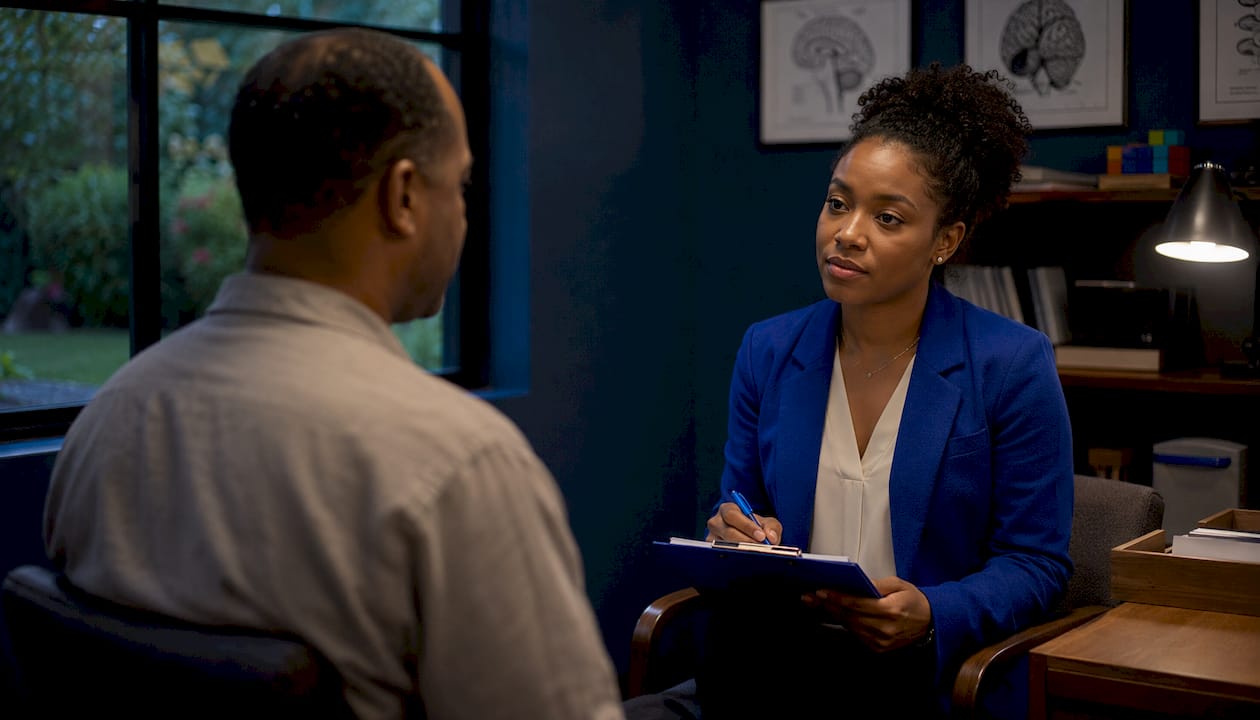
Expert type comparison
| Expert type | Typical assessments | Primary courtroom function |
|---|---|---|
| Psychiatrist | Clinical interview, DSM-5 diagnosis, medication review | Diagnosis, treatment plan, neurobiological causation |
| Clinical psychologist | MMPI-2-RF, PAI, PCL-5, structured interviews | Diagnosis, psychometric causation support, prognosis |
| Forensic psychologist | Validity scales, forensic interview protocols, record review | Causation opinion, malingering assessment, impartial evaluation |
| Neuropsychologist | WAIS-IV, memory batteries, performance validity measures | Cognitive impairment documentation, TBI linkage |
Pro Tip: When reviewing an expert's CV, look for forensic-specific training (postdoctoral fellowship in forensic psychology, board certification through ABPP in forensic psychology) and a testimony history that includes depositions and trial appearances — not just clinical publications. A clinician with 20 years of therapy experience but no forensic training is a liability on cross-examination.
What admissibility standards do U.S. courts apply to psychological experts?
Admissibility is the gate every psychological expert must pass before a jury hears a word of their opinion.
The two governing standards are Daubert v. Merrell Dow Pharmaceuticals, Inc. (1993) and Frye v. United States (1923). Federal courts and most states use the Daubert standard, which gives the trial judge a gatekeeping role. A smaller number of states still apply Frye, which asks only whether the methodology is generally accepted in the relevant scientific community.
Under Daubert, judges screen for:
- Testability: Can the expert's methodology be tested or falsified?
- Peer review and publication: Has the method been subjected to peer review?
- Known or potential error rate: Is there a known error rate for the technique?
- General acceptance: Is the methodology accepted within the relevant scientific community?
For psychological experts, this means the forensic assessment must be scientific, comprehensive, impartial, and grounded in reliable data. Courts have excluded psychological opinions that relied solely on clinical interview without standardized testing, that failed to address alternative explanations for the claimant's symptoms, or that used instruments outside their validated purpose.
Common admissibility objections in psychological-injury cases:
- The expert used a clinical instrument (designed for treatment) rather than a forensically validated tool
- The expert failed to address malingering or response bias
- The causation opinion lacks a documented methodology linking the index event to the diagnosis
- The expert's opinion on the "ultimate issue" of damages exceeds what Rule 704 permits
Best-practice forensic reports explicitly state assumptions, data sources, tests administered with norms, limitations of the opinion, and alternative explanations. That structure is not just good science — it is what survives a Daubert challenge.
What should you expect from an IME and defense experts?
A defendant can compel an independent medical examination the moment a plaintiff asserts emotional distress. The IME is not a neutral check-up. It is a defense tool, and understanding its mechanics protects a plaintiff's case.
A typical defense IME includes:
- Records review: All prior mental health treatment, medical records, employment records, and educational records the defense can obtain
- Clinical interview: Usually 1–3 hours; the examiner documents inconsistencies between reported symptoms and records
- Standardized testing: Often the MMPI-2-RF or PAI, specifically to generate validity scale data that the defense can use to argue symptom exaggeration
Defense forensic experts focus on three things: pre-existing mental health conditions, inconsistencies between the claimant's self-report and objective records, and validity testing results that suggest negative response bias. Malingering determinations require convergent evidence across multiple data sources — testing, records, and collateral interviews — and definitive calls are rare. That said, elevated validity scales give defense counsel a powerful cross-examination tool even short of a formal malingering opinion.
Plaintiff IME checklist:
- Bring a complete set of your own medical and mental health records
- Know your treatment timeline cold — dates, providers, diagnoses, medications
- Answer questions honestly and consistently; do not minimize or exaggerate
- Understand that the examiner is not your treating clinician; the report goes to the defense
- Your attorney should review the IME report and retain a rebuttal expert if the opinions are contested
For a broader overview of motor accident injury assessments, including what examiners typically document, that resource covers the mechanics in detail.
Pro Tip: Prepare your client for the IME the same way you prepare them for a deposition. Walk through the likely questions, review their records together, and remind them that the examiner will note every inconsistency. Emotional overstatement during an IME is one of the most common ways a legitimate claim gets undermined.
How do you vet and choose a psychological expert for your case?
The right expert is not just the most credentialed one. It is the one whose specific experience matches the injury type, whose opinions will survive cross-examination, and who can explain complex testing to a jury without losing them.
Vetting checklist:
- Licensure: Confirm active state licensure in the jurisdiction where they will testify
- Board certification: ABPP (American Board of Professional Psychology) certification in forensic psychology or clinical neuropsychology signals peer-validated expertise
- Forensic training: Look for a postdoctoral fellowship or formal forensic training, not just clinical experience
- Injury-specific experience: Has the expert published or testified specifically on PTSD, TBI, sexual trauma, or the injury type at issue? Practitioners who have published on the specific injury type face fewer effective cross-examination openings
- Testimony history: Request a list of prior depositions and trial appearances; review any published decisions where their testimony was challenged or excluded
- Fee structure: Understand retainer, evaluation fee, hourly deposition rate, and trial day rate upfront
- Consulting vs. testifying role: Under FRCP 26 and related rules, consulting experts are generally protected from disclosure while testifying experts are deposed; decide which role fits your strategy before retention
Red flags:
- No forensic training — only a clinical or therapy background
- A treating relationship with the claimant that was not separated from the forensic evaluation
- Opinions that shift across files or that use partisan language ("clearly malingering," "obviously fabricated")
- Refusal to acknowledge limitations of their opinion or alternative explanations
- No familiarity with the specific standardized instruments relevant to the injury type
Sample vetting questions:
- What standardized instruments do you use for PTSD or TBI evaluations, and why?
- How do you address response bias and validity testing in your reports?
- Have you been excluded under Daubert or Frye? If so, in what context?
- What is your typical timeline from retention to final report?
- Are you available for deposition within 60 days of completing the evaluation?
For a step-by-step guide on evidence collection and expert retention, that resource walks through the full intake process.
What does psychological expert involvement cost and how long does it take?
Psychological expert involvement is not cheap, and the timeline is longer than most clients expect. Setting realistic expectations early prevents budget surprises and scheduling crises.
Typical timeline milestones:
- Retention: 1–4 weeks after case intake; earlier is better for shaping discovery
- Records review: 2–6 weeks depending on volume
- Evaluation and testing: Neuropsychological batteries typically require 6–10 hours of testing across 1–2 days; psychiatric evaluations run 2–4 hours
- Draft report: 2–6 weeks after testing is complete
- Deposition: Scheduled after report disclosure; typically 4–12 weeks after report
- Trial testimony: Coordinated with trial date; expert availability is a real scheduling constraint
Cost structure:
- Retainer: Typically required upfront to secure the expert's time; ranges vary widely by specialty and market
- Evaluation and testing fee: Neuropsychological batteries are among the most expensive evaluations because of the time involved; psychiatric evaluations are generally shorter and less costly
- Hourly deposition rate: Most forensic experts charge a higher hourly rate for deposition and trial testimony than for evaluation work
- Trial day rate: Many experts charge a flat day rate for trial appearances plus travel
Cost drivers include the complexity of the testing battery, the expert's reputation and publication record, geographic travel requirements, and whether the case requires both a psychiatrist and a neuropsychologist. Cases involving TBI alongside PTSD commonly need both, which roughly doubles the expert budget.
Pro Tip: Retain a consulting expert early — even before formal retention as a testifying expert — to identify which records will be critical and to anticipate IME triggers. Early expert involvement shapes discovery strategy and prevents the scramble of finding a qualified expert under deposition deadline pressure.
What happens when a psychological expert actually testifies?
The expert's courtroom contribution flows through three deliverables: the written report, the deposition, and trial testimony. Each has a distinct purpose and a distinct set of risks.
Written evaluation report
The report is the foundation. A well-structured forensic report states the referral question, data sources reviewed, tests administered (with normative references), findings, and a clearly reasoned opinion linking the index event to the diagnosis. It also states limitations and addresses alternative explanations. Reports that skip those elements are vulnerable to exclusion. Experts generally may not testify to the ultimate issue of monetary damages; they provide diagnosis, impairment ratings, prognosis, and treatment recommendations that the jury uses to calculate damages.
Deposition
Opposing counsel uses the deposition to:
- Challenge the expert's qualifications and forensic training
- Probe the methodology and test selection
- Identify any data the expert did not review
- Establish alternative explanations the expert did not rule out
- Lock in opinions that can be used to impeach at trial
The deposition is where weak opinions collapse. An expert who cannot explain why they chose a particular instrument, or who cannot articulate the limits of their opinion, will face a Daubert motion before trial.
Trial testimony
At trial, the expert must translate psychometric data into language a jury can follow. Demonstratives — visual displays of test score profiles, symptom timelines, and functional limitation summaries — help jurors understand what the numbers mean. The expert cannot tell the jury what verdict to reach on damages, but they can describe the severity of impairment, the expected duration of treatment, and the functional limitations that affect the claimant's daily life and work capacity.
Pro Tip: Before your client sits for the opposing expert's deposition, walk them through what the expert's report actually says. Clients who understand the expert's opinion are less likely to make emotional overstatements that contradict the clinical findings.
How do experts handle causation disputes and pre-existing conditions?
Causation is the core dispute in most psychological-injury defenses. The defense will argue that the claimant's PTSD, depression, or anxiety predated the incident. The plaintiff's expert must show that the incident either caused a new condition or materially aggravated a pre-existing vulnerability.
Forensic experts approach this through a structured analysis:
- Establish baseline functioning: Prior mental health records, employment history, and educational records document the claimant's psychological state before the incident.
- Document symptom onset: Medical records, therapy notes, and collateral interviews establish when symptoms first appeared and whether they correlate with the index event.
- Apply the eggshell plaintiff doctrine: A pre-existing vulnerability does not defeat causation; it means the defendant takes the plaintiff as they find them. The expert's job is to distinguish between a pre-existing condition that was stable and a new or materially worsened condition caused by the incident.
- Use validity testing to rebut malingering claims: Psychometric validity scales, cross-referenced with records and collateral interviews, provide the convergent evidence needed to address response bias claims.
- Triangulate across data sources: Clinical records, psychometric data, collateral interviews, and lay testimony all pointing in the same direction is far more persuasive than any single source alone.
Lay witnesses — family members, coworkers, supervisors — supply concrete behavioral examples that jurors find persuasive alongside clinical labels. A spouse who describes a partner who no longer leaves the house, a supervisor who documents a previously high-performing employee's sudden inability to concentrate: that testimony gives the expert's diagnosis a human face.
For practical tactics on how emotional injury attorneys build cases around expert and lay evidence, that resource covers the litigation strategy in detail.
Key Takeaways
Psychological-injury cases require the right expert matched to the right question: forensic psychologist for causation, neuropsychologist for TBI, psychiatrist for diagnosis and treatment, and lay witnesses to make the impairment concrete for a jury.
| Point | Details |
|---|---|
| Match expert to the question | Use a forensic psychologist for causation disputes; a neuropsychologist when TBI or cognitive decline is claimed. |
| Separate treating and forensic roles | A treating clinician and a forensic specialist serve different functions; blending them invites admissibility objections. |
| Prepare for the IME | Defense IMEs are triggered by any emotional distress claim; bring complete records and prepare your client as you would for a deposition. |
| Vet for forensic experience | Board certification (ABPP), forensic training, and injury-specific testimony history reduce cross-examination vulnerability. |
| Carcollisionlawyer free evaluation | Carcollisionlawyer connects accident victims with vetted attorneys who understand how to retain and work with psychological experts from day one. |
Why the expert you pick matters more than most attorneys admit
The conventional wisdom is that any licensed psychologist can serve as an expert witness in a psychological-injury case. That is wrong, and it costs plaintiffs cases they should win.
The gap between a clinical psychologist who treats patients and a forensic psychologist who evaluates them for court is not just a credential difference. It is a difference in how they think about their role. A treating clinician's job is to believe their patient and help them. A forensic expert's job is to evaluate the evidence and render an impartial opinion. When a treating clinician testifies as a forensic expert, defense counsel will spend the entire cross-examination making that conflict visible to the jury. The opinion does not have to be wrong to be destroyed — it just has to look partial.
The second mistake is retaining an expert who offers opinions that are broader than the evidence supports. A sweeping diagnosis of permanent, total psychological disability, unsupported by objective testing, is not a strong plaintiff position. It is a target. Narrow, testable opinions grounded in specific psychometric findings are harder to attack and more credible to a jury. An expert who says "the MMPI-2-RF validity scales were within normal limits, the PTSD symptom profile is consistent with the reported trauma, and the claimant's functional limitations are corroborated by collateral sources" is more persuasive than one who says "this person is devastated and will never recover."
Pick the expert whose opinion you can defend on cross-examination, not the one with the most impressive title.
Carcollisionlawyer can match you with the right attorney today
If you have suffered psychological harm after a car, truck, or motorcycle accident, the expert witness question is one your attorney should be answering on day one — not after discovery closes.
Carcollisionlawyer offers a free case evaluation that matches accident victims with vetted attorneys who handle psychological-injury claims, including cases involving PTSD, emotional distress, and TBI. Submit your basic injury and incident details, and you get connected to a local attorney who understands which experts your claim needs and how to build the damages case around them. No upfront cost, no commitment. Start your free evaluation and find out what your claim may be worth.
Authoritative sources and further reading
Primary legal and clinical standards:
- Daubert v. Merrell Dow Pharmaceuticals, Inc., 509 U.S. 579 (1993) — the federal admissibility standard for expert testimony
- Frye v. United States, 293 F. 1013 (D.C. Cir. 1923) — the general-acceptance standard still used in some states
- American Psychiatric Association, Diagnostic and Statistical Manual of Mental Disorders, Fifth Edition (DSM-5) — the diagnostic reference for all psychological diagnoses in U.S. litigation
- Expert witness definition and roles — Legal Information Institute, Cornell Law School
- Civil forensic evaluation in psychological injury and law — peer-reviewed overview of forensic assessment standards
Selected research resources:
- Role of mental-health professionals as expert witnesses — practical overview of psychiatrist and psychologist roles in U.S. litigation
- Psychological harm without a physical injury — practitioner guidance on building psychological-injury claims
- Neuropsychologist role in injury claims — overview of neuropsychological testing and deliverables in injury cases
Internal further reading:
- Role of psychiatrist in injury claims explained
- How emotional injury attorneys build cases that win
- Why mental injuries deserve compensation
This article is general information, not legal or medical advice. Consult a licensed attorney and qualified mental health professional for guidance specific to your situation and jurisdiction.