
Accident-related phobia and anxiety are compensable injuries in the United States when they are clinically diagnosed, linked to the crash, and backed by a documented treatment record. Settlement values range from a few thousand dollars for mild, short-term anxiety to well into six figures for severe PTSD or chronic driving phobia that disrupts work and daily life. The single biggest mistake claimants make is waiting, either to see a mental health provider or to contact an attorney. Statutes of limitations in most states run two to three years from the accident date, and gaps in early treatment are the first thing an insurance adjuster will use against you.
Three things determine whether your claim survives adjuster scrutiny:
- A formal diagnosis carrying a DSM-5 code from a licensed provider, tied explicitly to the crash
- A consistent treatment record showing ongoing therapy, medication, or both
- Documented proof that symptoms impair daily function, whether that means avoiding highways, missing work, or needing a driver
The table below gives a quick orientation to typical settlement ranges before the full analysis.
| Severity Level | Typical Settlement Range | Key Driver |
|---|---|---|
| Mild (short-term anxiety, resolved) | a few thousand dollars | Brief treatment record, full recovery |
| Moderate (ongoing anxiety, GAD, adjustment disorder) | — | Consistent therapy, documented work impact |
| Severe (driving phobia, chronic PTSD symptoms) | well into six figures | Expert reports, significant life disruption |
| PTSD (full diagnostic criteria met) | — | Specialist evaluation, long-term impairment |
Start a free claim evaluation with Carcollisionlawyer before the filing window closes.

Table of Contents
- Which psychological conditions after a crash qualify for compensation?
- How do insurers and courts calculate psychological damages?
- What evidence actually determines your claim's value?
- Can you claim for anxiety or driving phobia without a physical injury?
- How state law limits or expands what you can recover
- How long does a psychological injury claim take, and what does it cost?
- What to do right now to protect your psychological injury claim
- How Carcollisionlawyer connects you with the right attorney
- Key Takeaways
- What claimants consistently get wrong about psychological injury claims
- Your free evaluation starts here: no commitment, no upfront cost
- Useful sources
Which psychological conditions after a crash qualify for compensation?
Not every bout of post-accident nerves rises to a compensable injury. Courts and insurers recognize specific, diagnosable conditions, and the DSM-5 is the standard they use to evaluate them.
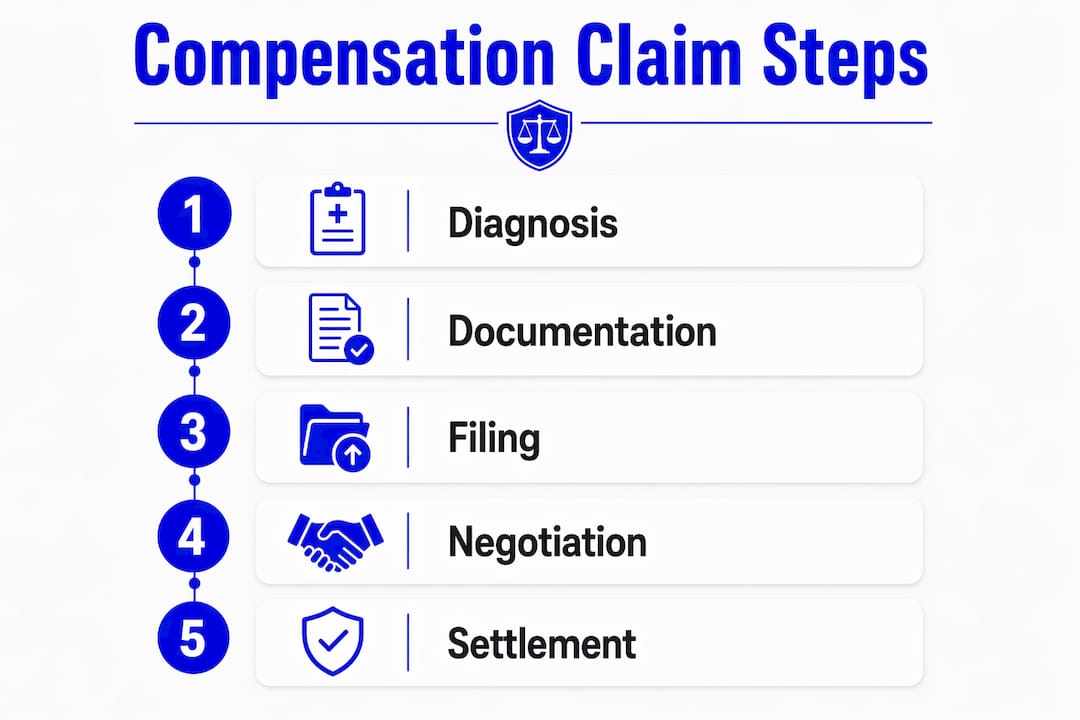
Recognized compensable diagnoses
The conditions most commonly accepted in U.S. personal injury claims include:
- Post-Traumatic Stress Disorder (PTSD): Requires exposure to a traumatic event, persistent intrusive symptoms (flashbacks, nightmares), avoidance behavior, negative mood changes, and hyperarousal lasting more than one month with functional impairment.
- Specific Phobia (vehophobia/dystychiphobia): A marked, disproportionate fear of driving or being in a car, triggered by the accident. Driving phobia is recognized as a common post-crash psychological injury affecting a notable share of car-accident survivors.
- Acute Stress Disorder: Similar symptom profile to PTSD but diagnosed within the first month after trauma; often the gateway diagnosis before a PTSD determination.
- Generalized Anxiety Disorder (GAD): Persistent, excessive worry across multiple domains, where the accident is the documented precipitating event.
- Adjustment Disorder with Anxiety: A stress response that exceeds what would normally be expected from the event, causing functional impairment. This is frequently the diagnosis when full PTSD criteria are not met.
- Clinical Depression: Major depressive episodes triggered or worsened by the accident, particularly when combined with chronic pain or disability.
What separates a compensable disorder from normal stress
Duration, severity, and functional impairment are the dividing line. Feeling shaken for a few days after a crash is a normal stress response. A compensable disorder persists beyond what the situation warrants, causes clinically significant distress, and interferes with work, relationships, or daily activities. The DSM-5 requires that symptoms not be better explained by another mental disorder, substance use, or a pre-existing condition that predates the crash.
Statistic: Driving phobia affects an estimated 25%–33% of car-accident survivors, yet most never pursue compensation because they assume psychological injuries don't count. They do.
How do insurers and courts calculate psychological damages?
Emotional distress damages fall into two buckets: economic and non-economic. Economic damages are the bills you can add up: therapy sessions, psychiatric medication, lost wages from days you couldn't work, and the cost of hiring a driver because you can no longer commute. Non-economic damages cover pain, suffering, loss of enjoyment, and the broader impact on your quality of life. These are harder to quantify, which is exactly why the calculation method matters.
The multiplier method
The most common approach attorneys use multiplies your total documented special damages (medical bills, therapy costs, lost wages) by a factor between 1.5 and 5. Multipliers of 1.5–5 apply depending on severity; higher multipliers go to severe, chronic cases with documented life disruption.
Worked example:
- Therapy and psychiatric bills: $12,000
- Lost wages (30 days missed): $6,000
- Total special damages: $18,000
- Multiplier (moderate-to-severe, consistent treatment): 3
- Non-economic damages estimate: $54,000
- Total claim value estimate: $72,000
That number is a starting point for negotiation, not a guarantee. Policy limits, comparative fault rules, and the strength of your documentation all move the final figure.
The per-day (per diem) method
Some attorneys use a daily rate for pain and suffering, multiplied by the number of days symptoms have affected the claimant. If a court accepts $150 per day and symptoms lasted 400 days, that produces $60,000 in non-economic damages alone. This method works best when a clear end date exists, which is less common in chronic PTSD cases.
Settlement ranges by severity
| Severity | Typical Range | What Pushes It Higher |
|---|---|---|
| Mild | a few thousand dollars | Early resolution, minimal treatment |
| Moderate | — | Consistent therapy, work impact documented |
| Severe | well into six figures | Expert psychiatric report, life disruption |
| PTSD (full criteria) | — | Long-term impairment, specialist testimony |
Settlement values vary widely; severe, long-term psychological trauma cases can reach six figures while minor claims may resolve for a few thousand. Policy limits cap what you can actually collect from the at-fault driver's insurer. If those limits are inadequate, your own uninsured/underinsured motorist (UM/UIM) coverage may be a second source of recovery.
Key factors that move the number
- Severity and duration of diagnosed symptoms
- Consistency of treatment (gaps hurt)
- Strength of the causal link between the crash and the diagnosis
- Documented functional impairment (work, driving, relationships)
- Whether a physical injury co-exists (physical injuries generally increase multipliers)
- Jurisdiction and applicable state law
What evidence actually determines your claim's value?
Emotional-distress claims require a paper trail as rigorous as physical-injury claims. Adjusters are trained to dismiss vague subjective reports. "I feel stressed" gets nowhere. A DSM-5 coded diagnosis in a provider's notes, linked explicitly to the accident, is a different matter entirely.
The evidence checklist
- Treating provider records with DSM-5 codes: Every therapy note should reference the specific diagnosis code and connect symptoms to the crash date.
- Therapist narrative reports: A written summary from your treating psychologist or psychiatrist explaining onset, symptom progression, and functional impact is among the most persuasive documents in a claim.
- Medication records: Prescriptions for anxiety, sleep, or depression medications, with start dates that align with the accident, corroborate severity.
- Therapy billing records: Itemized bills establish the economic anchor for the multiplier calculation.
- Work-impact documentation: Employer letters, pay stubs showing missed shifts, or HR records documenting reduced hours.
- Daily symptom journal: A consistent, dated log of symptoms, triggers, and functional limitations. Courts treat contemporaneous records as more credible than retrospective accounts.
- Witness statements: Family members, coworkers, or friends who can describe behavioral changes they observed after the crash.
- Incident and police reports: Establish the mechanism of injury and the accident date.
- Expert psychiatric evaluation: In higher-value claims, an independent forensic psychiatrist's report can be decisive.
Understanding how attorneys evaluate emotional-injury claims and the documentation they prioritize helps you build a stronger file from day one.
Where insurers attack claims
Adjusters look for three vulnerabilities: vague or uncoded diagnoses, gaps in treatment, and avoidance behavior that was never treated. The last one is subtle but important. If you stopped driving after the crash and never pursued exposure therapy or CBT, defense counsel may argue you failed to mitigate your damages. Trauma-focused clinics that accept auto insurance and structure records for legal use can address all three vulnerabilities simultaneously.
Pro Tip: Ask your treating provider to include the accident date, the DSM-5 diagnosis code, and a brief narrative linking your symptoms to the crash in every clinical note. Coordinate with your attorney before your first appointment so the provider understands the evidentiary standard. This one step prevents the most common reason claims are undervalued.
Can you claim for anxiety or driving phobia without a physical injury?
Yes, in many states. But the rules vary, and the evidentiary burden is higher when there is no physical injury to anchor the claim.
The impact rule and its variations
The traditional "impact rule" requires that a plaintiff have some physical contact or impact in the accident before recovering for emotional distress. A strict version of this rule, still applied in a handful of states, can bar purely psychological claims. Most states have moved away from strict impact requirements, allowing recovery for emotional distress when:
- The claimant was in the "zone of danger" (physically close enough to be at risk)
- The emotional injury is severe and documented
- There is a direct causal link to the defendant's negligence
States like California, New York, and Texas have adopted broader approaches that allow emotional distress recovery without requiring a physical injury, provided the psychological harm is genuine, diagnosable, and causally linked to the crash. Florida applies a modified impact rule that generally requires at least some physical impact, though exceptions exist for certain categories of claims.
PIP and no-fault subtleties
In no-fault states, Personal Injury Protection (PIP) coverage pays for medical expenses, including mental health treatment, up to the policy limit, regardless of who caused the accident. Some PIP policies impose caps on mental health treatment. Florida's PIP framework, for example, has been cited in practice as capping certain mental health coverage. Knowing your state's PIP rules before filing matters because PIP exhaustion can affect how you structure a tort claim against the at-fault driver.
Key insight: In states without a strict impact rule, a well-documented driving phobia or PTSD diagnosis, supported by a treating provider's narrative and a daily symptom log, can support a standalone psychological injury claim even when the physical injuries were minor or nonexistent. The documentation standard is higher, not the legal standard.
Practical steps for no-physical-injury claims
- Obtain a formal DSM-5 diagnosis from a licensed psychologist or psychiatrist as early as possible
- Request a written narrative from your provider explicitly linking the diagnosis to the crash
- Document every instance where symptoms prevented normal activity
- File your insurance claim promptly and preserve all correspondence
How state law limits or expands what you can recover
State law governs three things that directly affect the value of a psychological injury claim: whether you can bring the claim at all, how much you can recover, and how long you have to file.
Key state-law variables
| State / Rule | Impact Rule | Statute of Limitations | Notable Limits |
|---|---|---|---|
| California | No strict impact rule | 2 years (personal injury) | Comparative fault reduces recovery |
| Florida | Modified impact rule | 4 years (negligence) | PIP mental health caps; impact generally required |
| New York | Zone of danger rule | 3 years | No-fault threshold applies to serious injury |
| Texas | No strict impact rule | 2 years | Non-economic damage caps in some cases |
| Georgia | Impact rule (strict) | 2 years | Physical impact generally required |
These are illustrative examples. State rules change, and the interaction between PIP, tort thresholds, and emotional distress doctrines is fact-specific.
Statute of limitations: the clock is already running
Most states give you two to four years from the accident date to file a personal injury lawsuit. Missing that window ends your claim permanently, regardless of how strong your evidence is. The discovery rule applies in some jurisdictions, meaning the clock starts when you knew or should have known your psychological symptoms were caused by the crash. But relying on the discovery rule is a litigation risk, not a planning strategy.
UM/UIM coverage as a fallback
If the at-fault driver carried no insurance or inadequate limits, your own UM/UIM policy may cover psychological injuries. Evaluating UM/UIM coverage immediately after the accident is one of the first things an attorney should do for you.
- Check your own auto policy for UM/UIM limits before assuming the at-fault driver's policy is the only source of recovery
- Notify your own insurer of the accident even when you plan to pursue the at-fault driver
- Some states require UM/UIM claims to be filed within a shorter window than the general tort statute
For a detailed look at anxiety disorder accident claims and how state-specific filing timelines apply, Carcollisionlawyer's 2026 guide covers the current rules.
How long does a psychological injury claim take, and what does it cost?
Typical timeline stages
- Immediate post-accident phase (weeks 1–8): Medical evaluation, mental health intake, PIP claim filing, and initial attorney consultation. This phase sets the evidentiary foundation.
- Treatment and documentation phase (months 2–12): Ongoing therapy, building the treatment record, and gathering supporting documentation. Attorneys typically wait until treatment stabilizes before sending a demand.
- Demand and negotiation (months 6–18): Attorney sends a demand package to the insurer. Negotiation typically takes 1–6 months. Most psychological injury claims resolve here.
- Litigation (months 12–36+): If negotiation fails, filing suit and proceeding through discovery, depositions, and potentially trial. Psychological injury cases that go to trial take 18–36 months on average from filing.
Attorney fees and costs
Personal injury attorneys almost universally work on contingency, meaning no upfront fee. The standard contingency rate runs 33%–40% of the gross recovery, with the higher end applying when the case goes to litigation. Out of the settlement, the attorney also deducts case expenses: expert evaluation fees, deposition costs, medical record retrieval, and court filing fees. These can range from a few hundred dollars in a simple negotiated claim to tens of thousands in a litigated PTSD case.
Pro Tip: Before signing a retainer, ask the attorney three specific questions: What is your contingency percentage at settlement versus trial? Who advances case expenses, and are they deducted before or after the fee is calculated? Do you cap total deductions? The difference between pre-fee and post-fee expense deduction can change your net recovery by thousands of dollars.
What to do right now to protect your psychological injury claim
The first two weeks after a crash are the most important for preserving a psychological injury claim. Here is the sequence that matters.
- Seek a medical evaluation within 72 hours. Even if you feel physically fine, a documented visit establishes the accident date and creates a baseline record. Mention psychological symptoms, including anxiety, sleep disruption, and avoidance behavior, to the treating provider.
- Request a mental health intake within 30 days. Some PIP policies require early treatment visits to trigger mental health coverage. A psychologist or psychiatrist intake within the first month also establishes onset timing, which is critical for causation arguments.
- Start a daily symptom log immediately. Date every entry. Note specific symptoms, triggers, and activities you avoided or could not complete. Courts treat contemporaneous records as far more credible than reconstructed timelines.
- Preserve all accident evidence. Photos of the vehicles, the scene, and any visible injuries. Save the police report number and request a copy within days.
- Notify your insurer. Follow your attorney's guidance on what to say. Provide factual information about the accident but avoid recorded statements about your psychological state before you have a diagnosis.
- Contact Carcollisionlawyer for a free evaluation. The statute of limitations is running. An early consultation costs nothing and tells you exactly where your claim stands. Start at carcollisionlawyer.net.
- Avoid social media. Defense investigators routinely monitor claimants' social profiles. A single photo of you driving or at a social event can be used to undermine a driving phobia claim.
Coordinating care billing with auto insurance
- If your state has PIP, use it first for therapy and psychiatric visits before billing health insurance
- Ask your treating provider whether they accept auto insurance billing directly
- Specialized trauma clinics that coordinate with auto insurers can structure records for legal use while managing billing, reducing out-of-pocket costs during the claim period
Early clinical intervention also matters for recovery itself. Delaying treatment reinforces avoidance behaviors, which deepens the phobia and simultaneously weakens the evidentiary record.
How Carcollisionlawyer connects you with the right attorney
Carcollisionlawyer's free evaluation process is built specifically for accident injury claimants, including those whose primary injuries are psychological. The intake asks targeted questions about mental health impact, treatment status, and functional limitations, not just physical injuries. That specificity matters because a general personal injury attorney who has never handled a PTSD or driving phobia claim may undervalue the psychological component or miss the documentation steps that make it credible.
What the service provides for psychological injury claimants
- Targeted intake questions covering mental health symptoms, diagnosis status, and treatment history
- Matching with attorneys who have experience handling emotional distress and trauma-based claims
- Guidance on evidence compilation, including which provider records and expert reports to gather
- Connection to counsel familiar with state-specific impact rules and PIP requirements
The role of a psychiatrist in injury claims is often underestimated. Carcollisionlawyer's network includes attorneys who routinely work with forensic psychiatrists and trauma-focused psychologists to build the kind of expert-backed record that survives adjuster scrutiny.
Consider a scenario where a claimant develops a documented driving phobia after a rear-end collision, limiting her commute to short local routes and forcing her to turn down a promotion requiring regular highway travel. After connecting with an attorney through Carcollisionlawyer, she compiles therapy notes with DSM-5 codes, a provider narrative linking the phobia to the crash, and employer documentation of the declined promotion. The attorney negotiates a settlement that accounts for both the economic loss and the non-economic impact of the phobia. That outcome is not unusual. It is what happens when the documentation is right.

Key Takeaways
Accident-related phobia and anxiety are legally compensable in the U.S. when clinically diagnosed, causally linked to the crash, and supported by a consistent, coded treatment record.
| Point | Details |
|---|---|
| Diagnosis is the foundation | A DSM-5 coded diagnosis from a licensed provider, tied to the crash date, is the minimum threshold for a viable claim. |
| Documentation drives value | Therapy notes, provider narratives, and a daily symptom log determine whether a claim settles for thousands or six figures. |
| State law shapes recoverability | Impact rules, PIP caps, and statutes of limitations vary by state; most windows run 2–4 years from the accident date. |
| Act early on both fronts | Seek a mental health intake within 30 days and consult an attorney before the filing window closes. |
| Carcollisionlawyer offers a free start | A free evaluation at Carcollisionlawyer matches you with attorneys experienced in psychological injury claims at no upfront cost. |
What claimants consistently get wrong about psychological injury claims
The conventional wisdom says psychological injuries are harder to prove than physical ones. That is true in one narrow sense: you cannot X-ray anxiety. But the idea that emotional distress claims are inherently weaker is wrong, and it causes real harm to claimants who either don't pursue compensation or pursue it without the right preparation.
The actual problem is not the law. Most states allow psychological injury recovery. The problem is documentation. A claimant who sees a therapist twice, gets a vague note saying "patient reports stress after accident," and then stops treatment has a weak claim. A claimant who sees a licensed psychologist weekly, receives a formal DSM-5 diagnosis of specific phobia with coded notes linking every session to the crash, keeps a daily symptom journal, and has a provider narrative explaining how the phobia ended a career opportunity has a strong claim. The legal framework is the same. The documentation is not.
There is also a persistent misconception that pre-existing anxiety or depression bars recovery. It does not. The eggshell plaintiff doctrine holds that a defendant takes the plaintiff as they finds them. If the crash aggravated a pre-existing condition, the defendant is liable for that aggravation. What matters is proving the crash made things measurably worse, which requires a clear baseline and documented change.
The claimants who get the least are usually the ones who waited the longest to get help, both clinically and legally. Avoidance is the symptom that costs the most in court.
Your free evaluation starts here: no commitment, no upfront cost
If you were in a crash and you are experiencing fear of driving, panic attacks, intrusive memories, or persistent anxiety, those symptoms may be worth far more than you think. Carcollisionlawyer connects accident survivors with attorneys who specialize in psychological injury claims, at no cost to start.
To begin, have the following ready: the accident date, a brief description of your symptoms and how long you have had them, and your current treatment status (whether you have seen a provider or not). After you submit, an attorney match is made based on your state, injury type, and claim circumstances. Most claimants hear back within one business day.
The statute of limitations is not a formality. Missing it ends your claim permanently. Start your free evaluation now, or call directly through the site to speak with a representative about your situation. There is no fee unless you recover.
Useful sources
The following sources were used in researching this guide. They are organized by primary use case.
Clinical diagnosis and treatment standards:
- Dystychiphobia (Fear of Accidents): Symptoms & Treatment — Cleveland Clinic; covers DSM-5 diagnostic criteria, treatment options (CBT, EMDR, exposure therapy), and clinical thresholds for specific phobia.
- Coping With Anxiety and PTSD After a Car Accident — Counseling Now; explains symptom differentiation between transient anxiety and diagnosable PTSD.
- Accident-Related Trauma Therapy — Restorative Mental Health Group; details coordinated billing with auto insurers and record structuring for legal use.
Legal valuation and compensation:
- Compensation for Psychological Trauma After a Car Accident — LegalClarity; covers settlement ranges, multiplier methods, documentation standards, and UM/UIM considerations.
- Driving Phobia After a Car Accident — NC Accident Help; prevalence data on driving phobia and the avoidance trap evidentiary issue.
State law and filing procedures:
- How to File a Car Insurance Claim (2026) — FrenzyCars; step-by-step insurance filing guide for claimants navigating the post-accident process.
- Anxiety Disorder Accident Claim: Your 2026 Legal Guide — Carcollisionlawyer; state-specific filing timelines and anxiety claim guidance.
This article provides general legal information, not legal advice. Laws vary by state and individual circumstances differ. Consult a licensed attorney in your jurisdiction to evaluate your specific situation.