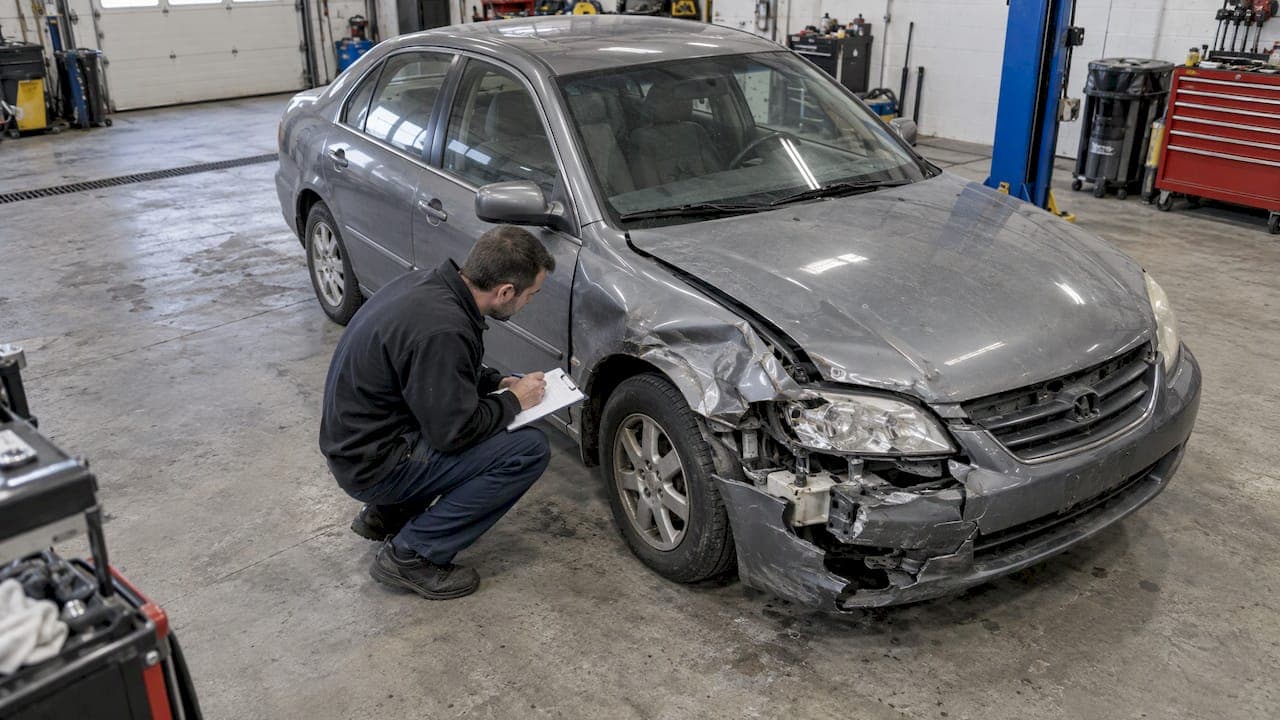
A total loss car claim ends with your insurer paying you the actual cash value (ACV) of your car, minus your deductible, instead of paying for repairs. The insurer declares the car a total loss when repairing it would cost about as much as the car was worth, or more. The rules on thresholds, taxes, deadlines and disputes vary by state, so the details below name the state that sets each rule.
TL;DR
- A car is usually totaled when repair costs plus related expenses exceed its pre-accident actual cash value, or pass a state percentage threshold such as 75%.
- The payout is the car's ACV minus your deductible. Many states also require the settlement to include sales tax and title and registration fees.
- Payment timelines are set by state rules. Some states give the insurer 30 days or less, and some require written updates if the claim drags on.
- If you owe money on the car, the lender is typically paid first. You get whatever is left over.
- If you disagree with the offer, you can negotiate, ask for a supervisor, invoke the appraisal clause or complain to your state insurance department. If you were hurt, talk to an attorney before you sign anything.
Table of Contents
- What "total loss" actually means
- How the insurer decides what your car is worth
- The total loss settlement process, step by step
- How long until you get paid
- Loans, leases and the title
- Keeping your totaled car
- If you think the offer is too low
- When you were hurt too
- Our perspective
- Get a free evaluation if you were injured
- FAQ
- Sources
What "total loss" actually means
A car is declared "totaled" when the estimated cost to repair the damage, plus related expenses, exceeds the car's actual cash value before the accident. Insurers compare the repair estimate to the ACV and apply their state's total loss rules.
The cutoff is not the same everywhere:
- In Maryland, a total loss means the repair cost is 75% or more of the fair market value just before the loss. The insurer may add costs such as a rental vehicle and potential hidden damage when it calculates that figure.
- In Tennessee, a passenger vehicle is a salvage vehicle when repair costs would exceed 75% of retail value.
- Some insurers explain that in certain states a car can be a total loss when repairs exceed a percentage of its value, such as 80%.
- Other states have no fixed percentage, and insurers apply a simpler test: if repairs cost about the same as or more than the car is worth, the insurer will likely treat it as totaled.
A car is not officially a total loss until the adjuster says so. The insurer confirms it after an inspection, so a shop's early guess is not the final word.
Older cars get totaled more easily than people expect. A fender-and-frame repair that is routine on a new car can exceed the value of a ten-year-old sedan. That is why a moderate collision can end in a total loss even when the car looks fixable.
How the insurer decides what your car is worth
The number that matters most is the ACV. Progressive describes it as based on factors such as the car's pre-loss condition, age, options and mileage. The deductible comes off the top.
One major insurer lists what feeds into ACV: mileage, features and modifications, any damage that existed before the accident, and recent sales prices of similar vehicles in your area. That list tells you what to document.

How insurers find the figure is also regulated. In Illinois, for cash settlements the insurer must first determine retail value, and it ordinarily uses guidebooks or computerized data. Advertisements are ordinarily not acceptable sources of market value. Maryland requires the offer to reflect the retail value of a "substantially similar" vehicle, using a nationally recognized valuation manual, computerized data or a quote from a qualified dealer at a reasonably convenient location.
Taxes and fees
A valuation that leaves out sales tax and fees can be short by thousands of dollars. Some state rules address this directly:
- California: a total loss settlement must include taxes, license and transfer fees and reflect the value of a comparable vehicle of like kind and quality.
- Maryland: the offer must include all applicable taxes and registration fees.
- Illinois: if you prove within 30 days of settlement that you bought or leased another vehicle, the insurer must pay applicable sales tax, transfer and title fees, subject to the limit stated by the state.
If your state is not listed here, ask your adjuster in writing how tax and fees were handled, and check your state insurance department's website for its rule.
Finding comparable cars
Valuation depends on cars like yours that are actually for sale. Washington's rule shows how seriously regulators take this: if the insurer cannot find comparable cars where you normally park, it must expand the search 25 miles at a time until it finds two or more comparable cars. With your permission it can search beyond 150 miles.
The total loss settlement process, step by step
The sequence is similar across insurers, even though deadlines differ by state.
- Report the claim and get the car inspected. The adjuster inspects the damage or reviews photos and a shop estimate. Only after that does the insurer confirm a total loss.
- Gather your records. Collect your maintenance receipts, recent major repairs, new tires, aftermarket features and photos of the car before the accident. These support a higher condition rating.
- Receive the valuation report. It should list the comparable vehicles, the adjustments for mileage and options, taxes and fees, and the deductible.
- Review it line by line. Check the trim level, mileage, options and whether the comparables really match your car.
- Accept or dispute. If you accept, you sign over the title and any required forms. If you dispute, see the section below.
- Get paid. If there is a loan, the lender is typically paid first. In Texas, the insurer typically pays the lienholder first, and if you owe less than the car is worth, you get the difference.
- Close out the extras. Cancel or move your coverage on the totaled car, remove toll tags and personal items, and ask how long rental coverage lasts.
Paperwork can come up too. In Illinois, many policies require a sworn proof of loss within 91 days of the loss. Read your own policy for its deadline and do not let a form sit in your inbox.
How long until you get paid
There is no single national deadline. Each state sets its own standard, and these examples show the range:
| State | What the rule says |
|---|---|
| California | The insurer must pay immediately after the claim is accepted, and no later than 30 days after the settlement date. |
| Maryland | The insurer generally has 10 days to offer a cash settlement. |
| New Jersey | Physical damage claims have a 30 calendar day maximum payment period unless a clear justification exists. |
| Washington | The insurer must approve, deny or explain a delay after 30 days, then keep explaining every 30 days. |
| Georgia | The insurer must tender payment within 10 days after coverage is confirmed and the full amount is determined and not in dispute. |
Note what these clocks measure. In New Jersey, the period runs from the insurer's receipt of notice of loss to the mailing of the settlement check, the vehicle's return to use or its replacement. If any element is still unresolved after 30 days, the insurer must give written reasons for the delay and send updated letters every 30 days.
In Georgia, the insurer must also acknowledge a claim within 15 days, and must affirm or deny liability within 15 days of a completed proof of loss for motor vehicle policies. Those periods run alongside the payment deadline.
In practice, the slowest steps are usually the ones that depend on you: signing the title, getting a lender payoff letter and returning forms. Respond to every request the same day and keep copies.
Loans, leases and the title
If you still owe money, the lender holds a lien on the title. In Oregon, the check is typically made out to you and the lienholder, and the lienholder may not allow you to keep the damaged vehicle.
When the payout is smaller than the loan balance, you owe the difference to the lender. That gap is what gap coverage addresses. If you bought it, tell the claims adjuster early and ask the lender for a written payoff figure.
Handing over the car means handing over proof that it is yours to give. Have your title, registration and ID ready, plus the keys. If you ever need to show ownership for key or lock work on a replacement vehicle, these proof of ownership documents are worth having in one folder.
The title also changes after a total loss. In New Hampshire, a vehicle deemed a total loss by an insurer gets a new title branded "Salvage", and it cannot be registered or titled until it is rebuilt for road use and passes a salvage inspection. In Wyoming, the owner or an insurer that takes ownership must submit the endorsed title, an application and the fee to the county clerk, who issues a salvage-branded title.
Keeping your totaled car
You may be able to keep the car, which is called owner-retained salvage. The tradeoff is on the payout. In Texas, the insurer deducts what it would get by selling the car as salvage. In Maryland, the offer is reduced by the salvage value, the insurer asks you to send the original title before the check goes out, and it then notifies the MVA so a salvage certificate is issued.
Washington adds that the insurer will report the totaled car to the Department of Licensing. California says deductions for retained salvage must be fair, measurable and discernible, so ask the insurer to show how it calculated the figure.
Before you choose this route, check what your state requires for a salvage title. In Tennessee, a vehicle with a salvage or non-repairable certificate cannot be registered or operated until the rebuilt vehicle process is completed. In New Hampshire, the salvage inspection requires proof of ownership, the adjuster's itemized report, proof of repairs and documents showing the car is safe for highway operation.

If you think the offer is too low
You have more options than accepting or walking away. Texas lists them plainly: you can negotiate, ask to speak with a claims supervisor or request appraisal, and you can file a complaint with the state insurance department if you think the company treated you unfairly.
A practical approach:
- Build your evidence. Gather listings for comparable cars (same year, trim, similar mileage) near you, service records and photos showing condition and options.
- Put it in writing. Send the adjuster your comparables and point to the exact lines in the valuation you dispute.
- Escalate. Ask for a supervisor if the adjuster will not move.
- Use the appraisal clause. California notes that standard policies often contain an appraisal provision. Either side can demand appraisal, each picks an appraiser, and the two choose a neutral umpire. Amounts agreed by any two are binding. Check your own policy for how it works.
- Know the rules where you live. Washington says that if you and the insurer cannot agree, the insurer may offer a comparable replacement car, pay the ACV of comparable cars, or use independent appraisers if the policy has an appraisal provision.
If the other driver caused the crash, you may be dealing with their insurer, not yours. Our guide to third-party car claims explains how those differ. And if the insurer says no outright, see what to do after a claim denial.
A total loss payout covers the car at its pre-accident value. It does not pay for the car's reduced value after a repair, which is a different claim called diminished value. A totaled car does not carry that issue, but if you have another damaged vehicle it may.
When you were hurt too
A totaled car usually means a hard hit. The vehicle claim and the injury claim are separate, and settling one does not settle the other. Signing a release in your injury case can end your right to more money, so do not sign anything about injuries until you know what your medical care will cost.
Several things shape what an injury claim is worth, and we lay them out in our car accident settlement factors guide. Fault matters too: even a small share assigned to you can reduce your recovery, as explained in our piece on comparative negligence. And deadlines apply, so read about the statute of limitations for car accident claims in your state early.
If medical providers or insurers have paid your bills, they may claim part of your settlement. Our guide to medical liens on a settlement shows how to protect what you keep.
Our perspective
The property side of a crash gets handled quickly, because the insurer has a process for it. The injury side is where people get left behind. When a car is totaled, the force involved was serious, and symptoms can show up days later.
We built our service around that gap. You describe what happened and the type of injury, whether physical harm, emotional trauma or the loss of a family member, and we match your request to vetted local attorneys. The evaluation is free and carries no obligation, so you can learn whether you may be entitled to compensation before you decide anything.
Our view is simple: you should not have to work out the legal side while you are also arranging a rental, dealing with a lender and recovering. A specialized evaluation based on your injury and circumstances helps you ask the right questions from the start.
Gerard
Get a free evaluation if you were injured
If the crash that totaled your car also left you injured, or you lost a family member, you do not have to sort it out alone. Our free evaluation asks about your accident and injury type, then connects you with vetted local attorneys. It costs you nothing and does not commit you to anything.
You can also read more guides on our blog while you decide on next steps.
FAQ
How much can I get from insurance if my car is totaled?
You are typically paid the car's actual cash value, based on factors like condition, age, options and mileage, minus your deductible. Some states require taxes and fees to be included. Your policy limits and any loan balance also affect what reaches you.
Can I refuse my car being totaled?
You can dispute the valuation and ask for a supervisor or appraisal, but the decision rests on state rules and the repair estimate. You can also ask to keep the car, in which case the salvage value is deducted from your payment. If a lender holds the title, it may not allow that.
How do they figure out if a vehicle is totaled?
The adjuster compares the repair estimate, plus related costs, with the car's pre-accident value and applies your state's rule. Some states use a fixed percentage, such as 75% in Maryland. The total loss becomes official only after the adjuster confirms it.
How long does it take to get money after your car is totaled?
It depends on your state. California, for example, requires payment no later than 30 days after the settlement date, while New Jersey sets a 30 calendar day maximum for physical damage claims. Delays often come from missing title paperwork or lender payoff letters.
What happens if I owe more than the car is worth?
The lender is typically paid first from the settlement, and you remain responsible for the remaining balance unless you have coverage that handles it. Read our guide to gap insurance after a total loss for how that claim works.
Sources
- Totaled Car: What It Means and How Insurance Companies Decide
- Car Is Totaled: Learn About The Total Loss Process
- Total Loss Claims, Progressive
- Maryland Insurance Administration: Total Loss
- Illinois Department of Insurance: Total Loss Auto Claims
- California Department of Insurance: So You've Had an Accident, What's Next?
- Washington Office of the Insurance Commissioner: What happens after your car gets totaled
- Texas Office of Public Insurance Counsel: Your Options After a Total Loss
- N.J. Admin. Code § 11:3-10.5
- Ga. Comp. R. & Regs. R. 120-2-52-.03
- Oregon Division of Financial Regulation: Totaled vehicle
- Tennessee Department of Revenue: Salvage/Rebuilt Process
- New Hampshire DMV: Salvage and Rebuilt Vehicles
- Wyoming Statutes § 31-2-107
- Proof of ownership documents for locksmith services