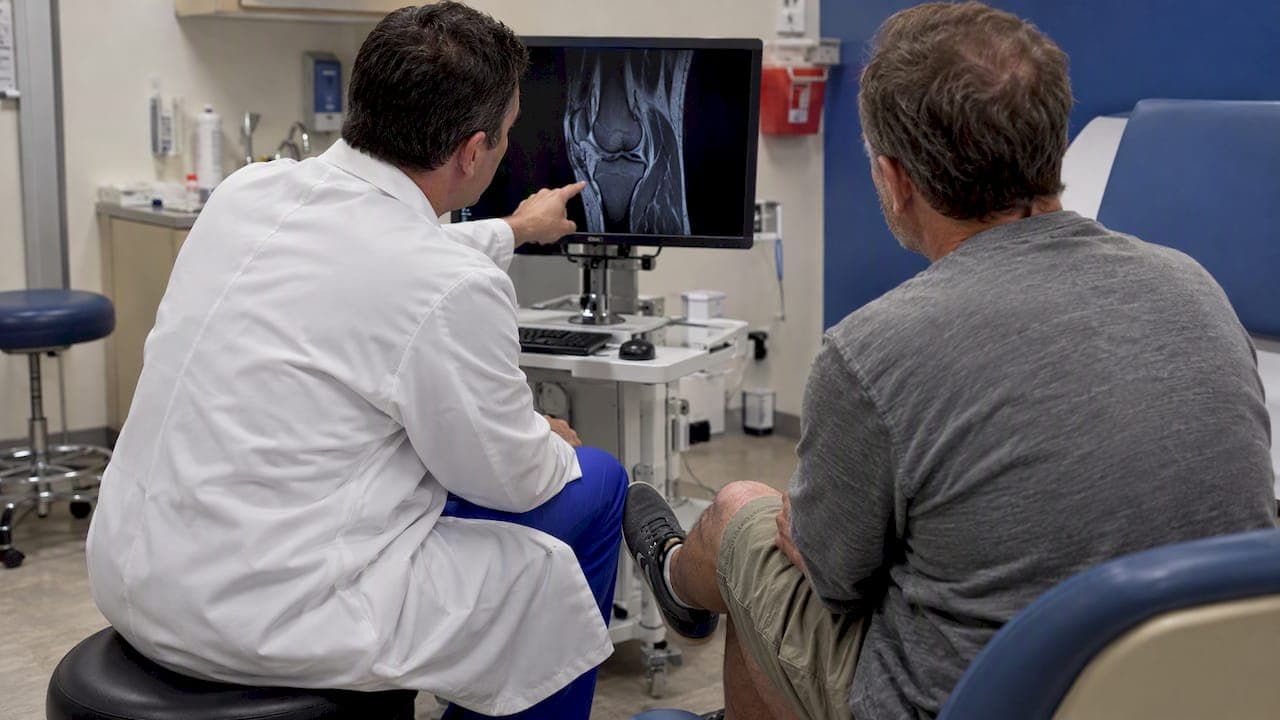
Knee injury settlements after a car accident typically range from around $10,000 for a minor sprain to well over $100,000 when surgery, permanent damage, or lost earning capacity are involved, according to legal market analysis. The exact number depends on your medical proof, not guesswork, so the first move is simple: get your treatment documented and request a free case evaluation before deadlines or gaps in care weaken your claim.
TL;DR:
- Cases involving surgery or permanent damage can settle from $100,000 to over $350,000, depending on recovery and lost income.
- Strengthening the injury record with objective evidence like MRI results and consistent treatment notes can significantly increase settlement value.
- Timely documentation noting "post-motor vehicle accident" at each visit is critical to protecting the injury claim.
- Negotiations typically take 1 to 4 months, with longer durations possible if liability or future care costs are heavily contested.
- Early responses to insurance offers should consider future treatment needs and ongoing symptoms to avoid undervaluing the claim.
Table of Contents
- Settlement Ranges and What the Numbers Actually Mean
- What Actually Moves Your Settlement Value Up or Down
- How Long a Knee Injury Claim Takes From Crash to Payout
- Should You Accept the Insurance Company's First Offer?
- Proving Your Knee Injury Came From the Crash
- Why Legal Representation Changes the Outcome
- What Most People Get Wrong About Knee Injury Claims
- Getting a Free Case Evaluation Started
- FAQ
- Sources
Settlement Ranges and What the Numbers Actually Mean
Knee injuries span a wide spectrum, and so do their payouts. A strained or bruised knee that heals with physical therapy tends to settle in the low five figures. A torn meniscus requiring arthroscopic surgery usually pushes the range into the mid to high five figures, sometimes reaching toward the upper end depending on recovery and lost income. An ACL tear needing reconstruction, or any injury that leaves permanent instability or early arthritis, can land anywhere from $100,000 to $350,000 or more.

Legal market data shows a median jury verdict near $110,000 for knee injury cases, while the average is often pulled higher by a small number of catastrophic outcomes. That gap matters: if you hear a headline "average settlement" figure, it may reflect a handful of extreme verdicts rather than what a typical case like yours would recover.
Attorneys commonly use the multiplier method to estimate the noneconomic portion of a claim, pain and suffering, by multiplying total medical bills by a factor tied to severity.
- A moderate sprain with $8,000 in medical bills and a multiplier of 1.5 suggests roughly $12,000 in pain and suffering, plus the bills themselves.
- A surgical meniscus repair with $35,000 in medical costs and a multiplier of 3 points toward about $105,000 in pain and suffering, for a combined estimate near $145,000 before fault or fee adjustments.
One sourced figure worth remembering: the median knee injury verdict sits near $110,000, a useful anchor point when your injury involved surgery or lasting limitation. Our guide to settlement factors breaks down how each variable shifts that baseline up or down.
What Actually Moves Your Settlement Value Up or Down
Insurance adjusters and attorneys both look at the same core categories when sizing up a knee claim. Your economic damages, medical bills already paid, projected future care, lost wages, and any reduction in your ability to earn, form the foundation. On top of that sits the noneconomic side: pain, disruption to daily life, and loss of mobility, typically expressed through the multiplier discussed above.
- Surgery and permanence push multipliers toward the higher end, often 3 to 5 or more.
- Strong objective evidence, including MRI results, operative reports, and consistent physical therapy notes, supports higher valuations because it removes doubt about what happened.
- Treatment gaps between the crash and your first knee-related visit give insurers an opening to argue the injury came from somewhere else.
- Pre-existing knee problems don't disqualify a claim, but they do require clear documentation showing the crash made things worse.
- Shared fault findings reduce your recovery in states that apply comparative negligence, sometimes dollar for dollar with your percentage of blame.
Pro Tip: Ask every treating provider to note "post-motor vehicle accident" in your chart at each visit. That single phrase, repeated consistently, does more to protect your claim than almost anything else.
Lost income and reduced earning capacity deserve their own attention, and our step-by-step guide to lost wages recovery covers exactly what documentation carriers expect to see, while a Knee Injury Workers' Comp Settlement Calculator can help estimate compensation specific to knee claims.
How Long a Knee Injury Claim Takes From Crash to Payout
Most knee injury claims move through a predictable sequence, though timing varies by state and by how contested liability is.
- Immediate aftermath (days 1 to 14): seek medical care right away, photograph the scene and your injury, and start a symptom journal.
- Investigation and treatment (weeks to several months): your attorney gathers records while you complete the treatment your doctor recommends; rushing this phase almost always undervalues the claim.
- Demand and negotiation (1 to 4 months): a demand letter goes to the insurer, followed by rounds of counteroffers.
- Lawsuit filing, if needed: when negotiations stall, a suit preserves your rights and restarts formal discovery.
- Discovery, mediation, and possibly trial (6 months to 2 years): complex or disputed cases take longer, especially when future care costs are contested.
Every state sets its own statute of limitations for personal injury claims, and many fall in the 2 to 3 year range from the date of the crash, though some states allow far less time. Our state-by-state deadline guide lays out specifics, and our claim timeline resource walks through what to expect at each stage.
Should You Accept the Insurance Company's First Offer?
Insurers typically open low because they're betting you don't know your claim's full value yet, or that you'll accept quick cash over a longer fight. Before responding to any offer, compare it against:
- Your total medical bills to date, plus a realistic estimate of future treatment.
- Lost wages and any projected reduction in future earning capacity.
- Whether your knee has fully stabilized or whether more surgery, injections, or therapy may still be needed.
- How clear liability is, since a disputed fault scenario changes the math substantially.
A first offer that ignores future surgery, leaves diagnostic questions unresolved, or undervalues a disputed liability situation is a signal to negotiate further or bring in counsel. Accepting early can make sense only when your knee has fully healed, your bills are finalized, and the offer already reflects the full value of your documented losses.
Proving Your Knee Injury Came From the Crash
Causation is often the single biggest fight in a knee injury claim, especially for meniscus tears. MRI imaging alone frequently cannot distinguish a degenerative tear from one caused by sudden trauma, which is why medical-legal literature on meniscal injuries stresses the importance of contemporaneous records and a treating surgeon's opinion connecting the mechanism of injury to the tear.
The most persuasive evidence includes emergency room or urgent care notes from right after the crash, imaging that shows a new tear rather than wear and tear, operative reports, physical therapy records showing a consistent recovery arc, and a written opinion from your treating orthopedic surgeon. The AAOS clinical practice guideline on acute meniscal pathology notes that earlier, accurate diagnosis shapes both treatment and prognosis, which is part of why timing matters so much in these cases.
If you had prior knee problems, the law in most states still allows recovery under the aggravation principle: you can be compensated for the degree to which the crash worsened a pre-existing condition, even if you weren't starting from a perfectly healthy knee.

Pro Tip: Keep a simple written log of pain levels, missed activities, and work impact starting the day of the crash. It becomes powerful supporting evidence months later when memory alone won't cut it.
Why Legal Representation Changes the Outcome
Attorneys handling knee injury claims typically do three things claimants struggle to do alone: build out the full evidentiary record, calculate future medical costs and lost earning capacity with defensible numbers, and negotiate from a position that doesn't blink at a lowball offer. Our guide to real settlement outcomes shows how these pieces come together in practice.
When vetting an attorney, ask about:
- Direct experience handling knee and orthopedic injury claims specifically.
- A track record of taking cases to trial when insurers refuse fair offers.
- A clear, written contingency fee structure with no surprise costs.
- How they handle medical liens and subrogation claims against your settlement.
A free evaluation can help get these questions answered before committing to anything, and it costs nothing to find out where your case stands.
What Most People Get Wrong About Knee Injury Claims
The biggest mistake we see is delay: putting off a doctor's visit, skipping follow-up appointments, or waiting weeks to mention knee pain because other injuries seemed more urgent at the time. That gap becomes the insurer's favorite argument.
The second mistake is signing the first offer out of exhaustion or financial pressure, before knowing whether more surgery is coming or whether lost wages have been fully counted. Thin or inconsistent medical records cause more claim denials and lowball settlements than any other single factor we encounter. Timely, consistent documentation combined with an early, honest case evaluation tends to be the difference between a modest check and a fair one.
— Gerard
Getting a Free Case Evaluation Started
A knee injury after a car accident comes with enough uncertainty already, so we built our evaluation process to remove the guesswork around next steps. Our no-obligation case review asks about your injury type, the treatment you've received so far, and any approaching deadlines, then connects you with an attorney experienced in cases like yours.
There's no cost and no commitment to start the conversation, and getting matched early can help preserve evidence and protect your filing deadline before either one becomes a problem. If you're ready to see what your knee injury claim might be worth, you can start your free evaluation today.
This article is general information, not a substitute for advice from a qualified lawyer. Consult a qualified legal professional about your own circumstances before acting on anything here.
FAQ
How much is a knee injury worth in a car accident?
Value depends heavily on severity: minor sprains often settle in the low five figures, while surgical injuries like a torn meniscus or ACL tear can reach into the mid six figures when permanent impairment or lost earning capacity is involved. Your specific medical records, treatment history, and liability facts determine where your case falls on that range.
What is a good settlement offer for a knee injury?
A good offer fully accounts for your medical bills to date, any anticipated future treatment such as additional surgery, lost wages, and a pain and suffering amount calculated using a multiplier appropriate to your injury's severity. If an offer ignores ongoing symptoms or unresolved diagnostic questions, it likely undervalues your claim.
What is the average payout for a knee injury claim?
Market analysis points to a median jury verdict near $110,000 for knee injury cases, though averages can run higher due to a small number of large catastrophic verdicts. Minor injuries without surgery typically settle well below that median.
Do steroid injections increase settlement?
Steroid injections and other active treatments generally support a higher valuation because they demonstrate ongoing, documented symptoms rather than a resolved injury. They are one piece of a larger medical record, and their impact depends on how clearly they connect to the original crash and your overall treatment timeline.
Sources
- Acute Isolated Meniscal Pathology (AAOS CPG)
- What Is the Average Payout for a Knee Injury? - LegalClarity
- PMC article on meniscal tear causation and evidence