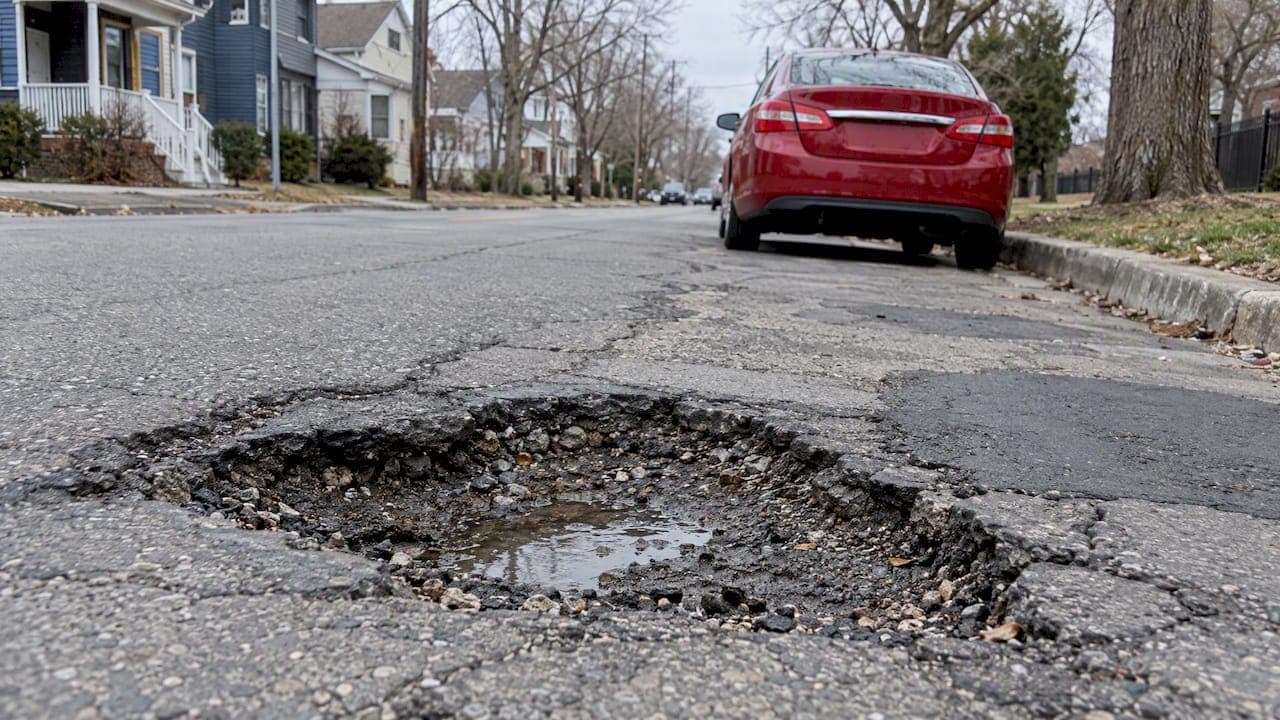
You can sometimes hold a government entity responsible for a crash caused by a hazardous road, if the agency knew or should have known about the defect and had time to fix or warn. Photograph the hazard, collect witness names, and identify the responsible agency right away, because missed notice deadlines kill most claims. Federal claims run on a separate clock under the FTCA.
TL;DR:
- State highways, county roads, city streets, and federal land may have different maintainers; when ownership overlaps, notify each plausible agency and confirm jurisdiction in writing.
- Road defect claims require proof of a dangerous condition, agency notice, time to respond, causation, and documented losses such as medical bills or repair costs.
- For federal claims, submit a written administrative claim within two years; after a final denial, you generally have six months to file suit.
- Your federal lawsuit generally cannot seek more than the amount requested in the administrative claim, so support that figure with bills and repair estimates.
- Federal agencies can avoid liability for policy choices about budgets or repair priorities, but ignored known hazards and missed mandatory inspections may remain actionable.
Table of Contents
- 1. Which agency is responsible for the road where you crashed?
- 2. What do you have to prove in a road-defect claim?
- 3. How fast do you have to give notice or file a claim?
- 4. What is the discretionary-function exception, and what other defenses should you expect?
- 5. How do you preserve evidence after a road-defect crash?
- 6. How do you file an administrative claim?
- 7. When should you talk to an attorney?
- 8. Why acting fast and getting expert review matters
- 9. Get a free, no-obligation review of your road-defect claim
- FAQ
- Sources
1. Which agency is responsible for the road where you crashed?
Government liability starts with a simple question: who maintained that stretch of pavement? Naming the wrong defendant can waste valuable time, since each agency has its own notice rules.
- State departments of transportation typically maintain interstates and state-numbered highways. Look for route markers such as I, US, or SR.
- Counties generally handle county roads, often marked CR. Rural roads without a state or federal number usually fall here.
- Cities maintain local streets, sidewalks near intersections, and many traffic signals.
- Federal agencies are responsible for roads on federal land, such as national parks and military installations.
- Private contractors may share liability when they recently performed construction or repair work. A poorly marked work zone or a patch that failed quickly can point to the contractor, the hiring agency, or both.
If you cannot tell who owns the road, start with the state DOT or the county road commission. Many states publish online maintenance-responsibility maps, and a records request to either office can confirm jurisdiction in writing. Do that early, because the answer determines which notice rules and deadlines apply to you.
A practical habit: write down the nearest cross streets, mile markers, and any route signs while you are still at the scene. That detail lets an agency, an insurer, or an attorney pin down jurisdiction without guessing. Where several entities touch the same roadway, such as a state highway running through a city, notify each plausible one. Sending a notice to an agency that turns out not to own the road costs you an envelope. Skipping the right one can cost you the claim.
2. What do you have to prove in a road-defect claim?
A road-defect claim is a negligence claim against the government, and it has the same building blocks as other negligence cases, plus extra hurdles around notice. Plain-language guidance from Nolo frames the core showing: a dangerous condition, notice, time to act, causation, and damages.
- Dangerous condition. The defect must create an unreasonable risk of harm. Examples include large potholes, edge drop-offs, missing guardrails, failed drainage, and absent or misleading warning signs. A small crack that most drivers cross without trouble rarely qualifies.
- Actual notice. The agency was told about the hazard. Evidence includes citizen complaints, 311 reports, prior repair orders, and inspection logs that mention the spot.
- Constructive notice. Even with no complaint on file, the agency should have found the problem through reasonable inspections. A pothole that had been growing for months across a busy arterial is a classic example. The longer a defect existed, the easier it is to argue the agency should have caught it.
- Time to act. The agency needs a reasonable window to repair or warn. A hole that opened overnight after a storm is a harder case than one that sat untouched for a season.
- Causation. You must connect the defect to the crash. Photos showing your vehicle's position relative to the hazard, plus damage patterns such as a bent rim or blown tire, help here.
- Damages. Document medical bills, lost wages, and vehicle repair estimates. Courts want numbers, not impressions.
Each element matters in practice because the agency only needs to knock out one. A claimant with a vivid injury story but no proof of notice usually loses. Transportation-industry guidance from ITE notes that agencies run risk-management programs built on documented inspections and engineering standards, and common problem areas include edge drop-offs, drainage failures, and deficient traffic control devices. Expect the agency's records to be its main defense, and expect your evidence to need to answer them.
3. How fast do you have to give notice or file a claim?
Timing is where road-defect claims most often fail. State and municipal notice deadlines vary and may be short. Check the applicable rules for the specific deadline. Many places also require a written notice or a specific pre-claim form, delivered in a particular way. A late or misdelivered notice can end a case regardless of how strong the facts are. For the state-by-state picture, see our guide on how state statutes of limitations can kill car accident claims.
Federal claims follow a different structure under the Federal Tort Claims Act:
- You must present a written administrative claim to the responsible federal agency within two years of accrual, as set out in 28 U.S.C. §2401(b).
- If the agency issues a final denial, you generally have six months from the mailing of that denial to file suit.
- If the agency does not act within six months, you may treat the silence as a final denial and proceed, under 28 U.S.C. §2675.
- Amending a claim can trigger a fresh six-month review period, according to the Navy's implementing rule at 32 CFR §750.36.
Federal claims: two years to present the claim in writing, then six months to sue after a final denial. That is the statutory rule in 28 U.S.C. §2401(b), and courts enforce it strictly.
Courts have even debated whether these time bars can be relaxed. The Supreme Court examined whether FTCA deadlines allow equitable tolling in United States v. Kwai Fun Wong, but you should never plan around an exception.
To find the right agency, ask the road's owner for its claim form and filing address. Use the agency's official form when one exists, and send it by certified mail with return receipt so you can prove when it arrived. Keep a complete copy of everything you send.

4. What is the discretionary-function exception, and what other defenses should you expect?
Sovereign immunity does not disappear just because a statute lets you sue. Governments raise several defenses, and the most important federal one is the discretionary-function exception in 28 U.S.C. §2680(a). As LSU's law materials on FTCA exceptions explain, it protects agency actions that involve judgment or policy choices, such as decisions about budgeting or prioritizing maintenance projects.
Courts generally examine whether:
- Did the action involve an element of judgment or choice, rather than following a mandatory rule?
- Is that judgment the kind that policy considerations are meant to shield?
The U.S. government's own filings, such as this Supreme Court brief, describe the exception as insulating high-level choices about funding and maintenance priorities, applied through fact-specific analysis.
The practical dividing line looks like this:
- Often protected: deciding how much of a budget goes to resurfacing, choosing which corridors to repair first, and selecting a road-design approach.
- Often not protected: failing to repair a specific, known hazard, ignoring a mandatory inspection schedule, or leaving a work-zone hazard unmarked.
Because the inquiry turns on facts, documentation can be decisive. Inspection logs, internal maintenance policies, and contemporaneous complaints can show the agency was not weighing policy at all, but simply failed to do routine work.
Other defenses are common. Agencies may argue they lacked notice, that the defect was too minor to be dangerous, that they had no reasonable time to fix it, or that the driver's own speed or inattention caused the crash. Many states also recognize immunity doctrines for certain governmental functions, so expect your state's rules to shape the case.
5. How do you preserve evidence after a road-defect crash?
Evidence disappears fast. Maintenance crews can patch a hazard within days, and once it is gone, so is your best proof of the dangerous condition. Work through these steps as soon as you are safe and medically cleared:
- Photograph the defect with something for scale, and capture the surrounding area from several angles and distances.
- Photograph your vehicle's damage and its final position on the road.
- Record weather, lighting, and traffic conditions, and take video if you can.
- Get names and contact details from every witness, including other drivers and nearby residents.
- Keep all repair estimates, invoices, and towing records, and save medical records and bills as they arrive.
Timestamps matter because the agency may argue the hazard appeared after your crash or that it had no time to learn of it. Photos with embedded metadata, certified-mail receipts, and dated reports to the agency all help show when you acted and what the defect looked like at the time.
Pro Tip: Lay a coin, tape measure, or ruler beside the defect for scale, then upload every photo to cloud storage so it carries an independent timestamp.
For a broader walkthrough, see our car accident evidence best practices.
6. How do you file an administrative claim?
Many government claims require an administrative claim before any lawsuit, with strictly enforced deadlines. Under federal law, 28 U.S.C. §2675 generally requires a final written denial, or six months of agency inaction, before you can sue, and the amount you later seek in court is generally capped at what you claimed administratively. That makes the claim amount a strategic decision, not a formality. The Government Publishing Office text of the same regulation shows how these requirements are written into agency rules.
A solid claim includes:
- A clear description of what happened, with the date, time, and exact location.
- The identity of the agency or employee you believe is responsible, if known.
- The specific dollar amount of damages you seek, supported by estimates and bills.
- Supporting evidence, such as photos, repair estimates, and medical records.
Deliver it the way the agency requires. Use the official form when there is one, and send it by certified mail with return receipt. Calendar the six-month mark immediately, since that date may open your path to court.
If the agency denies the claim or never responds, you can move toward litigation, but the next deadline is short. Because an under-valued or incomplete claim can limit your options later, many people have an attorney review or prepare it. To understand what happens after filing, see our injury claim timeline and our guide to common claim denials.
7. When should you talk to an attorney?
Contact a lawyer promptly if your injuries are serious, if the defendant may be a state or federal agency, if notice deadlines are short, or if the agency is disputing notice or causation. Each of those situations punishes delay.
A free evaluation typically looks at whether the agency had actual or constructive notice, whether you can still meet the filing rules, and whether your damages justify a claim. Have these ready: photos, witness names, repair estimates, medical records, and any correspondence with the agency.
An attorney can also review or prepare your administrative claim so it preserves your right to sue, and can gather inspection and maintenance records that counter a discretionary-function defense. Handing that work off early protects options you cannot get back later.
8. Why acting fast and getting expert review matters
Here is my view, and I will state it plainly: the claims that fail are rarely the weak ones. Too often a valid claim dies because the notice window closed while someone was recovering, or because the crew filled the pothole before anyone took a picture. Nobody loses on the law. They lose on the calendar.
People also assume the government is untouchable, so they never ask. That belief is wrong often enough to be costly. A free evaluation will not tell you everything, but it can tell you whether to move forward and what to do this week, before the next deadline passes. If you are unsure, ask early rather than late.
— Gerard
9. Get a free, no-obligation review of your road-defect claim
If a hazardous road injured you, we offer a free evaluation that reviews your likely defendants, the notice and filing deadlines that apply, and whether your claim justifies moving forward. Tell us what happened and what injuries you suffered, and we connect you with an attorney suited to your situation. Have your photos, repair estimates, and medical records handy. Carcollisionlawyer so you can learn where you stand while the deadlines are still on your side.
This article is general information, not a substitute for advice from a qualified lawyer. Consult a qualified legal professional about your own circumstances before acting on anything here.
FAQ
Is the government responsible for potholes?
Sometimes. A government entity can be liable when a pothole is dangerous, the agency had actual or constructive notice, and it had reasonable time to repair or warn. Special notice rules and short deadlines usually apply, as Nolo's guidance explains.
What are the four proofs of negligence?
Negligence generally requires duty, breach, causation, and damages. In road-defect cases, you also typically need to show the agency had notice of the dangerous condition and time to act.
Can you sue the federal government for damages?
Yes, in many situations, through the Federal Tort Claims Act, but you must first present a written administrative claim to the agency within two years. The statutory timing in 28 U.S.C. §2401(b) is strict, and the discretionary-function exception can block some claims.
What are the four elements of tort liability?
Tort liability typically rests on a legal duty, a breach of that duty, causation linking the breach to your harm, and measurable damages. Government cases add procedural hurdles such as notice and claim-filing requirements.
Sources
- Law
- Biotech
- Transportation Forensics and Risk Management - ITE-A Community of Transportation Professionals