
The eggshell skull rule means a negligent driver is liable for your full injuries, even if a fragile pre-existing condition made those injuries far worse than they'd be for anyone else. Courts call this "taking the victim as you find them." You still have to prove the defendant caused the harm, but you don't have to prove you were healthy beforehand. The Cornell Law School Wex entry treats this as settled doctrine, and services exist partly because many claimants with prior conditions get lowballed by insurers who don't know, or pretend not to know, this rule.
TL;DR:
- The eggshell skull rule means defendants are liable for the full extent of injuries caused, regardless of pre-existing vulnerabilities or unexpected severity.
- Plaintiffs must prove that the defendant caused a foreseeable injury of a certain type, but not necessarily the severity, which is ruled by the eggshell doctrine.
- Damages are adjusted based on the aggravation of pre-existing conditions, with courts estimating what would have happened without the accident.
- Strong documentation of pre-accident health and early expert testimony are vital to establishing an eggshell skull claim.
- Insurance companies often underestimate damages by citing pre-existing conditions, making early legal consultation crucial for vulnerable claimants.
Table of Contents
- What Is the Eggshell Skull Rule in Tort Law?
- How Does Causation Work Under the Eggshell Skull Rule?
- What Do Real Eggshell Skull Cases Look Like?
- How Do Courts Handle Damages With Pre-Existing Conditions?
- Can an Intervening Act Break the Chain of Liability?
- What Should Plaintiffs Do to Protect an Eggshell Skull Claim?
- Why Early Attorney Matching Matters for Vulnerable Plaintiffs
- Get a Free Case Evaluation From Carcollisionlawyer
- Where to Read More on the Eggshell Skull Rule
- Sources
- FAQ
What Is the Eggshell Skull Rule in Tort Law?
Also called the eggshell plaintiff rule or thin skull doctrine, this principle holds a defendant fully responsible for the actual damage caused, not the damage a "normal" person would have suffered. Cornell's Wex definition frames it as liability for "the full extent" of injury, regardless of an unforeseeable vulnerability.
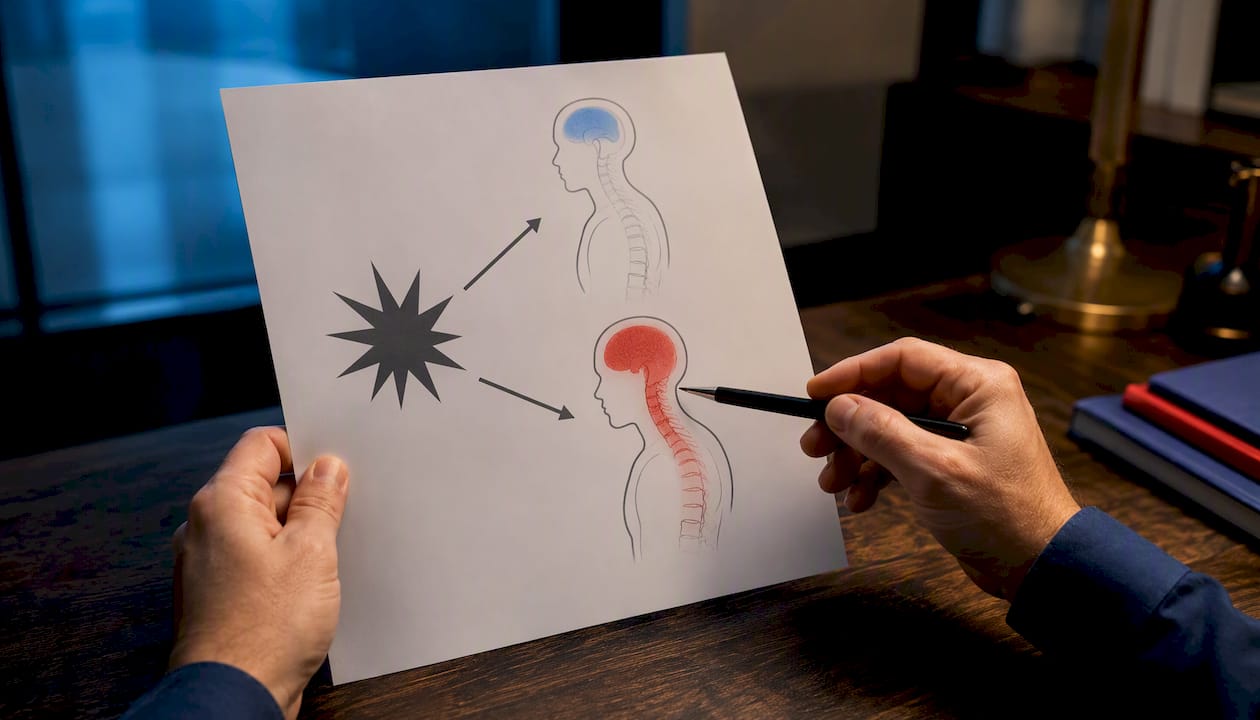
The reasoning is straightforward. Courts don't want a negligent driver to get a discount just because the person they hit happened to have osteoporosis or a prior spinal fusion. The wrongdoer created the risk, so the wrongdoer bears the consequences of who actually got hurt.
A few things worth separating out:
- Eggshell skull rule: vulnerability existed before the accident and the tort worsens it disproportionately.
- Crumbling skull doctrine: the plaintiff's condition was already deteriorating, so damages are adjusted to avoid paying for decline that would have happened anyway.
- Thin skull / eggshell plaintiff: interchangeable terms for the same core rule.
That crumbling skull distinction matters, and we'll come back to it under damages.
How Does Causation Work Under the Eggshell Skull Rule?
Proximate cause doesn't disappear just because the rule favors plaintiffs. You still have to show the defendant's negligence caused a foreseeable type of injury. A rear-end collision that could plausibly cause neck or back injury satisfies that. What you don't have to show is that the severity was foreseeable.
That split, foreseeable type versus unforeseeable extent, is the entire hinge of eggshell skull litigation. A Fifth Circuit opinion reflects this approach, applying the rule while still requiring the initial harm to fall within the risk the defendant's conduct created.
To prove your case, you'll typically need to establish:
- A duty of care existed and was breached.
- The breach caused an injury of a foreseeable type (even a minor one).
- Medical evidence connects that initial injury to the full extent of harm suffered.
- Expert testimony explains why a pre-existing condition amplified the outcome.
Pro Tip: Get a doctor to put the causal chain in writing early. "Accident aggravated pre-existing disc degeneration, resulting in..." is worth more to your claim than any amount of arguing after the fact.
What Do Real Eggshell Skull Cases Look Like?
Fact patterns tend to fall into a few recurring shapes:
- A driver taps another car at low speed; the other driver has brittle bone disease and suffers a fracture a healthy person never would have.
- A rear-end collision aggravates a plaintiff's decade-old spinal fusion, triggering chronic pain that wasn't previously symptomatic.
- An anxious passenger develops full-blown PTSD after a crash that a less vulnerable passenger would have shrugged off.
In each scenario, the defendant caused some foreseeable injury, and the rule extends liability to the surprising severity. The Campbell Law Review analysis notes courts increasingly grapple with psychiatric aggravation claims under this same framework, weighing multiple contributing causes rather than assuming the tort is the sole trigger. Physical vulnerabilities like brittle bones and prior surgeries, along with psychiatric conditions such as PTSD, both fall within the doctrine's reach, according to background legal summaries on the eggshell skull concept.
How Do Courts Handle Damages With Pre-Existing Conditions?
Courts don't just hand plaintiffs a blank check. The goal is to compensate for the aggravation caused by the tort, not to fund an unrelated pre-existing decline. That's where the crumbling skull doctrine comes in: if your condition was already worsening before the crash, damages get adjusted so you're paid for the acceleration or aggravation, not the baseline deterioration you'd have experienced regardless.
Practically, this plays out a few ways:
- Damages are calculated against your likely trajectory without the accident, not against a hypothetical healthy baseline.
- Medical experts often testify about what your condition probably would have looked like in five or ten years absent the crash.
- In rare cases, courts invoke public policy to limit recovery when claimed damages are wildly disproportionate to the defendant's actual culpability, a limitation the Campbell Law Review discusses as an outlier safeguard, not the norm.
Prior injuries and degenerative conditions routinely shape settlement negotiations for exactly this reason.
Can an Intervening Act Break the Chain of Liability?
Not every intervening event lets a defendant off the hook, but some do. Novus actus interveniens, an intervening act, can cut the causal chain if it's independent, unforeseeable, and significant enough to override the original negligence.
- Independent third-party conduct. If someone else's separate, unforeseeable act causes further harm, that act may become the true legal cause instead.
- Grossly negligent medical care. Ordinary imperfect treatment doesn't break causation, but medical care so inferior it's essentially reckless can, according to background analysis on the eggshell skull doctrine.
- Policy-based limits. Courts occasionally decline to extend liability where the outcome would be grossly disproportionate to the defendant's fault.
Ordinary medical negligence, a missed follow-up, a slow referral, almost never counts as an intervening act on its own.
What Should Plaintiffs Do to Protect an Eggshell Skull Claim?
Documentation wins these cases more often than argument does. Insurers challenge eggshell claims aggressively because the damages can run higher than a "typical" injury, so build the record before they start pushing back.
- Pull complete pre-accident medical history, not just recent records, to establish your true baseline.
- Keep contemporaneous records from the days and weeks right after the crash; gaps in treatment get used against you.
- Line up witness statements while memories are fresh.
- Retain a specialist, orthopedic, neurological, or psychiatric depending on the injury, who can explain the aggravation in plain terms a jury understands.
Expert witnesses do double duty here: they establish causation (the tort triggered the worsening) and they quantify damages (how much worse, and for how long). Claims involving PTSD or emotional trauma especially benefit from psychiatric documentation gathered early, before memory and symptoms fade.
Pro Tip: Don't wait for the insurer to request your pre-accident records. Get them yourself, early, so your own doctor's letter isn't the only account of "before."
Why Early Attorney Matching Matters for Vulnerable Plaintiffs
The eggshell rule protects you on paper, but it only helps if your attorney knows how to build the aggravation timeline that makes it stick. That's the gap services like this exist to close: connecting people with unusual vulnerabilities to attorneys who've actually litigated these fact patterns, before evidence goes stale or an insurer locks in a lowball number.
— Gerard
Get a Free Case Evaluation From Carcollisionlawyer
Insurance adjusters routinely lean on pre-existing conditions to shrink settlements, betting most claimants won't know the eggshell rule protects them from exactly that tactic. Such services provide free case evaluations that match you with an attorney experienced in exactly this kind of claim, at no upfront cost.
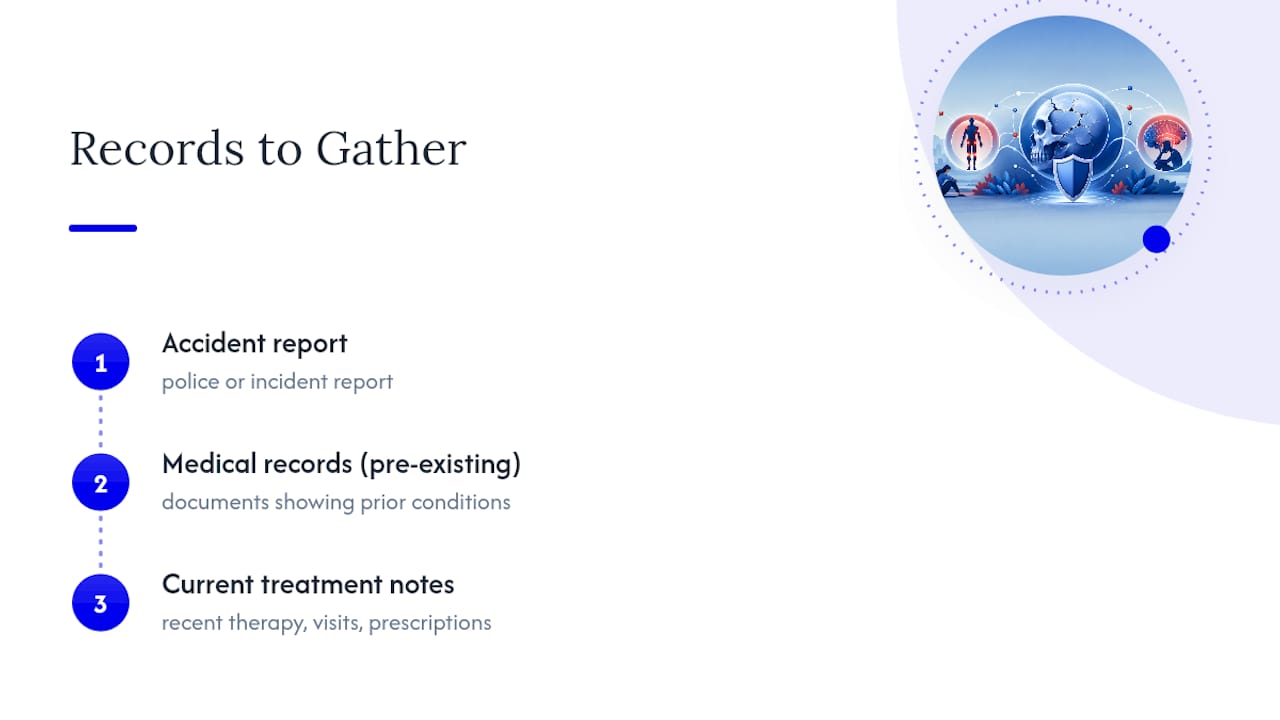
Before you start, gather your accident report, any medical records showing pre-existing conditions, and current treatment notes. Those three items let an attorney assess your case fast and tell you honestly whether your vulnerability strengthens your claim rather than weakens it. If you're also dealing with anxiety or emotional aftershock from the crash, our guide to diagnosing accident-related phobia explains how that fits into a compensation claim too.
Start your free case evaluation now and find out what your claim is actually worth.
Where to Read More on the Eggshell Skull Rule
For readers who want to verify the law directly rather than take a summary's word for it, these are the primary and secondary sources behind this article:
- Eggshell Skull Rule, Wex, Cornell Law School, for the foundational legal definition.
- The Eggshell Skull Rule and Related Problems in Recovery, Campbell Law Review, for scholarly treatment of psychiatric damages and apportionment.
- Selected Fifth Circuit opinion, for an example of the rule applied in federal appellate practice.
- Eggshell Skull Rule, USLegal, for a plain-language distinction between eggshell and crumbling skull doctrines.
This article is general information, not a substitute for advice from a qualified lawyer. Consult a qualified legal professional about your own circumstances before acting on anything here.
Sources
- eggshell skull rule | Wex - Cornell Law School
- The Eggshell Skull Rule and Related Problems in Recovery (Campbell Law Review)
- Selected Fifth Circuit opinion (research pool)
- Eggshell skull rule law and legal definition | USLegal
FAQ
Can You Still Be Sued (or Sue) Under the Eggshell Skull Rule?
Yes. The rule doesn't shield anyone from liability or create it out of nothing; it only expands the scope of damages once negligence and causation are already proven.
Is the Eggshell Skull Rule Fair to Defendants?
Courts justify it on the principle that a negligent party should bear the actual consequences of their conduct, not a hypothetical average outcome, though the Campbell Law Review notes courts do apply proportionality limits in extreme cases.
Does the Eggshell Skull Rule Apply in Criminal Law?
The doctrine originated in and is most consistently applied in tort law; criminal cases involve separate causation and intent standards, so the rule's civil framework doesn't transfer directly.
What Is the Eggshell Plaintiff Rule in California?
California follows the same core doctrine as other U.S. jurisdictions: a defendant takes the plaintiff as they find them and is liable for the full extent of injury, foreseeable type included, unforeseeable severity included.
How Do I Know if My Pre-Existing Condition Helps or Hurts My Claim?
A documented pre-existing condition can strengthen an eggshell claim if the aggravation is well recorded; a free evaluation through Carcollisionlawyer can connect you with an attorney who can assess your specific medical timeline.