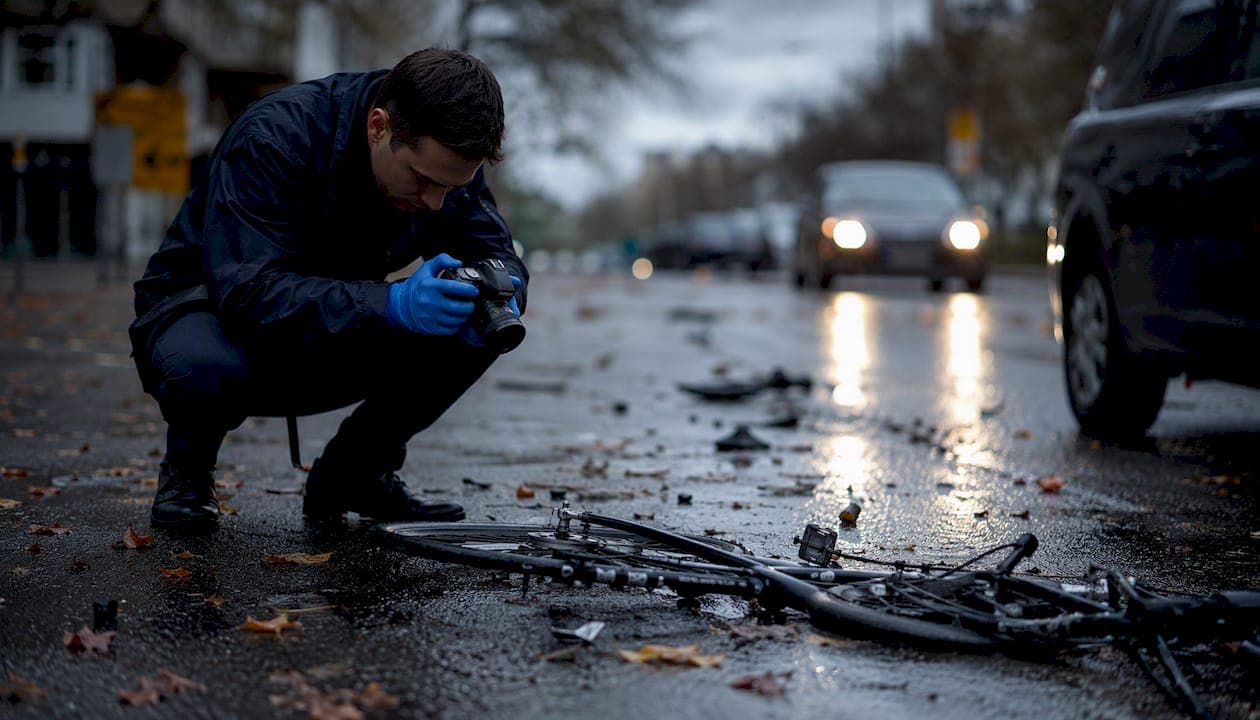
Bicycle accident claims need specialists because the evidence, equipment valuation, and insurer tactics involved are genuinely different from a standard car crash, and missing any one of those elements can cut your recovery significantly. A specialist brings accident reconstruction experts, cycling-specific medical documentation, and the negotiation leverage to push back when an adjuster undervalues your bike or disputes your injuries.
If you were just hurt in a crash, here is what matters right now:
- Stronger liability proof. Specialists know how to document lane position, road conditions, and vehicle speed in ways that hold up under insurer scrutiny.
- Correct equipment valuation. A custom build or aftermarket component stack is worth far more than a generic replacement bike, and only a specialist knows how to prove that.
- Expert witnesses. Accident reconstruction engineers, treating physicians, and vocational experts convert technical facts into persuasive evidence.
- Insurer negotiation. Specialists recognize lowball tactics and have the documentation ready to counter them before you sign anything.
- Contingency-fee handling. You pay nothing unless you recover, so the specialist's financial interest aligns directly with yours.
Your immediate next steps: get medical care today even if injuries feel minor, preserve your bike and gear without repairing them, photograph the scene and your injuries, and get a free specialist evaluation through Carcollisionlawyer before you speak to any insurance adjuster.
Key Takeaways
Bicycle claims need specialists because the evidence, equipment valuation, and insurer tactics involved are distinct from car crashes, and missing any one element can significantly reduce your recovery.
| Point | Details |
|---|---|
| Specialist vs. generalist gap | Specialists catch cycling-specific evidence (GPS data, component values, lane-position reconstruction) that generalists routinely miss. |
| Settlements driven by medical costs | Bicycle settlements often exceed comparable car-crash settlements because cyclists absorb full impact force without vehicle protection. |
| Expert witnesses are decisive | Reconstruction engineers, medical specialists, and vocational experts convert technical facts into persuasive, monetized evidence. |
| Statute of limitations is strict | Most states allow two to three years to file; some municipal claims require notice within 90 days, so acting quickly protects your rights. |
| Carcollisionlawyer free evaluation | Carcollisionlawyer matches injured cyclists with vetted bicycle-accident attorneys at no cost and no commitment through a free intake process. |
Table of Contents
- Why bicycle claims need specialists: what the job actually looks like
- Why specialists win bicycle cases that generalists often lose
- How specialists handle insurance-company tactics and protect your claim
- How damages are calculated in bicycle accident claims
- What expert witnesses do in a bicycle claim
- What to expect when you hire a bicycle-accident specialist
- How a free specialist evaluation through Carcollisionlawyer works
- Why specialization is the only sensible choice for a non-trivial bicycle claim
- Get a free bicycle accident case evaluation now
- Sources
Why bicycle claims need specialists: what the job actually looks like
Specialists build a claim by securing evidence, documenting injuries precisely, and matching the right experts to the right facts. That sounds straightforward until you see how many moving parts a bicycle crash actually involves.
Intake and initial investigation
The process starts the moment you contact a specialist. They pull the police report, identify all potentially liable parties (the driver, a municipality with a defective road, a bike manufacturer), and flag which insurance policies apply. A bicycle collision can trigger the at-fault driver's liability coverage, your own uninsured/underinsured motorist (UM/UIM) policy, and sometimes a homeowner's policy, depending on the facts. Bicycle collision claims often develop into a very different kind of insurance case than a standard car accident, and specialists know which policies to check from the start.
Scene and bike documentation
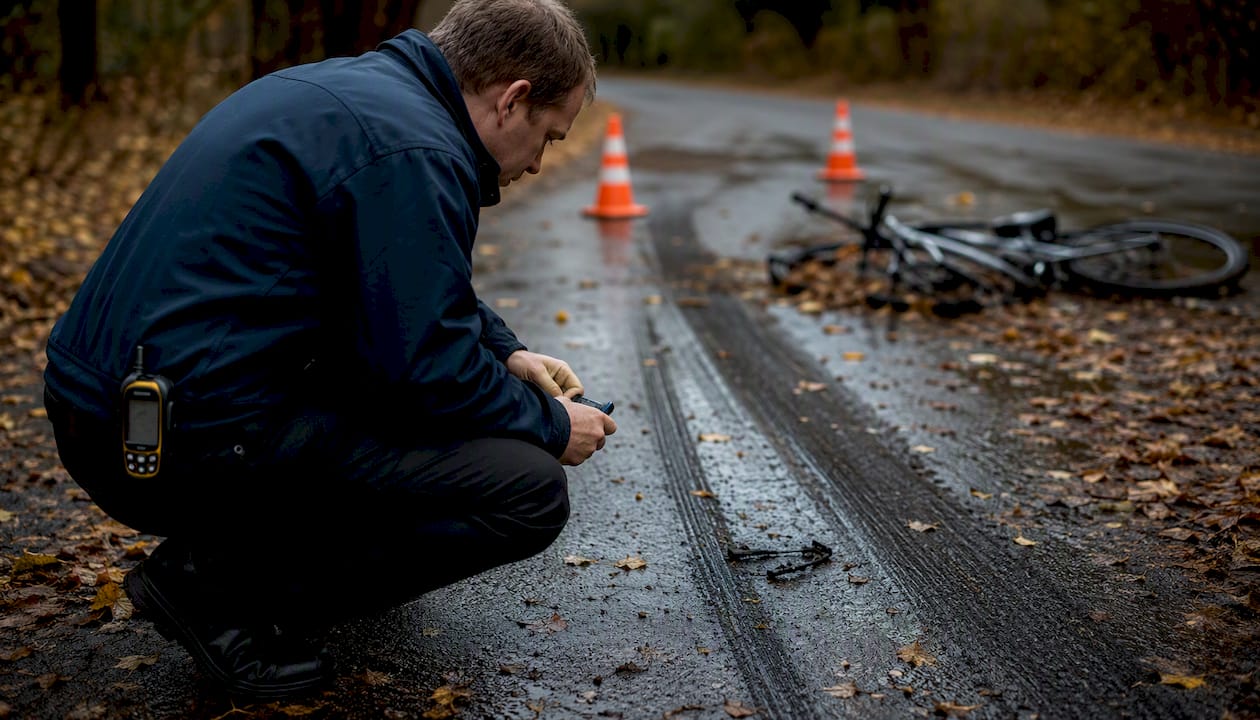
A specialist sends an investigator or directs you to document the crash scene before road conditions change. That means GPS coordinates, skid marks, sight-line photos, and traffic-control device positions. Your bike gets photographed and inventoried component by component: frame, fork, drivetrain, wheels, saddle, computer, and any aftermarket parts with receipts. This inventory matters enormously when it is time to argue replacement value.
Medical documentation and injury coding
Cycling injuries have specific patterns: clavicle fractures, road rash, traumatic brain injuries from helmet impacts, and knee ligament damage from impact or fall mechanics. A specialist works with your treating physicians to make sure the medical records use the correct diagnostic codes and connect your injuries explicitly to the crash. Vague or incomplete medical records are one of the most common reasons insurers dispute injury severity.
Demand, negotiation, and litigation
Once the medical picture stabilizes, the specialist assembles a demand package: medical bills, lost wages, expert reports, and a pain-and-suffering narrative. That package goes to the insurer with a deadline. If the insurer's response is inadequate, the specialist files suit. Most bicycle cases settle before trial, but the credible threat of litigation is what moves adjusters off their initial positions.
Pro Tip: Take photos of your bike, helmet, and gear before anyone moves them, and get the names and phone numbers of every witness at the scene. Those two steps, done in the first ten minutes, can be worth thousands of dollars in your eventual recovery. For more on what to do right after a crash, the filing an insurance claim after a bicycle accident guide from Briskman Briskman & Greenberg covers the sequence clearly.
Why specialists win bicycle cases that generalists often lose
Specialists matter because bike cases hinge on small, technical details: lane position at the moment of impact, the replacement cost of a carbon fiber fork, the long-term functional limits of a clavicle fracture. A general personal-injury attorney may handle dozens of car accidents a year and never develop fluency in those specifics.
Here is where the gap shows up in practice:
- What a specialist notices: tire contact patch evidence, helmet crush patterns, Strava or GPS data showing speed and route, aftermarket component receipts, cycling-specific injury coding, local ordinances governing bike lane use.
- What a generalist often misses: the difference between a stock bike value and a custom build, the significance of a driver's blind-spot angle relative to a bike lane, the need for a vocational expert when a cyclist can no longer commute or compete.
Consider a scenario that plays out regularly: a rider is hit from behind on a protected bike lane. The driver's insurer argues the cyclist was partially at fault for riding too far left. A general attorney might accept a shared-fault reduction. A specialist pulls the city's bike lane ordinance, hires a reconstruction engineer to plot the exact lane position from skid marks and vehicle damage, and eliminates the comparative-fault argument entirely. The difference in recovery can be substantial.
Specialist bike solicitors develop contextual awareness of cycling behavior and crash patterns that general injury attorneys simply do not accumulate at the same pace. That awareness compounds as case complexity increases, which is exactly when it matters most. For a deeper look at the legal advantages, the benefits of a specialized bicycle injury attorney guide covers the outcomes data in detail.
How specialists handle insurance-company tactics and protect your claim
Insurers look for early leverage. Specialists neutralize those tactics with evidence and process control before the adjuster gets a foothold.
The typical adjuster playbook after a bicycle crash runs like this: contact the rider within 24–48 hours while they are still in pain and disoriented, ask for a recorded statement, and make a quick settlement offer that sounds reasonable before the full injury picture is clear. Insurance adjusters often misunderstand cyclists, their equipment, and crash dynamics, which leads to claims being undervalued from the first phone call. They may classify a high-end road bike as a generic recreational bicycle, dispute that a concussion requires ongoing neurological care, or suggest the rider was at fault for not wearing a helmet in a state where helmet laws do not apply to adults.
A specialist's response to each of those moves is specific. The recorded statement gets declined or handled through counsel. The bike valuation gets backed by component receipts and a certified appraisal. The helmet argument gets countered with the applicable state statute. For practical guidance on handling insurance companies after an injury accident, the process of pushing back on adjusters follows a consistent pattern regardless of state.
The timeline typically runs: insurer contacts rider within days of the crash, makes an initial offer within two to four weeks, specialist submits a formal demand package with full documentation at medical maximum improvement (often three to six months post-crash), and negotiation runs for another four to eight weeks. If no agreement is reached, the specialist files suit, which typically prompts a more serious settlement discussion. Understanding how bicycle accident cases are settled at each stage helps riders know when to hold and when to move.
How damages are calculated in bicycle accident claims
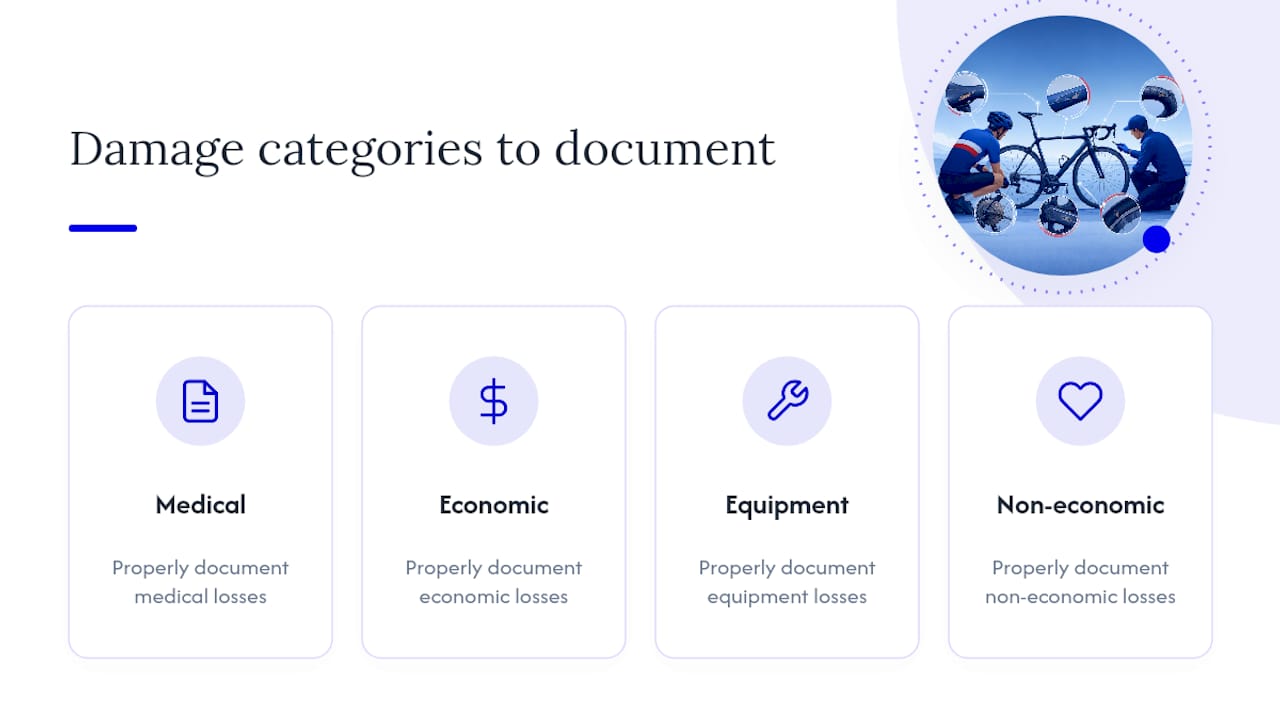
Total recovery depends on properly documenting medical, economic, equipment, and non-economic losses. Miss one category and you leave real money behind.
Medical bills and future care
Current medical expenses are the anchor of most bicycle claims. Bills from the ER, orthopedic surgery, physical therapy, and follow-up imaging all go into the demand. Future care is harder to prove but often larger: a cyclist with a traumatic brain injury may need years of neurological monitoring, cognitive therapy, and medication. A life-care planner or treating physician provides a written projection that specialists use to support that future-care number.
Lost earnings and earning capacity
If you missed work, your pay stubs and employer letter document the loss. If your injuries affect your ability to work long-term, a vocational expert calculates the difference between what you earned before the crash and what you can reasonably earn afterward. For a professional cyclist or a rider who commutes by bike for work, that gap can be significant.
Equipment and aftermarket component values
Bicycle settlements are often driven higher than comparable car cases at the same speed because cyclists lack vehicle protection, and the equipment losses compound the injury losses. A $12,000 custom road bike with a carbon frame, electronic shifting, and a power meter is not worth what a generic replacement costs at a big-box retailer. Specialized claims services that handle procurement and repair, such as Riders at Work, demonstrate how industry-specific knowledge and supplier networks can protect equipment value during the claims process. Their UK-focused operation similarly shows how tech-driven procurement reduces the need for cash settlements when replacement parts are sourced through trusted channels.
Pain and suffering
Non-economic damages cover physical pain, emotional distress, loss of enjoyment of activities, and the impact on relationships. Specialists use a multiplier applied to economic damages, or a per-diem rate for each day of pain, depending on the jurisdiction and the facts. The stronger the medical documentation and the more clearly the injuries are tied to the crash, the more defensible the non-economic number becomes.
| Damage Category | What Proves It |
|---|---|
| Medical bills (current) | Hospital records, itemized bills, insurance EOBs |
| Future medical care | Life-care plan, treating physician projection |
| Lost wages | Pay stubs, employer letter, tax returns |
| Lost earning capacity | Vocational expert report, employment history |
| Bike and equipment value | Component receipts, appraisal, replacement quotes |
| Pain and suffering | Medical records, personal journal, treating notes |
Settlement context: Bicycle accident settlements frequently exceed comparable car-crash settlements at the same collision speed because cyclists absorb the full force of impact without a vehicle frame around them. Medical bills and future care needs are the primary anchors of settlement value, according to settlement analysis from FairSettlement.org.
What expert witnesses do in a bicycle claim
Well-chosen experts convert technical facts into persuasive evidence. The right expert at the right stage can shift a disputed liability case into a clear-fault finding, or turn a vague pain complaint into a documented, monetized loss.
Accident reconstruction engineers
These experts analyze physical evidence: vehicle damage, skid marks, road geometry, sight lines, and impact angles. They produce a technical report showing speed, point of impact, and fault allocation. Accident reconstruction and engineering experts analyze bicycle crashes and provide technical reports that become key evidence when fault or crash mechanics are disputed. Working with reconstruction experts helps explain crash dynamics and can be decisive when liability is unclear. Their reports are particularly valuable in rear-end and intersection cases where the driver claims the cyclist appeared suddenly.
Medical specialists
An orthopedic surgeon, neurologist, or physiatrist who treats cyclists understands the injury patterns specific to road crashes. Their testimony connects the mechanism of injury to the diagnosis, which is exactly what an insurer's medical reviewer will try to sever. A treating specialist who can explain why a clavicle fracture in a cyclist carries different long-term implications than the same fracture in a sedentary patient strengthens both the medical bills and the pain-and-suffering argument.
Economic and vocational experts
When lost earning capacity is at issue, an economist calculates the present value of future income loss. A vocational rehabilitation expert assesses what jobs the injured rider can still perform and at what wage. Together, they build the economic damages number that anchors large settlements and verdicts.
Biomechanics and mental health experts
A biomechanics expert can explain how a specific impact force translates into a specific injury pattern, which is useful when the insurer argues the injury was pre-existing or unrelated to the crash. A psychologist or psychiatrist documents post-traumatic stress, anxiety about returning to cycling, and depression, all of which are compensable and often overlooked in bicycle claims.
What to expect when you hire a bicycle-accident specialist
Hiring a specialist means you get a managed process and a fee structure that aligns the attorney's financial interest directly with your recovery. Here is what that looks like in practice.
Documents to gather before your first meeting
- Police or crash report (request it from the responding agency)
- All medical records and bills from every provider since the crash
- Photos of the crash scene, your bike, your helmet, and your injuries
- Witness names and contact information
- Your bike's purchase receipt and any component or upgrade receipts
- Strava, Garmin, or other GPS ride data from the day of the crash
- Pay stubs or income records covering the period you missed work
- Your own auto insurance declarations page (for UM/UIM coverage)
Fees and timeline
Most bicycle-accident specialists work on a contingency fee, meaning they take a percentage of the recovery and charge nothing if the case does not settle or win. Percentages vary by state and case complexity, but the structure means you can hire experienced counsel without paying anything upfront. The free consultation guide from Carcollisionlawyer walks through exactly what to bring and what to expect at that first meeting.
A typical case timeline runs roughly like this:
- Weeks 1–4: Intake, evidence preservation, insurer notification, medical treatment begins.
- Months 1–6: Ongoing treatment, specialist gathers records and expert opinions.
- Month 6–9: Demand package submitted at or near maximum medical improvement.
- Months 9–18: Negotiation, mediation if needed, settlement or suit filed.
- 18+ months: Trial preparation if no settlement is reached.
One important deadline: every state has a statute of limitations for personal injury claims, typically two to three years from the date of the crash, though some states are shorter and municipal claims can have notice requirements as tight as 90 days. Missing that deadline ends your claim permanently.
How a free specialist evaluation through Carcollisionlawyer works
A free evaluation clarifies liability paths, damage scope, and the right attorney match without any commitment on your part. You do not need a complete file or a clear sense of fault to start.
When you submit through Carcollisionlawyer, the intake process checks the basic facts of the crash (date, location, how it happened), the nature and severity of your injuries, what evidence you currently have, and which insurance policies are in play. That information is enough to identify whether your case involves a straightforward liability claim, a UM/UIM coverage issue, a municipal road-defect angle, or some combination. It also flags which expert witnesses are likely to matter and what documentation gaps need to be filled quickly.
After you submit, you can expect a prompt follow-up by phone or email, a request for any documents you have on hand, and a referral to a vetted local attorney with bicycle-accident experience. Everything you share is confidential. The attorney you are matched with works on contingency, so the evaluation costs you nothing and commits you to nothing. For a clear picture of bicycle accident liability before you speak with anyone, that guide covers fault rules and comparative negligence across U.S. jurisdictions.
Why specialization is the only sensible choice for a non-trivial bicycle claim
Most injured cyclists underestimate how technically demanding their own claim is. They assume the fault is obvious, the injuries are documented, and the insurer will pay a fair amount. That assumption is wrong in a majority of contested cases, and the cost of that mistake is measured in the gap between what a specialist recovers and what a generalist or unrepresented rider accepts.
The evidence that wins a bicycle case is not the same evidence that wins a car crash case. Strava data, component appraisals, cycling-specific injury coding, lane-position reconstruction, and the interplay between helmet laws and comparative fault are all specialist territory. A general attorney who handles car crashes competently may never have encountered any of those issues. That is not a criticism; it is simply a description of how specialization works in any field.
What I find most underappreciated is the equipment-valuation gap. Riders who own high-end bikes often accept whatever the insurer offers for the bike because they do not know it can be challenged. A $4,000 insurer estimate on a $14,000 custom build is not a negotiating position; it is a test to see if you know the difference. Specialists know the difference, and they document it.
The free evaluation path through Carcollisionlawyer exists precisely to close that knowledge gap at zero cost to the rider. There is no reason to navigate the insurer's process alone when a specialist review is available before you commit to anything.
Get a free bicycle accident case evaluation now
Riders who have been hurt in a bicycle crash often wait too long to get legal help, and that delay costs them. Evidence fades, witnesses become harder to reach, and insurers use the time to build their own version of events.
Carcollisionlawyer connects injured cyclists with vetted, experienced bicycle-accident attorneys through a free, no-commitment case evaluation. You describe your crash and injuries, and the platform matches you with a local specialist who handles bicycle claims, works on contingency, and knows how to push back on insurer tactics. No upfront cost, no obligation, and everything you share stays confidential.
Start your free case evaluation today. The intake takes a few minutes, and a specialist follow-up typically happens within one business day.
Sources
The sources below were used in preparing this article and are worth reading directly if you want to go deeper on reconstruction methods, settlement valuation, or specialized claims handling.
ARCCA Bicycle Accident Investigation covers the engineering and failure-analysis methods that reconstruction experts use when fault or crash mechanics are disputed. Their work illustrates exactly what a technical report looks like and why it carries weight with insurers and courts. Bicycle Accident Investigation | Accident Reconstruction Experts
Expert Institute: Working With Bicycle Accident Reconstruction Experts explains how to engage reconstruction specialists, what they examine, and how their analysis affects negotiations and trial outcomes. Useful if you want to understand what a specialist attorney is actually commissioning when they hire an expert. Working With Bicycle Accident Investigation and Reconstruction Experts
FairSettlement.org Bicycle Accident Settlement Calculator provides settlement context and example comparisons between bicycle and car-crash cases at similar speeds. The analysis explains why medical bills and future care anchor bicycle settlement values higher than many riders expect. Bicycle Accident Settlement Calculator: Average Payouts
Riders at Work demonstrates how specialized procurement and repair services protect equipment value during the claims process, with industry connections that reduce the gap between insurer offers and actual replacement costs. Riders at Work and their UK operation both illustrate the tech-driven supplier model.
This article is general information, not a substitute for advice from a qualified lawyer. Consult a qualified legal professional about your own circumstances before acting on anything here.