
Shoulder injuries from car accidents are usually compensable when medical records clearly connect the crash to the damage in your joint. The catch is timing: insurers exploit gaps in treatment and thin documentation to deny or lowball claims, and your state's filing deadline is running whether you act or not. The right first move is simple. Preserve every piece of evidence now and request a free case evaluation through Carcollisionlawyer.
TL;DR:
- Immediate evaluation and documentation within the first week are crucial, as insurers scrutinize treatment delays and lack of objective evidence.
- Early involvement of an attorney helps secure witness statements, expert opinions, and medical records to strengthen causation claims.
- Medical imaging and specialist diagnoses obtained shortly after the crash counter common insurer defenses that injuries preexisted or were not crash-related.
- Case value varies widely depending on the injury severity, treatment required, and documented impact on daily life and work.
- Organizing a comprehensive file of medical bills, imaging, and treatment notes can significantly influence settlement outcomes by providing tangible proof.
Table of Contents
- What To Do First To Protect A Shoulder Injury Claim
- What Does A Personal Injury Attorney Actually Do For You?
- How Much Does A Car Accident Lawyer Cost?
- Why Insurers Fight Shoulder Claims And How To Beat Them
- What Is My Shoulder Injury Claim Actually Worth?
- Where The Conventional Advice Gets This Wrong
- Start Your Free Shoulder Injury Case Review
- Sources
What To Do First To Protect A Shoulder Injury Claim
The steps you take in the first two weeks after a crash often decide whether an insurer takes your shoulder injury seriously or treats it as an afterthought. Shoulder trauma from a car crash doesn't always announce itself with the same urgency as a broken bone. Adrenaline masks pain, and plenty of people walk away from a collision feeling "fine" only to wake up the next morning unable to lift an arm.
- Get evaluated immediately, even if the pain seems minor. An emergency room or urgent care visit creates the first official record tying your shoulder pain to the crash date.
- Follow every referral. If a doctor sends you to an orthopedist or physical therapist, go, and keep the paperwork from each visit.
- Start a simple log. Write down pain levels, missed activities, and how the injury affects sleep, work, or lifting your kids. Insurers weigh this kind of daily detail.
- Collect crash evidence fast. Photos of vehicle damage, the police report number, witness names, and the other driver's insurance details all matter later.
- Hold off on recorded statements. Insurance adjusters often call within days asking you to describe the accident on tape. Wait until an attorney has reviewed your case first.
- Save pay stubs and time-off records if the shoulder injury has kept you from working.
Pro Tip: Keep a dated folder, physical or digital, with every medical bill, appointment summary, and photo in one place. When an attorney reviews your case, an organized file speeds up the entire process and can meaningfully change how quickly a demand goes out.
What Does A Personal Injury Attorney Actually Do For You?
A lawyer handling a car accident shoulder pain claim does far more than send a demand letter. Early intake matters because certain tasks, like locking down witness statements or getting an orthopedic exam on record, get harder the longer you wait.
Typical attorney work on a shoulder injury case includes:
- Investigating fault: pulling the police report, canvassing witnesses, and sometimes reconstructing the crash.
- Coordinating with treating physicians and, when needed, retaining an orthopedic expert to explain how the shoulder injury connects to the impact.
- Building and sending a demand package to the insurer, then negotiating.
- Managing medical liens so your treatment providers get paid without eating your entire settlement.
- Filing a lawsuit and preparing for trial if the insurer refuses a fair number.
Insurers love to argue that shoulder damage was already there before the crash. This is why an early exam matters. A specialist who examines you within days of the accident, and documents a working shoulder before and a torn or inflamed one after, gives your attorney's causation argument something concrete to stand on.
Most firms take these cases on contingency, meaning you owe nothing upfront. The attorney typically advances filing fees and expert costs, then recovers them from the settlement.
How Much Does A Car Accident Lawyer Cost?
Contingency fees follow a fairly predictable pattern nationwide, though the exact percentage and rules vary by state. A common structure runs about one-third if the case settles before a lawsuit is filed, rising to a higher percentage if the case goes into active litigation, according to the Legal Information Institute. Some states regulate this more tightly. Michigan, for example, caps contingency fees at one-third for certain personal injury and no-fault benefit claims. Read the written fee agreement before signing anything, since it should spell out exactly how the percentage is calculated and how case costs get repaid, as required under rules like Michigan's Rule 8.121.
Fees and costs are two different things:
- Attorney fees are the percentage cut from your gross settlement.
- Case costs cover filing fees, medical record requests, and expert witnesses. Attorneys usually advance these costs and get repaid from your recovery.
- Net recovery is what's left after: gross settlement minus attorney fee, minus case costs, minus any medical liens.
Statutes of limitations for car accident injury claims range from about one year to six years depending on the state and the type of claim. Miss it, and you likely lose the right to sue entirely, no matter how strong your medical evidence is.
Contact an attorney immediately to confirm the exact deadline in your state. Some states carve out exceptions for minors, government defendants, or delayed discovery of an injury, but you should never assume you qualify for one.
Why Insurers Fight Shoulder Claims And How To Beat Them
Shoulder injuries get disputed more than almost any other soft-tissue claim, and insurers rely on three go-to arguments.
- "It's degenerative, not crash-related." Rotator cuff wear happens naturally with age, so adjusters argue your MRI findings predate the accident.
- "You waited too long to get treated." A gap of even a week between the crash and your first shoulder complaint gives insurers room to argue something else caused it.
- "There's no objective finding." Pain alone, without imaging or a specialist diagnosis, is easy for an adjuster to dismiss.
Each defense has a direct counter. Imaging like an MRI gives a doctor something concrete to point to. A same-week or same-day medical visit closes the "delay" argument before it starts. And a specialist's written opinion tying your specific symptoms to the mechanics of the collision addresses causation head-on, the exact legal standard insurers are attacking.
Signs of a shoulder injury worth documenting immediately include reduced range of motion, a popping or grinding sensation, numbness down the arm, and pain that worsens overnight. Whiplash shoulder injury cases often get overlooked because the neck symptoms dominate the initial exam, so mention shoulder pain explicitly at every visit, even if it feels secondary.
Pro Tip: Ask your doctor to note work restrictions in writing, not just verbally. "Patient advised no lifting over 10 pounds" on a chart carries far more weight with an insurer than your own description of struggling at your job.
Building a clean, chronological file, appointment dates, imaging results, and work-impact notes, gives your attorney everything needed to counter these defenses before the insurer even raises them.
What Is My Shoulder Injury Claim Actually Worth?
There's no fixed number for a shoulder injury settlement, and any article claiming otherwise is guessing. Value depends on the strength of objective medical proof, whether the injury required surgery or just physical therapy, how long symptoms lasted, and how much work or daily function you lost.
A torn rotator cuff requiring arthroscopic surgery generally commands more than a soft-tissue strain that resolved in six weeks of physical therapy. That said, gross settlement and what you actually take home are two very different figures.
- Gross settlement: the total amount the insurer agrees to pay.
- Minus attorney fee (commonly about one-third, sometimes higher during litigation).
- Minus case costs (records, experts, filing fees).
- Minus medical liens or health-plan subrogation claims.
- Equals net recovery: what actually lands in your pocket.
An attorney can often negotiate down medical liens after settlement, which directly increases your net payout even when the gross number stays the same.
Where The Conventional Advice Gets This Wrong
Most articles on shoulder injuries after car accidents treat the medical side and the legal side as separate conversations. That's backward. The medical file is the legal case. Every appointment you skip, every symptom you fail to mention to a doctor, becomes an argument the insurer's adjuster will use six months from now.
The overrated advice is "wait and see how you feel." Waiting is exactly what insurers count on. A two-week gap in treatment doesn't mean your shoulder healed. It means you handed the adjuster a talking point about delayed causation that costs real money in a settlement negotiation.
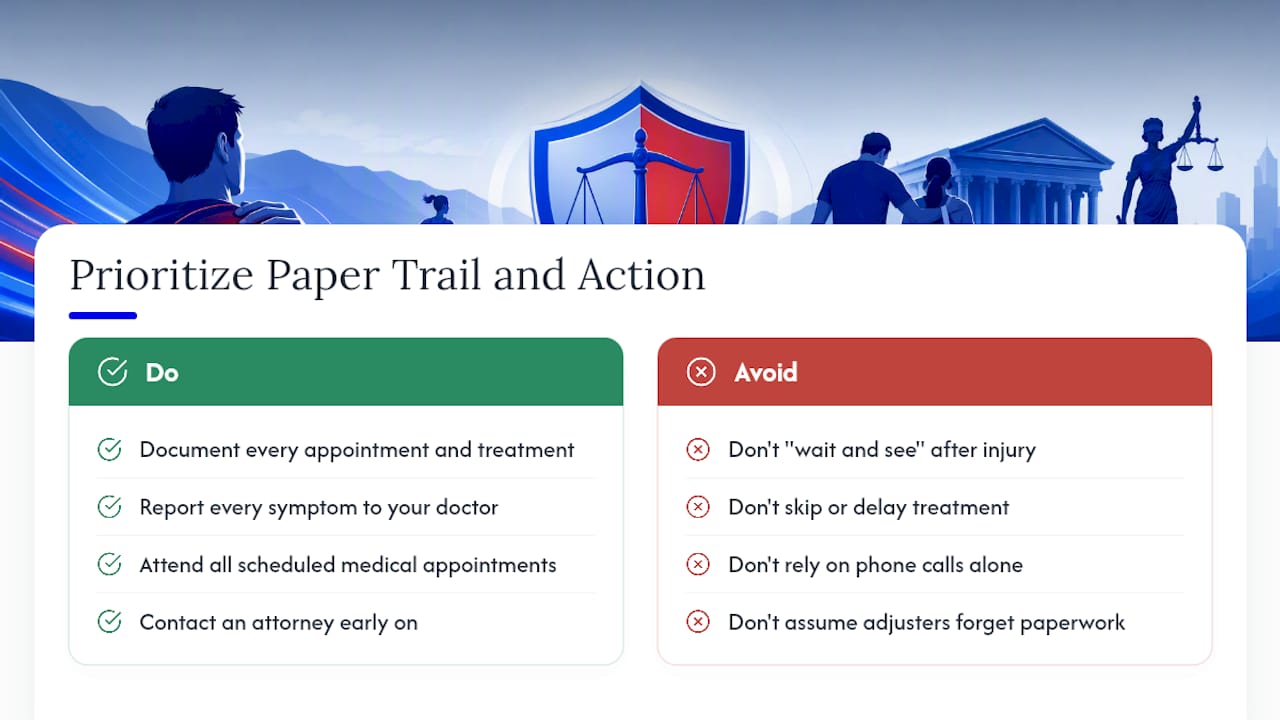
What's underrated is how early legal involvement changes outcomes. It's not about being litigious. It's about having someone track your state's statute-of-limitations clock while you focus on physical therapy. Attorneys working on contingency have no incentive to drag out a weak case. They take shoulder injury claims because the documentation, when done right, tends to hold up.
If you take one thing from this, prioritize the paper trail over the phone calls. Adjusters forget conversations. They don't forget MRIs, dated treatment logs, and written work restrictions.
— Gerard
Start Your Free Shoulder Injury Case Review
The site connects you with vetted local attorneys without a retainer check or an upfront bill. The free case evaluation is tailored to specific injuries and takes only a few minutes to submit.
Before you start, gather a few basics: the accident date, a rough treatment timeline, any medical records or imaging you already have, photos of vehicle damage, and the names of witnesses if you have them. None of this needs to be perfect. The intake is designed to work with whatever you have on hand today.
Once you submit, the information goes toward matching you with an attorney who handles car accident shoulder injury claims, and there's no obligation to hire anyone after the evaluation. Your details are handled under CarCollisionLawyer.net's privacy policy, and starting the process costs nothing. Request your free case evaluation now and get the clock working in your favor instead of against you.