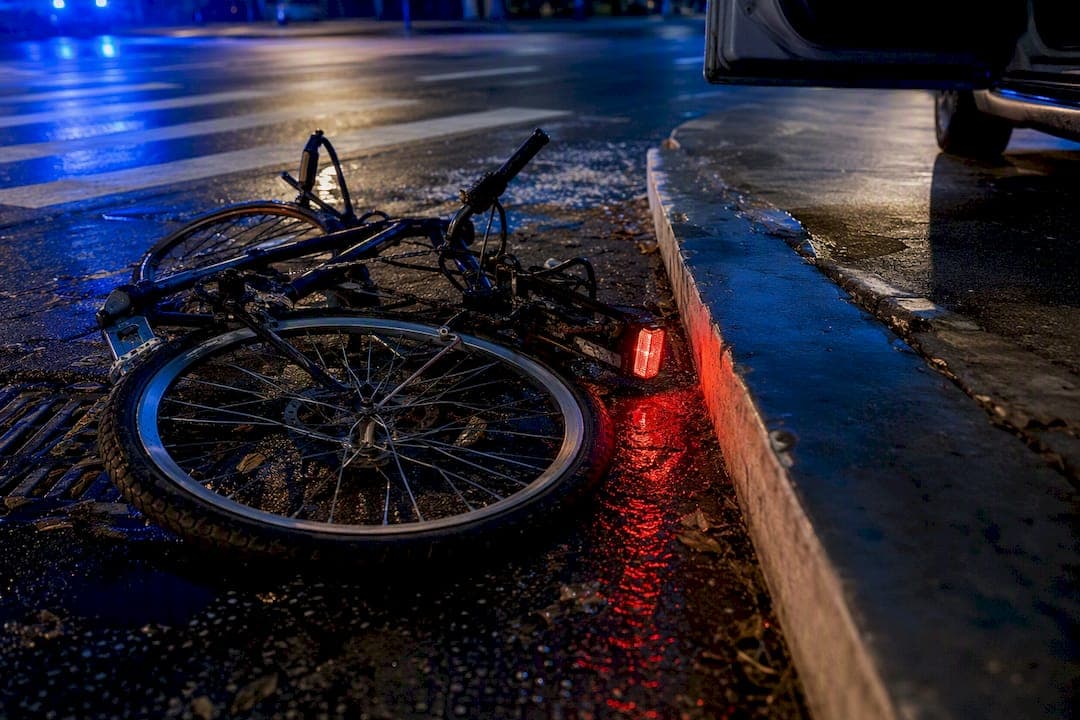
Call 911 immediately and insist officers file a hit-and-run report with a case number, then get medical care the same day so your injuries are on record. Your fastest path to compensation is usually an uninsured/unidentified motorist (UM/UIM) claim through your own auto policy, filed alongside that police report. A specialized bicycle-injury attorney, or a free case evaluation, can then confirm which recovery routes apply to your situation.
TL;DR:
- Photograph all scene details and vehicle descriptions immediately, as evidence and footage commonly degrade within 48 to 72 hours.
- File police reports promptly and obtain a case number, ensuring it specifically states a bicycle was hit and the driver fled for a stronger insurance claim.
- Notify your auto insurer within days, providing written documentation and contemporaneous accounts to support your uninsured or underinsured motorist claim.
- Engaging private investigators can be necessary in non-fatal cases where police investigations slow down or deprioritize lead follow-up.
- Seek a free legal evaluation early to clarify recovery options, corroborate evidence, and prevent common mistakes like skipping medical care or losing footage.
Table of Contents
- Steps to Take After a Bicycle Hit and Run
- How Police Investigate Bicycle Hit-and-Run Cases
- Insurance and Legal Options for Bicycle Hit-and-Run Victims
- Bicyclist Safety Data and Common Crash Patterns
- Community Resources and Support After a Bicycle Crash
- Getting Legal Help After a Bicycle Hit and Run
- What Actually Changes Case Outcomes
- Sources
Steps to Take After a Bicycle Hit and Run
The first 72 hours decide most of what happens later. Evidence disappears fast, memories fade, and insurance deadlines start ticking the moment the driver leaves.
- Call 911 and stay put. Tell the dispatcher explicitly that a driver struck you and fled. That phrase, "hit and run," changes how the call gets classified and dispatched.
- Accept medical transport if it's offered. Adrenaline masks pain, and a same-day emergency room visit creates the medical paper trail insurers and attorneys will need later.
- Get the police case number before the officer leaves. Confirm the report specifically notes that the vehicle struck a cyclist and left the scene; that wording matters for a UM claim.
- Photograph everything. Your bike, the road surface, skid marks, your injuries, and the surrounding intersection or street signs all matter.
- Write down the vehicle description while it's fresh. Color, make, model, partial plate, direction of travel, and any bumper stickers or damage.
- Collect witness contact information on the spot. Witnesses vanish within minutes; a name and phone number scrawled on your phone can make or break a later claim.
- Canvass for cameras within 48 to 72 hours. Doorbell cameras, storefront systems, and traffic cameras often overwrite footage on short cycles, so requesting footage quickly matters more than almost anything else you do.
- Notify your auto insurer within days, not weeks. Most policies require prompt notice to preserve a UM/UIM claim, even though the crash involved a bike, not a car you were driving.
Pro Tip: Log your own account of the crash the same day, even a voice memo on your phone. Insurance adjusters weigh contemporaneous statements far more heavily than a story reconstructed weeks later.
How Police Investigate Bicycle Hit-and-Run Cases
Same-day reporting matters because investigators lean heavily on evidence that degrades fast: skid marks fade, memories blur, and camera footage gets erased on a rolling basis. A report filed hours after the crash, instead of days, gives officers a real shot at working the case while leads are still fresh.
A typical hit-and-run investigation moves through a few predictable stages:
- Officers canvass the area for witnesses and check nearby businesses for camera access.
- Debris at the scene, paint transfer, or broken parts get logged and sometimes matched to a make or model.
- A partial license plate or distinctive vehicle description gets run through databases and shared with patrol units.
- Detectives sometimes issue public appeals for tips, as police did in a fatal Hamilton Heights case in Manhattan when the driver wasn't immediately identified.
Not every case gets this level of attention. Departments juggling heavy caseloads sometimes deprioritize non-fatal hit-and-runs, which is exactly when private investigation, funded through an attorney, fills the gap. Cross-jurisdictional tracing does work, though: Delaware State Police made an arrest in a fatal bicycle hit-and-run after tracking a suspect who had fled across a state line. Whatever the outcome, that initial police report and its documented injuries become the backbone of any civil or UM claim you file afterward.
Insurance and Legal Options for Bicycle Hit-and-Run Victims
If the driver is never found, your own auto insurance is usually where recovery comes from, not the driver's insurer. Uninsured and underinsured motorist coverage, commonly called UM/UIM, typically extends to cyclists struck by unidentified drivers, but insurers in many states require some form of corroboration, such as a witness, police report, or physical contact with the vehicle, before honoring the claim.
If the driver is eventually identified, the calculus shifts:
- You can file a liability claim directly against the driver's auto insurer.
- A pending criminal hit-and-run charge does not resolve your civil claim; the two proceed on separate tracks with separate standards of proof.
- Prompt legal advice matters because the statute of limitations for personal injury claims varies by state and starts running from the date of the crash, not the date a driver is caught.
Insurers routinely raise a handful of defenses in bicycle hit-and-run claims: late notice of the claim, insufficient corroboration that a vehicle was actually involved, or comparative fault arguments suggesting you contributed to the crash. Early documentation, and an attorney who understands bicycle liability, directly counters each of those defenses before they gain traction.
Pro Tip: Read your UM/UIM policy language before you need it. Some policies require "physical contact" with the fleeing vehicle for hit-and-run coverage to apply, which becomes a real problem in dooring cases where a car door, not the car itself, caused the injury.
When a claim stalls, arbitration or a lawsuit against your own insurer sometimes becomes necessary, and an attorney's negotiation leverage, plus their handling of subrogation, often determines the final payout. State-specific UM rules vary enough that understanding your coverage before a crash happens is worth the ten minutes it takes.
Bicyclist Safety Data and Common Crash Patterns
A significant number of bicyclists were killed in crashes with motor vehicles in 2024, according to IIHS Fatality Facts, and the trend line has been climbing over the past decade. That federal count draws from NHTSA's Fatality Analysis Reporting System, the government's primary database for national traffic fatality tracking.
Certain crash patterns show up again and again in hit-and-run cases specifically. Dooring, where a parked car's door opens into a cyclist's path, frequently ends with the driver claiming they never saw the impact and simply driving off. Unsafe passing and intersection strikes, especially in low-light conditions, account for a large share of the rest. None of that changes your legal footing as a victim. Prevention advice matters for the next ride, but it doesn't erase your right to pursue recovery for the crash that already happened.
Community Resources and Support After a Bicycle Crash
Recovery after a hit-and-run isn't only medical and legal. It's also emotional, and pretending otherwise usually backfires.
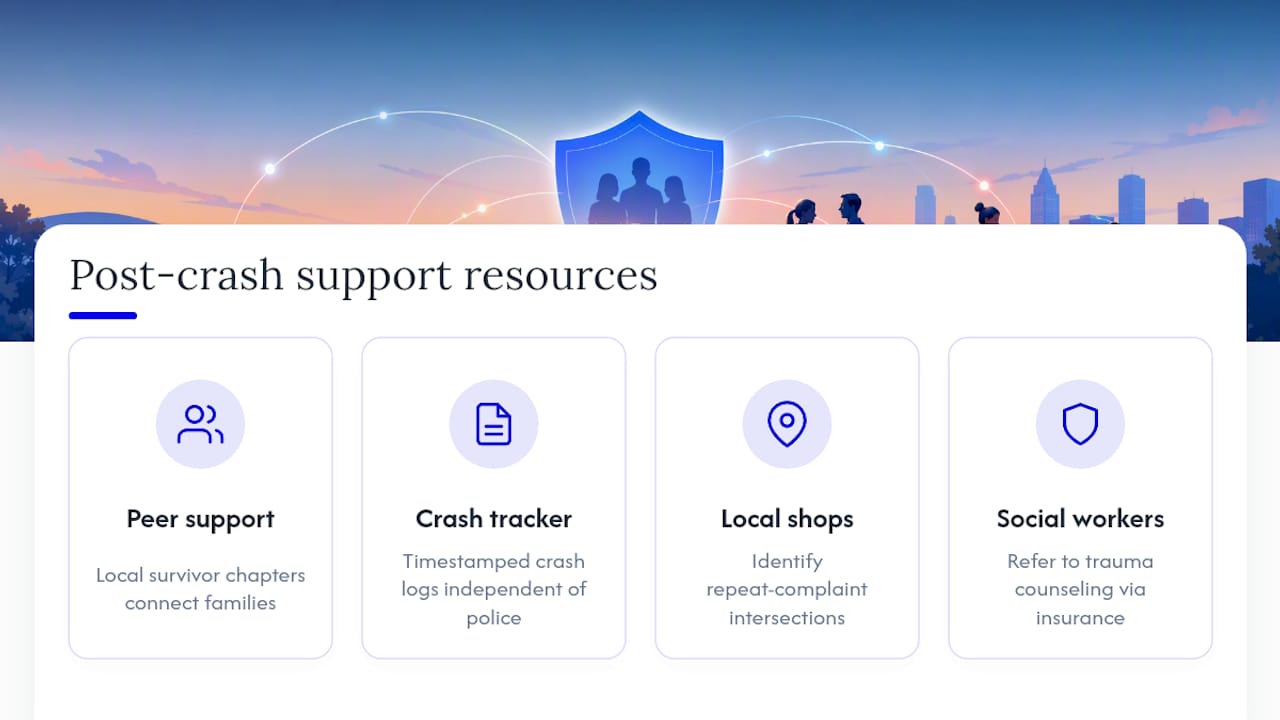
Peer-support networks built specifically for crash survivors exist in most major metro areas. Families for Safe Streets runs local chapters that connect survivors and grieving families with others who understand what a hit-and-run actually does to a household, from the fear of getting back on a bike to the frustration of an unresolved police case.
Beyond peer support, regional advocacy tools serve a quieter but useful purpose: documentation. The WABA Crash Tracker lets cyclists in the DC region log crashes and near-misses independently of the police report. It won't replace an official report, but it builds a record advocacy groups use to push for safer intersections, and it gives you a timestamped account of what happened in your own words.
Local bike shops and cycling clubs often know which intersections generate repeat complaints, which can matter if your case ever needs pattern evidence. Hospital social workers can also point crash victims toward trauma counseling covered under many insurance plans, something few people think to ask about in the immediate aftermath.
Getting Legal Help After a Bicycle Hit and Run
A free case evaluation exists to answer one question fast: which recovery paths actually apply to your crash. That typically means reviewing your police case number, the evidence you've gathered, and your insurance policy to identify whether a UM claim, a direct liability claim, or both are realistic.
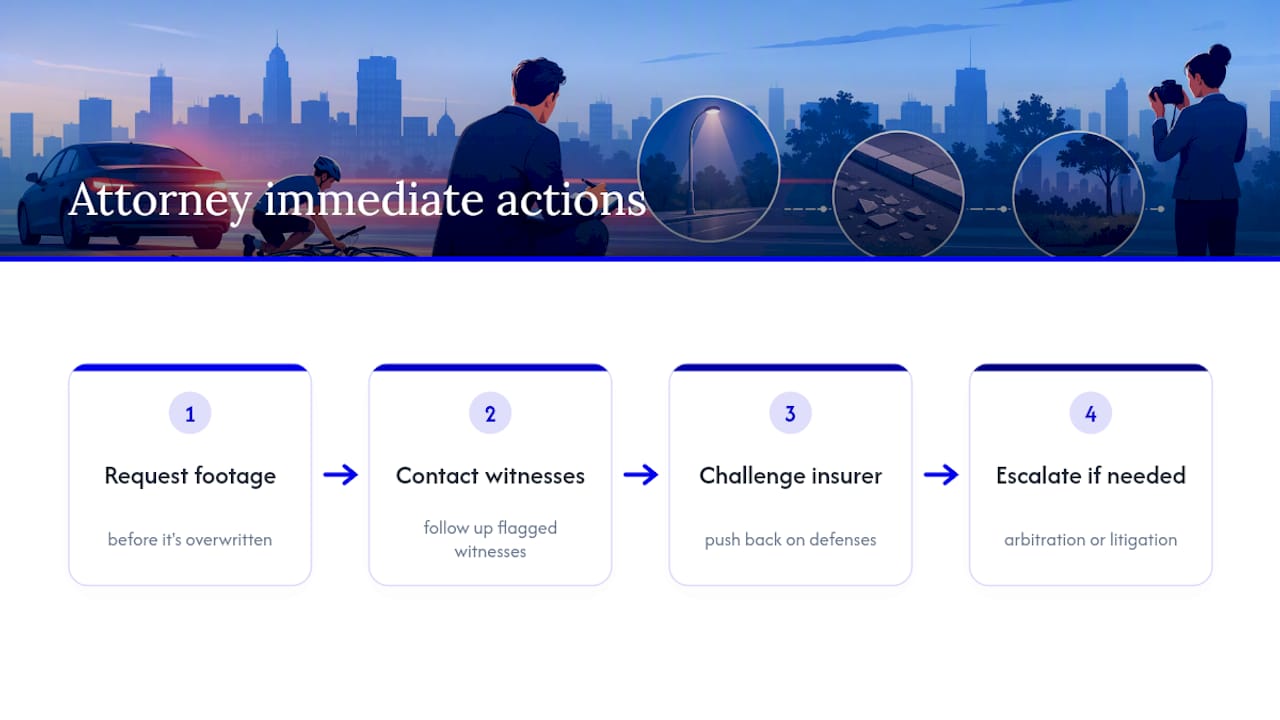
Once matched with a vetted local attorney through Carcollisionlawyer, the practical work usually kicks into gear immediately: requesting surveillance footage before it's overwritten, following up on witnesses you flagged at the scene, and pushing back on the insurer defenses that show up in nearly every hit-and-run file, like late notice or thin corroboration. If negotiation stalls, that same attorney handles the arbitration or litigation process instead of leaving you to navigate it alone.
Before requesting a free evaluation, gather what you can: your police report and case number, photos from the scene, and any medical records documenting your injuries. Even a partial set is enough to start. Carcollisionlawyer's free case evaluation matches your specifics to attorneys who handle bicycle claims specifically, not general auto cases, which matters given how often bike-specific liability rules trip up generalist firms. If you want to understand what that consultation actually covers first, the free consultation guide walks through it, and why specialists win more bicycle claims explains the gap between generalist and specialist representation. Start your evaluation through Carcollisionlawyer today.
What Actually Changes Case Outcomes
The mistakes that sink bicycle hit-and-run cases aren't dramatic. They're small, quiet omissions. Skipping the emergency room because you feel "fine" that afternoon, then discovering a concussion or torn ligament three days later with no medical record to tie it to the crash. Letting an officer write up the incident as a generic "collision" instead of insisting on hit-and-run language. Assuming footage from the corner store will still exist a week later. It usually doesn't.
If you take away one thing from all of this, take away three priorities: document everything before memory fades, notify your insurer before any notice deadline passes, and get a free legal evaluation before you assume you have no recourse. Cases that follow that order tend to resolve faster and for more, largely because the evidence exists when it's needed instead of being reconstructed from memory months later.
— Gerard
This article is general information, not a substitute for advice from a qualified lawyer. Consult a qualified legal professional about your own circumstances before acting on anything here.
Sources
- Fatality Facts 2024: Bicyclists
- Fatality Analysis Reporting System (FARS) — NHTSA
- Crash Tracker and Reporting Form