
A wrongful death lawsuit is a civil claim brought by surviving family members or an estate representative against a person or entity whose negligent, reckless, or intentional conduct caused someone's death. Under U.S. civil law, the standard of proof is a preponderance of the evidence, meaning the plaintiff must show it is more likely than not that the defendant's conduct caused the death. That is a meaningfully lower bar than the criminal standard of "beyond a reasonable doubt," and it matters enormously for families who want justice when prosecutors decline to act.
Three things survivors need to know right away:
- Who can file: Typically a spouse, children, or parents of the deceased, or a court-appointed personal representative acting on behalf of the estate. Eligibility varies by state.
- What you can recover: Economic damages (lost income, medical bills, funeral costs) and non-economic damages (loss of companionship, grief). Some states also allow punitive damages for especially reckless or intentional conduct.
- How long you have: Statutes of limitations for wrongful death commonly run 1–3 years from the date of death, depending on the state. Missing that deadline can permanently bar recovery.
Table of Contents
- What is a wrongful death lawsuit under U.S. civil law?
- Who can file a wrongful death claim?
- What kinds of deaths give rise to wrongful death cases?
- What must you prove to win a wrongful death case?
- What damages can survivors recover in a wrongful death case?
- How long do you have to file, and why does timing matter?
- How does a wrongful death claim differ from a survival action or criminal case?
- What does the process look like from filing to resolution?
- How much is a wrongful death case worth?
- What should you bring to your first attorney consultation?
- Key Takeaways
- The part most families don't realize until it's too late
- How Carcollisionlawyer can help you take the next step
- Authoritative resources for state-specific rules
What is a wrongful death lawsuit under U.S. civil law?
Wrongful death is a civil cause of action, not a criminal charge. The distinction is fundamental. A civil claim seeks monetary compensation for the survivors' losses; a criminal prosecution seeks punishment for the defendant. Both can arise from the same incident, but they proceed on separate tracks with separate outcomes.
The civil burden of proof, preponderance of the evidence, means the jury must find it more probable than not that the defendant's conduct caused the death. Criminal courts require proof beyond a reasonable doubt, a far higher threshold. That gap explains why a defendant can be acquitted in criminal court and still lose a civil wrongful death case.
Wrongful death law is entirely state-based. Every state has its own wrongful death statute that defines who may sue, what damages are available, and how long survivors have to file. There is no single federal wrongful death statute for ordinary civil claims. That means the rules in California differ from those in Texas, Florida, or New York, and reading the right state statute is the first practical step any family should take.
Who can file a wrongful death claim?
Eligibility to bring a wrongful death claim depends on state law, but most statutes recognize a core group of potential plaintiffs:
- Surviving spouse: Almost universally eligible in every state.
- Children of the deceased: Biological and legally adopted children; some states include stepchildren who were financially dependent.
- Parents: Eligible in many states, particularly when the deceased was a minor or had no spouse or children.
- Financial dependents: Some states extend standing to individuals who depended on the deceased for financial support, even without a blood or marital relationship.
- Personal representative of the estate: Many states require that the claim be filed by or through a personal representative, who then distributes any recovery to the beneficiaries.
The personal representative is a formal legal role. If the deceased left a will, the executor named in that document typically serves. Without a will, a court appoints an administrator. This distinction matters because wrongful death statutes in some states require the personal representative to be the named plaintiff, even when the actual beneficiaries are the surviving family members. Getting that appointment right early prevents procedural problems later.
What kinds of deaths give rise to wrongful death cases?
Any death caused by another party's negligence, recklessness, or intentional conduct can support a wrongful death claim. In practice, certain categories come up repeatedly.
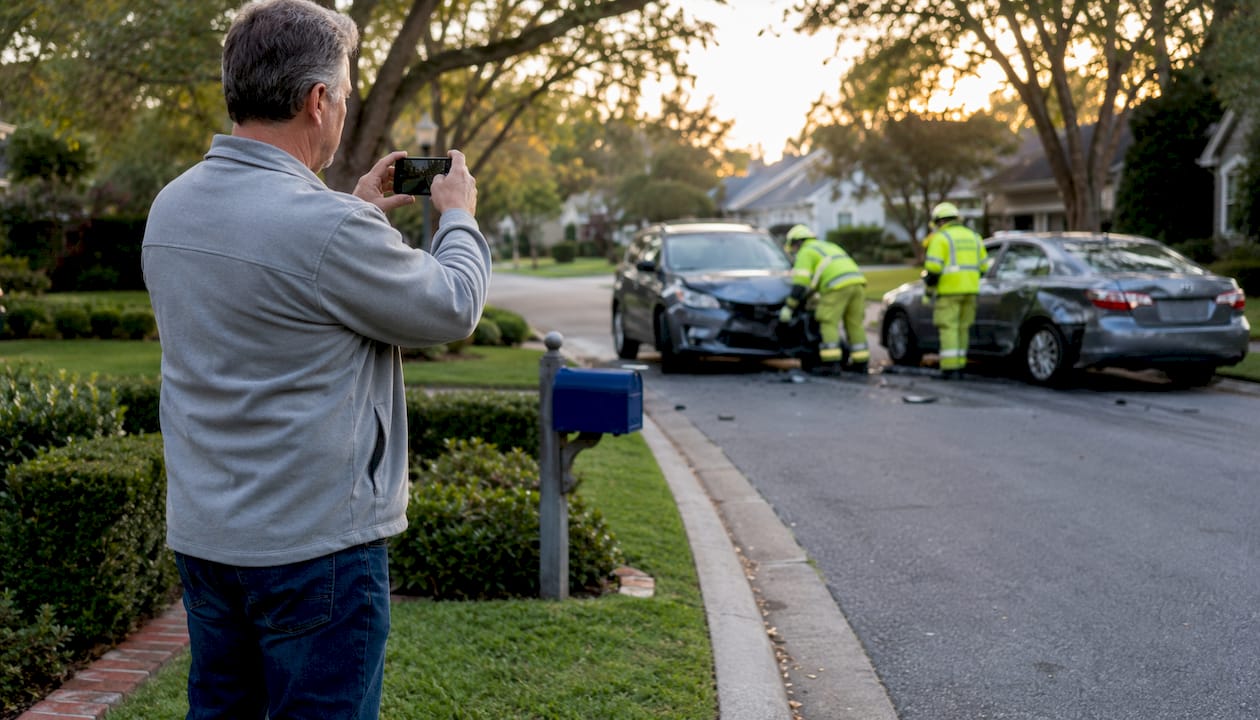
Car and truck crashes are among the most common. A driver who runs a red light, a trucking company whose driver exceeded federal hours-of-service limits, or a manufacturer whose defective brakes failed can all face wrongful death liability. For families dealing with commercial vehicle crashes, the truck accident wrongful death guide covers the specific evidentiary and liability issues those cases raise.
Medical malpractice deaths require expert testimony to establish that a provider deviated from the accepted standard of care and that the deviation caused the death. These cases are typically more expensive to litigate and take longer to resolve because both sides retain medical experts.
Workplace accidents often involve both a workers' compensation claim and a separate wrongful death suit against a third party (a contractor, equipment manufacturer, or property owner) whose negligence contributed to the death.
Defective products can generate claims under product liability theories alongside negligence, meaning multiple defendants (manufacturer, distributor, retailer) may share liability for the same death.
Intentional acts such as assault or homicide also support wrongful death claims. The civil case proceeds regardless of whether criminal charges are filed.
What must you prove to win a wrongful death case?
To prevail, a plaintiff must establish four elements by a preponderance of the evidence:
-
Duty of care. The defendant owed the deceased a legal duty. A driver owes a duty of reasonable care to other road users. A doctor owes a duty to meet the standard of care for their specialty. Evidence: traffic laws, licensing records, professional standards, contracts.
-
Breach of duty. The defendant failed to meet that duty. A driver who was texting breached the duty of care. A surgeon who operated on the wrong site breached the medical standard. Evidence: police reports, accident reconstruction, medical records, employer logs, cell phone records.
-
Causation. The breach actually caused the death (actual cause) and the death was a foreseeable result of the breach (proximate cause). Causation is often the most contested element. Evidence: medical examiner reports, death certificates, expert testimony linking the breach to the fatal outcome, vehicle data recorder downloads.
-
Damages. Survivors suffered quantifiable losses as a result of the death. Evidence: employment and payroll records, tax returns, actuarial life-expectancy tables, economic expert reports, testimony about the relationship between the deceased and survivors.
Proximate cause deserves particular attention. A defendant can argue that an intervening cause, something that happened between their conduct and the death, broke the causal chain. Anticipating and rebutting that argument with expert testimony is often what separates a strong case from a weak one.
What damages can survivors recover in a wrongful death case?
Wrongful death damages fall into two broad categories, and the line between them matters for both valuation and state-law caps.
Economic damages are calculable financial losses:
- Lost wages and benefits the deceased would have earned over their remaining work life
- Medical expenses incurred between the injury and death
- Funeral and burial costs
- Value of household services the deceased provided (childcare, home maintenance)
Non-economic damages compensate for losses that cannot be reduced to a spreadsheet:
- Loss of companionship, consortium, and guidance (particularly for a surviving spouse or minor children)
- Grief and mental anguish of survivors
- Loss of parental guidance for dependent children
Valuation of economic damages relies heavily on expert analysis. An economic expert will use the deceased's age, earnings history, education, occupation, and actuarial life expectancy to project future lost income. Non-economic damages are harder to quantify and more subject to jury discretion, which is one reason they are also more likely to be capped by state law.
Punitive damages are available in some states when the defendant's conduct was especially egregious, such as a drunk driver with multiple prior DUI convictions or a manufacturer that knowingly sold a dangerous product. They are not available in every state, and where they are, courts apply a higher evidentiary standard for the conduct that justifies them.
How long do you have to file, and why does timing matter?
Most states set a wrongful death statute of limitations of 1–3 years from the date of death. A few states fall outside that range. California, for example, allows two years; some states give only one year for claims against government defendants, and many require a formal notice of claim to be filed within months of the death before any lawsuit can proceed.
Tolling rules can extend the deadline in specific circumstances. If a beneficiary is a minor, the clock may not start running until they reach adulthood. If the cause of death was not immediately apparent (a latent toxic exposure, for instance), the discovery rule may delay the start of the limitations period. But these exceptions are narrow and fact-specific.
Missing the statute of limitations is not a procedural technicality. Courts dismiss untimely cases entirely, with no recovery for the family. That finality is why early action matters so much, not just for legal deadlines but for evidence preservation.
Pro Tip: Preserve all physical and digital evidence immediately: dashcam footage, phone records, vehicle data, photographs of the scene, and any written communications with insurers. Do not give recorded statements to any insurance company before speaking with an attorney. Insurers move quickly after a fatal accident, and early statements can be used to limit your recovery.
How does a wrongful death claim differ from a survival action or criminal case?
These three legal concepts often arise from the same death, but they serve different purposes and benefit different parties.
| Wrongful Death Claim | Survival Action | Criminal Prosecution | |
|---|---|---|---|
| Who brings it | Surviving family members or personal representative | Personal representative of the estate | State or federal prosecutor |
| What it compensates | Survivors' losses (income, companionship, grief) | Decedent's own pre-death losses (pain, suffering, medical bills) | No compensation; seeks punishment |
| Burden of proof | Preponderance of the evidence | Preponderance of the evidence | Beyond a reasonable doubt |
| Outcome if defendant acquitted criminally | Civil claim can still succeed | Civil claim can still succeed | Acquittal ends criminal case |
| Who receives recovery | Surviving beneficiaries | Decedent's estate | N/A |
Failing to file both a wrongful death claim and a survival action when both are available can forfeit significant recovery. The wrongful death claim compensates the family for their own losses going forward. The survival action collects what the deceased could have claimed for their own pain, suffering, and medical costs between the injury and death. Some jurisdictions require simultaneous filing to preserve both claims.
A criminal acquittal does not bar a civil wrongful death case. The O.J. Simpson civil judgment is the most widely known example of this principle in practice: acquitted in criminal court, found liable in civil court. The different burdens of proof make that outcome legally consistent.
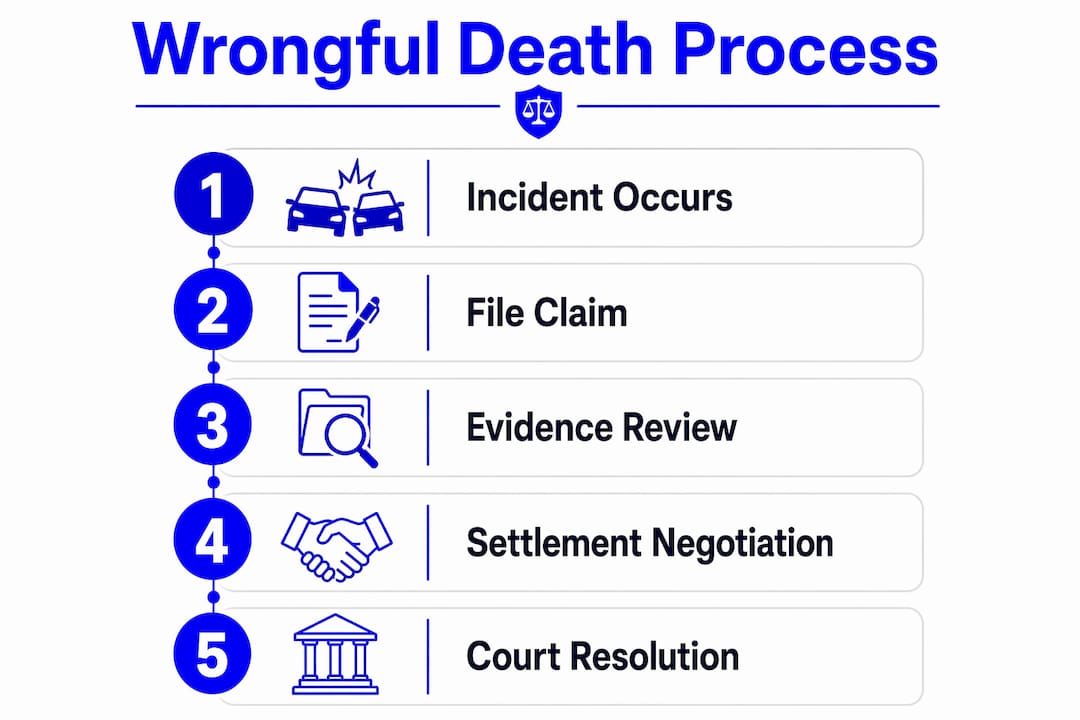
What does the process look like from filing to resolution?
Most wrongful death cases follow a recognizable sequence, though the timeline varies considerably by complexity.
-
Initial consultation (weeks 1–4). An attorney reviews the facts, identifies potential defendants, checks the statute of limitations, and advises whether a survival action should also be filed. Fee structure is discussed (most wrongful death attorneys work on contingency, meaning no fee unless you recover).
-
Investigation and filing (months 1–6). Counsel gathers police reports, medical records, employment records, and expert opinions. The complaint is filed in the appropriate court before the limitations deadline.
-
Discovery (months 6–18). Both sides exchange documents, take depositions, and retain experts. This phase often takes the longest in complex cases involving medical malpractice or multi-defendant commercial vehicle crashes.
-
Settlement negotiations (ongoing, often peaking after discovery). Insurers typically make early low offers to close claims cheaply. After expert reports are exchanged and depositions taken, the realistic value of the case becomes clearer and negotiations become more substantive. Most wrongful death cases settle before trial.
-
Trial (if no settlement, typically 18–36 months after filing). A jury hears evidence, applies the preponderance standard, and returns a verdict. Post-trial motions and appeals can extend the timeline further.
Insurance is the practical source of payment in the vast majority of cases. The defendant's liability policy limits often control how much a family actually recovers, particularly when the defendant is an individual rather than a corporation. Where policy limits are low and the defendant has few personal assets, recovery may fall short of the full damages the jury would award.
How much is a wrongful death case worth?
Published "average settlement" figures for wrongful death cases are largely meaningless. Case value is driven by facts specific to the deceased and the survivors, not industry averages.
The primary value drivers are:
- Decedent's earnings and benefits: A 35-year-old with 30 years of projected earnings represents a larger economic loss than a retired person with no dependents.
- Number and age of surviving dependents: Minor children who lost a parent's financial support and guidance represent substantial non-economic loss.
- Life expectancy: Actuarial tables and the deceased's health history inform projections.
- Degree of defendant fault: Clear, documented negligence (a driver who ran a red light at high speed) produces stronger liability than a disputed causation scenario.
- Available insurance coverage: Policy limits cap practical recovery unless the defendant has significant personal assets.
For a sense of how damages break down in real collision cases, the car accident damages examples page illustrates how economic and non-economic losses are calculated in practice.
Non-economic damages for loss of companionship are recognized in most states under the legal concept of loss of consortium, which covers the relational and emotional losses a surviving spouse or child suffers. Some states cap these damages; others do not.
What should you bring to your first attorney consultation?
Preparation before the first meeting saves time and helps counsel assess the case accurately. Gather as much of the following as you can:
- Police or accident report (or incident report if the death occurred at a workplace or medical facility)
- Death certificate
- Medical records from the final hospitalization or treatment
- Employment and payroll records showing the deceased's income and benefits
- Tax returns for the past 2–3 years
- Photos of the accident scene, vehicle damage, or any relevant physical evidence
- Witness contact information
- Any correspondence with insurers (do not sign anything or give recorded statements before this meeting)
- Insurance policy information for all potentially involved parties
At the consultation, ask the attorney directly: What is the statute of limitations for this case? Should a survival action also be filed? What are the primary value drivers here? How are fees structured? The attorney evaluation guide has a full checklist of questions worth raising.
Pro Tip: Preserve digital evidence before it disappears. Dashcam footage overwrites itself. Vehicle event data recorders can be overwritten or lost if the vehicle is repaired or sold. Social media posts by the defendant may be deleted. An attorney can send preservation letters quickly, but only if you act fast.
Early retention of medical and economic experts is often decisive in complex cases. Expert reports quantify future lost income and non-economic losses, and they are what move insurers from low opening offers to realistic settlement numbers.
This article provides general legal information, not legal advice. Laws vary by state, and you should consult a qualified attorney about the specific facts of your situation.
Key Takeaways
A wrongful death lawsuit is a civil claim for survivors' monetary losses, governed by state law, and subject to strict filing deadlines that vary by state.
| Point | Details |
|---|---|
| Civil standard applies | Plaintiffs must prove their case by a preponderance of the evidence, a lower bar than the criminal standard. |
| State law controls eligibility | Spouses, children, and parents are common filers; exact rules and available damages vary by state statute. |
| File both claims when available | A wrongful death claim covers survivors' losses; a survival action covers the decedent's pre-death losses. Filing only one can forfeit recovery. |
| Statutes of limitations are strict | Most states allow 1–3 years from the date of death; missing the deadline permanently bars recovery. |
| Carcollisionlawyer connects families to counsel | The free evaluation process helps survivors understand their rights and connects them with experienced wrongful death attorneys. |
The part most families don't realize until it's too late
The conventional wisdom about wrongful death cases focuses on the legal elements: duty, breach, causation, damages. That framework is accurate, but it misses the practical reality that most families face. The real challenge is not understanding the law. It is acting fast enough to preserve the evidence that makes the law work in your favor.
Dashcam footage gets overwritten. Vehicle event data recorders get lost when cars are repaired or sold. Witnesses move, forget details, or become harder to locate. Insurers send adjusters to accident scenes within hours, not days, and their job is to close claims cheaply before families understand what they are entitled to. The families who recover the most are not necessarily those with the strongest legal theories. They are the ones who preserved evidence, retained counsel early, and did not give recorded statements before understanding their rights.
There is also a filing strategy point that gets overlooked: the difference between a wrongful death claim and a survival action. Many families file one and not the other, forfeiting the decedent's own pre-death damages entirely. That is money that belongs to the estate and, ultimately, to the family. An experienced attorney will identify both claims in the first consultation. If yours does not raise it, ask directly.
The legal system gives families a path to real compensation. But that path has deadlines, procedural requirements, and evidentiary demands that do not pause for grief. The families who navigate it successfully are the ones who treated the legal process with the same urgency the other side did from day one.
How Carcollisionlawyer can help you take the next step
Losing a family member to someone else's negligence is devastating. Figuring out the legal system on top of that grief should not fall entirely on you.
Carcollisionlawyer connects survivors and estate representatives with experienced wrongful death attorneys through a free, no-commitment evaluation. You describe your situation, and the process matches you with counsel who handles exactly this type of claim, whether it involves a car crash, a truck accident, a workplace death, or a medical error. There is no upfront cost, and most wrongful death attorneys work on contingency, meaning they only get paid if you recover. The initial evaluation covers the statute of limitations for your state, whether a survival action should also be filed, and what documents to gather before the first formal consultation. To understand how attorney fees work in these cases before you commit to anything, the wrongful death attorney fee guide explains the standard arrangements clearly. When you are ready, start your free case evaluation and get a clear picture of your options.
Authoritative resources for state-specific rules
The following sources are reliable starting points for verifying wrongful death law in your state:
- Cornell Law School Legal Information Institute (LII) at law.cornell.edu provides the foundational legal definitions and links to state statutes.
- Justia at justia.com covers wrongful death law by state with plain-language explanations and links to statutory text.
- Nolo at nolo.com offers detailed guides on filing, damages, and the difference between wrongful death and survival actions.
- Your state's official legislature website is the primary source for the exact text of your state's wrongful death statute, including deadlines, eligible plaintiffs, and damage caps. Search "[your state] wrongful death statute" alongside the state legislature's domain.
- Local court rules govern filing formalities, notice requirements for government defendants, and procedural deadlines that differ from the general statute of limitations.
For state-specific guidance, always verify the current version of the statute directly, since legislatures amend these laws periodically.