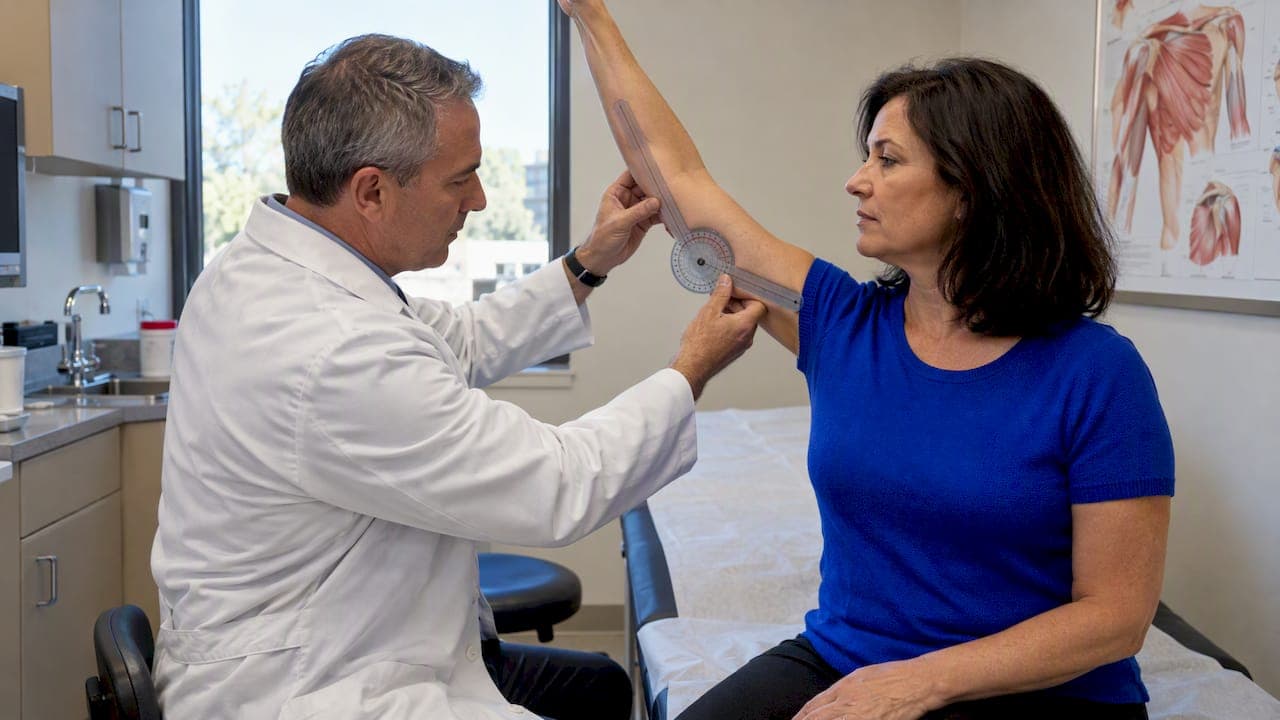
Most rotator cuff workers' comp settlements without surgery land in the low five figures, while surgical cases often settle in the mid-five to low six figures. The single biggest factor is your documented permanent impairment rating at maximum medical improvement (MMI). Getting that rating right, and backing it with solid medical records, matters more than whether you had surgery at all.
TL;DR:
- State schedule awards use wage and impairment formulas rather than pain and suffering, and prior awards for the same shoulder may reduce a new payment.
- At maximum medical improvement, doctors may use diagnosis based impairment or range of motion; range of motion ratings typically require three separate measurements.
- Settling before maximum medical improvement can lock in a lower award; treatment and scheduling may delay a rating for several months or over a year.
- Report the injury in writing the same day, then keep MRI results, operative reports, therapy notes, wage records, and work restrictions to support the assessment.
- Surgery can strengthen a claim through operative reports and imaging, but injections mainly relieve pain and rarely establish permanent impairment on their own.
Table of Contents
- Typical Settlement Ranges and What Those Numbers Mean
- What Drives a Rotator Cuff Settlement
- How Impairment Ratings Turn Into Dollars
- Does Surgery or Injections Change Settlement Value?
- Timeline: From Injury Report to Settlement
- Evidence Checklist to Strengthen Your Claim
- Common Mistakes and Realistic Expectations
- Get a Free Case Evaluation and Attorney Match
- FAQ
- Sources
Typical Settlement Ranges and What Those Numbers Mean
Settlement figures for rotator cuff claims vary by state, injury severity, and whether surgery occurred. Workers who recover with physical therapy alone, without surgery, tend to settle toward the lower end of the range, since their medical records show fewer objective findings to support a higher impairment percentage. Surgical cases generally settle higher because operative reports and post-surgical imaging give evaluators more concrete evidence of permanent damage.
National workplace injury and workers' comp cost data shows that average payouts differ widely by injury type and industry, which is why any range you read, including this one, is directional rather than a promise.
- Non-surgical rotator cuff claims often settle in the low five-figure range.
- Surgical claims with documented permanent impairment often reach mid-five to low six figures.
- Workers' comp schedule awards pay a fixed amount per body part and impairment percent, unlike personal injury verdicts, which can include pain and suffering.
- State statutes and individual facts, like wage history and prior injuries, create wide swings even within the same injury category.
Workers' comp indemnity payments and schedule awards follow set formulas tied to your state's wage and impairment rules, not a jury's sense of fairness. That structure caps upside but also makes outcomes more predictable once you know your impairment percentage.
What Drives a Rotator Cuff Settlement
Adjusters and judges weigh a specific set of facts when they value a shoulder claim, and understanding them tells you where you have real influence.
- Severity and type of tear, plus whether surgery was performed, shape the baseline impairment estimate.
- Lost wages and whether work restrictions are permanent affect how much future earning capacity factors into the number.
- Medical costs, including physical therapy, injections, and the chance of a second surgery, add to the claim's value.
- Preexisting shoulder problems, comparative fault, late reporting, and your employer's claims history can all reduce an offer.
- Cases that settle before a hearing often land lower than those where a judge rules on a contested impairment rating.
Pro Tip: Report your injury the same day it happens and get it in writing, since delayed reporting is one of the easiest reasons an adjuster uses to discount a claim.
A claim with a clean reporting history, consistent treatment, and no major preexisting shoulder issues starts from a stronger position before anyone even looks at your impairment percentage.
How Impairment Ratings Turn Into Dollars
Workers' comp doctors rate permanent shoulder impairment using the A.M.A. Guides to the Evaluation of Permanent Impairment, 6th edition, through one of two methods: Diagnosis-Based Impairment (DBI) or Range of Motion (ROM). DBI assigns impairment based on your specific diagnosis, such as a full-thickness tear with surgical repair. ROM measures how far you can move your shoulder and rates impairment from the deficit, typically requiring three separate measurements for accuracy.
- Your treating physician determines you've reached MMI, meaning your condition has stabilized.
- The doctor applies DBI, ROM, or both, and documents the resulting upper-extremity impairment percentage.
- That percentage converts into a schedule award using your state's formula or, in federal claims, OWCP's compensation schedule.
- Any prior schedule award for the same shoulder gets subtracted from the new total.
A 2024 federal OWCP decision shows how this plays out in practice: the case resulted in an award of up to 12% upper-extremity impairment after the Board compared DBI and ROM results. That single case illustrates why getting your rating method right can swing your settlement meaningfully, since the two methods don't always agree.
Does Surgery or Injections Change Settlement Value?
Surgery tends to generate the kind of objective findings that support a higher impairment rating, which is why surgical cases often settle for more. The AAOS rotator cuff guideline notes that both physical therapy and operative treatment improve outcomes, but surgery leaves behind operative reports and imaging that are easier to translate into a measurable impairment percentage.
- Physical therapy alone can restore function well but often leaves a thinner paper trail for impairment purposes.
- Steroid injections may ease pain but rarely create new objective evidence of permanent damage.
- AAOS guidance advises against routine use of PRP for full-thickness tears, citing insufficient evidence, which is part of why many payers don't authorize it. Readers curious about where the evidence stands can review current PRP research for rotator cuff tears from a regenerative medicine provider.
- Documented complications or a second surgery typically strengthen your negotiating position, since they add to both cost and permanency.
Timeline: From Injury Report to Settlement
A rotator cuff claim moves through a predictable sequence, though delays are common.
- Report the injury immediately and seek authorized medical treatment.
- Complete treatment, whether PT, injections, or surgery, as prescribed.
- Reach MMI, the point where your doctor says further improvement isn't expected.
- Get a formal impairment rating under the A.M.A. Guides.
- Negotiate settlement or proceed to a hearing if the parties disagree.
Settling before MMI usually locks in a lower number, since your permanent impairment hasn't been fully documented yet. Waiting can take several months to over a year, depending on treatment and scheduling, but it often produces a more accurate, and higher, final figure.
Evidence Checklist to Strengthen Your Claim
The paper trail you build between injury and MMI often matters more than the injury itself.
- Keep copies of operative reports, MRI results, and every physical therapy note.
- Ask your doctor to document at least three ROM measurements if a ROM-based rating applies.
- Request a formal impairment rating under the A.M.A. Guides and get your MMI date in writing.
- Track wage loss and any changes to your job duties or restrictions.
- Save all written communication with your employer about your injury and work status.
- Ask about an independent medical examination (IME) or vocational evaluation if your earning capacity looks permanently affected.
Pro Tip: Request copies of your medical records as you go instead of waiting until settlement talks start, since gaps in your file are hard to fill after the fact.
Having this file organized before you speak with an attorney or submit a free case evaluation makes it far easier for anyone reviewing your claim to spot its real value.

Common Mistakes and Realistic Expectations
The biggest myth we see is that surgery automatically means a big payout. Reality is less dramatic: documentation and a well-supported impairment rating decide the number, not the procedure itself. Workers who document early and get a targeted legal evaluation tend to do better than those who wait and hope.
— Gerard
Get a Free Case Evaluation and Attorney Match
We offer a free evaluation to help injured workers understand their claim without any upfront cost or commitment. Submitting your details connects you with a local attorney who can review your medical records, your impairment rating status, and your wage loss documentation, then walk you through what your specific case might be worth.
Before you start, gather what you can:
- Medical records, including operative reports and imaging if you've had surgery.
- Key dates: injury date, treatment dates, and your MMI date if one has been set.
- Recent wage statements and any documentation of changed work duties.
If your shoulder injury happened on the job, our free evaluation is a straightforward way to find out where you stand and get matched with an attorney who handles these claims regularly.
This article is general information, not a substitute for advice from a qualified lawyer. Consult a qualified legal professional about your own circumstances before acting on anything here.
FAQ
Can you get disability from a torn rotator cuff?
Yes, a torn rotator cuff can qualify for workers' comp disability benefits if it causes documented work restrictions or permanent impairment. The amount depends on whether the disability is temporary or permanent and how your impairment rating is calculated under your state's rules.
What is the average settlement for a torn bicep tendon?
Bicep tendon tear settlements follow similar valuation logic to rotator cuff claims, since both are upper-extremity injuries rated under the same A.M.A. Guides framework. Figures vary by whether surgery was performed and the resulting impairment percentage, so there's no single fixed number that applies across states.
How much of a 50,000 dollar settlement will I get?
What you keep from any settlement depends on attorney fees, medical liens, and any outstanding workers' comp payments already issued, all of which are deducted before you receive your portion. An attorney reviewing your specific claim can break down these deductions before you agree to any number.
Do steroid injections increase settlement value?
Steroid injections mainly treat pain rather than create new objective evidence of permanent damage, so they rarely increase a settlement on their own. What raises value is documented permanent impairment, which typically comes from imaging, operative findings, or measurable range-of-motion loss.
Sources
- 24-0443: S.Y. and DEPARTMENT OF HEALTH & HUMAN SE...
- Management of rotator cuff injuries — AAOS guideline
- National Safety Council — workers' compensation costs and context