
Motorcycle accident compensation is a legal mechanism that allows injured riders to recover financial damages for losses caused by another party's negligence. The formal term for this process is a personal injury claim, and it covers both economic losses like medical bills and lost wages, and non-economic losses like pain and suffering. How motorcycle accident compensation works depends on three core factors: proving the other party's fault, documenting your damages thoroughly, and understanding the negligence laws in your state. This guide breaks down every stage of that process so you know exactly where you stand.
How motorcycle accident compensation works: damages explained
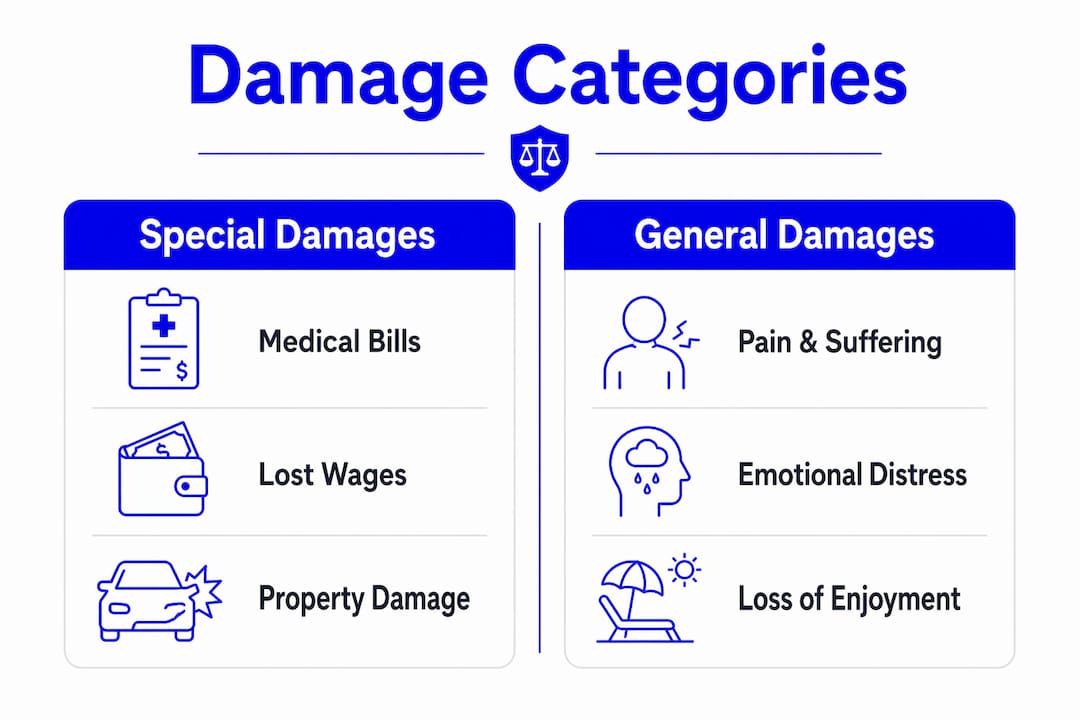
Motorcycle injury claims divide into two categories: special damages and general damages. Special damages cover every quantifiable financial loss you can attach a number to. General damages cover the personal toll of your injuries, which is harder to measure but often represents the largest share of a final settlement.
Special damages typically include:
- Medical bills (emergency care, surgery, rehabilitation, ongoing treatment)
- Lost wages from time off work during recovery
- Future lost earning capacity if your injuries affect your career long term
- Property damage to your motorcycle and gear
General damages cover non-economic impacts:
- Physical pain and suffering
- Emotional distress and anxiety
- Loss of enjoyment of life and hobbies
- Permanent scarring or disability
Compensation ranges vary widely based on injury severity. Minor injury claims in the U.S. typically settle between $10,000 and $50,000, while severe disabilities can exceed $500,000. A serious leg fracture, for example, attracts significant general damages due to long-term mobility issues and psychological impact. That range reflects how courts and insurers weigh permanent life disruption against temporary setbacks.
Pro Tip: Keep a daily pain journal from the day of your accident. Write down how your injuries affect sleep, mobility, and mood. This personal record directly counters insurer attempts to minimize your general damages.
Documenting both damage types from day one is the single most effective way to protect the full value of your claim. Insurers look for gaps in records to justify lower offers. Every receipt, every doctor's note, and every missed shift matters.
How does motorcycle accident liability affect your payout?
Liability is the legal foundation of every motorcycle accident claim. To recover compensation, you must prove the other party owed you a duty of care, breached that duty, and directly caused your injuries. Most road users owe each other a duty of care by default, so the central fight in most claims is over breach and causation.

The negligence framework your state uses determines how much fault affects your payout. Most states use comparative negligence, which reduces your compensation by your percentage of fault. If a jury finds you 20% at fault for a $100,000 claim, you recover $80,000. That rule makes partial fault manageable rather than catastrophic.
Five jurisdictions use a stricter standard called contributory negligence: Alabama, Maryland, North Carolina, Virginia, and Washington D.C. Under contributory negligence, any fault on your part bars recovery entirely. Even 1% fault can eliminate your claim. If you ride in one of these states, fault disputes become far more consequential.
Insurers exploit common biases to assign you partial fault. Adjusters frequently cite factors like helmet use, lane positioning, or speed to inflate your fault percentage. These tactics are standard practice, not objective assessments. Disputing them requires solid evidence gathered at the scene.
Pro Tip: Never admit fault at the accident scene, even casually. A simple "I'm sorry" can be recorded and used to assign you partial liability. Let the evidence speak.
Evidence that counters unfair fault assignments includes photos of road conditions, witness statements, traffic camera footage, and accident reconstruction reports. Gather all of it as quickly as possible.
What is the typical timeline for the motorcycle accident payout process?
The motorcycle accident payout process follows a predictable sequence, though the duration varies significantly by case complexity. Over 95% of motorcycle accident claims settle out of court, typically within 1–2 years. Complex cases with disputed liability or catastrophic injuries can take 3 or more years.
The standard process moves through these stages:
- Report and notify. File a police report immediately and notify your insurer within the required window, usually 24–72 hours.
- Seek medical evaluation. Get a full clinical assessment within 24–48 hours, even if you feel fine. Delayed medical attention gives insurers grounds to argue your injuries are unrelated to the accident.
- Reach maximum medical improvement (MMI). Settling before MMI means you may accept less than your injuries ultimately cost. MMI is the point where your condition has stabilized and future treatment costs can be accurately projected.
- Demand and negotiation. Your attorney sends a demand letter to the at-fault party's insurer. Negotiation typically takes weeks to months.
- Settlement or litigation. Most cases settle during negotiation. If the insurer refuses a fair offer, filing a lawsuit moves the case toward trial, which extends the timeline significantly.
One underused option in this process is interim compensation. If the other party's insurer admits liability early, advance payments are available to cover urgent costs like lost income, rehabilitation, or living expenses before the final settlement is reached. This option prevents financial pressure from forcing you into a low early offer.
Pro Tip: Do not rush to settle before you reach MMI. Insurers count on financial pressure pushing victims to accept early, low offers. An interim payment request can relieve that pressure without sacrificing your final settlement.
What steps protect your motorcycle accident claim from the start?
The first hour after a motorcycle accident determines the strength of your claim more than any other period. Critical evidence degrades within 30–60 minutes: skid marks fade, debris gets cleared, and security footage gets overwritten. Acting fast is not optional.
Follow these steps immediately after the accident:
- Call 911. A police report creates an official record of the accident, the parties involved, and initial fault observations.
- Photograph everything. Capture road conditions, vehicle positions, damage, skid marks, traffic signs, and your injuries before anything moves.
- Collect witness information. Names and phone numbers from bystanders provide independent accounts that carry significant weight in disputes.
- Seek medical care within 24 hours. Soft tissue injuries and internal trauma often show no immediate symptoms. A clinical record from the day of the accident closes the door on insurer arguments about injury causation.
- Keep every record. Medical bills, prescription receipts, repair estimates, and pay stubs documenting missed work all feed directly into your special damages calculation.
- Avoid recorded statements. Insurers routinely request recorded statements early in the process. Anything you say can be used to minimize your claim. Decline until you have legal representation.
- Consult a motorcycle accident attorney early. An attorney protects you from insurer tactics, handles fault disputes, and maximizes your settlement by building a complete evidence file from the start.
Victims who delay medical care or skip documentation steps consistently recover less. Insurers minimize settlements by focusing on objective evidence gaps and downplaying personal testimony. Your job is to leave no gaps.
The documents that support your settlement include medical records, imaging results, employment records, and a detailed personal impact diary. Assembling this file early puts you in a far stronger negotiating position.
Key Takeaways
Motorcycle accident compensation requires proving fault, documenting every economic and personal loss, and understanding your state's negligence rules before accepting any settlement offer.
| Point | Details |
|---|---|
| Two damage categories | Special damages cover financial losses; general damages cover pain, suffering, and life impact. |
| State negligence rules matter | Comparative negligence reduces your payout by fault percentage; contributory negligence states can bar recovery entirely. |
| Timing is critical | Gather evidence within 60 minutes and seek medical care within 24 hours to protect claim validity. |
| Most claims settle out of court | Over 95% of motorcycle accident claims resolve without trial, typically within 1–2 years. |
| Interim payments exist | If liability is admitted early, you can request advance payments to cover urgent costs before final settlement. |
What I've learned watching riders settle for less than they deserve
Riders consistently underestimate how aggressively insurers work to minimize general damages. Pain and suffering, emotional distress, and loss of enjoyment are real losses, but they are invisible on a spreadsheet. Insurers know this and exploit it.
The pattern I see repeatedly is this: a rider accepts a fast settlement because the bills are piling up and the insurer's offer sounds reasonable. Six months later, they realize their injuries are permanent, their earning capacity has dropped, and they signed away their right to claim more. That outcome is almost always preventable.
Two things separate riders who get fair compensation from those who don't. First, they wait for maximum medical improvement before settling. Second, they have an attorney who knows how to put a dollar value on non-economic damages and defend it under pressure. Neither of those things requires a large upfront investment. Most motorcycle accident attorneys work on contingency, meaning they only get paid when you win.
The riders who recover the most are not necessarily the ones with the worst injuries. They are the ones who documented everything, refused to rush, and got professional help early. Patience and preparation are the real factors affecting motorcycle compensation outcomes.
— Gerard
Get the legal support your claim deserves
Recovering fair compensation after a motorcycle accident is not something you should tackle alone. Insurers have experienced adjusters working against your claim from day one.
Carcollisionlawyer connects injured motorcyclists with trusted attorneys who specialize in personal injury claims. The process starts with a free evaluation so you understand your rights and the value of your claim before committing to anything. There is no upfront cost and no obligation. If you were injured in a motorcycle accident and want to know what your claim is worth, start your free evaluation today. Specialized legal support matched to your specific injury and circumstances makes a measurable difference in final settlement outcomes.
FAQ
What does motorcycle accident compensation cover?
Motorcycle accident compensation covers special damages (medical bills, lost wages, property damage) and general damages (pain, suffering, emotional distress, and loss of enjoyment of life). The total amount depends on injury severity, fault allocation, and the strength of your documentation.
How long does a motorcycle accident claim take to settle?
Most motorcycle accident claims resolve within 1–2 years. Complex cases with disputed liability or serious injuries can take 3 or more years, though interim payments are available if liability is admitted early.
Does wearing a helmet affect my compensation?
In comparative negligence states, not wearing a helmet can increase your assigned fault percentage and reduce your payout proportionally. In contributory negligence states like Alabama, Maryland, North Carolina, Virginia, and Washington D.C., it could bar your claim entirely.
When should I accept a settlement offer?
Accept a settlement only after reaching maximum medical improvement, when your future treatment costs are fully known. Settling too early often means accepting less than your injuries ultimately cost.
Do I need a lawyer to claim motorcycle accident compensation?
You are not legally required to hire an attorney, but riders with legal representation consistently recover higher settlements. An attorney counters insurer fault tactics, values non-economic damages accurately, and handles negotiation so you focus on recovery.